



An Introduction to Egypt Before History Begins
In my previous post, I proposed a journey through Egyptian history in reverse — beginning with the Egypt we can still encounter before travelling towards its most distant past.
We would begin in the present and travel backwards: through revolutions and republics, monarchs and colonial ambitions, Ottoman governors and medieval dynasties, Roman emperors and Greek kings, until eventually we reached the Egypt that seems to stand outside ordinary time—the Egypt of pharaohs, temples and pyramids.
But before beginning that journey, we must pause.
Before Egypt becomes history, it must first become a place.
And before it becomes a succession of civilisations, it must become a people.
Before the Monuments, the People
This distinction matters because Egypt is often introduced backwards, even when the chronology moves forward.
We are shown the monuments before the men and women who live beside them. We meet the dead before the living. We learn the names of pharaohs before hearing the voices of Egyptians arguing over the price of tomatoes, laughing in cafés, crossing impossible roads, celebrating weddings, complaining about bureaucracy or discussing football with the intensity of military strategists.
The result is a country admired at a distance but rarely encountered at eye level. To encounter it properly, we must first understand that Egypt is not simply something we visit, nor merely a tourist destination.
For many visitors, Egypt begins with stone: the pyramids at Giza, the columns of Karnak, the painted tombs of Luxor and the monumental figures seated beside the Nile.
These remains are extraordinary, but their very scale can obscure the country around them. They encourage us to imagine Egypt as a completed civilisation—a magnificent achievement left behind by people who vanished thousands of years ago.
Yet Egypt did not end.
It continued.
A Country Where History Accumulates
Egypt changed its language, its rulers and its gods. It absorbed conquerors without becoming identical to them. It carried fragments of one age into the next, sometimes openly and sometimes beneath the surface.
Temples became quarries. Churches rose among ancient columns. Mosques entered the skyline. Languages and scripts succeeded one another, leaving traces that would one day allow the Rosetta Stone to unlock the voices of ancient Egypt. Foreign words settled into local speech, and old customs survived after the explanations attached to them had changed.
History here is not arranged in separate rooms.
It accumulates.
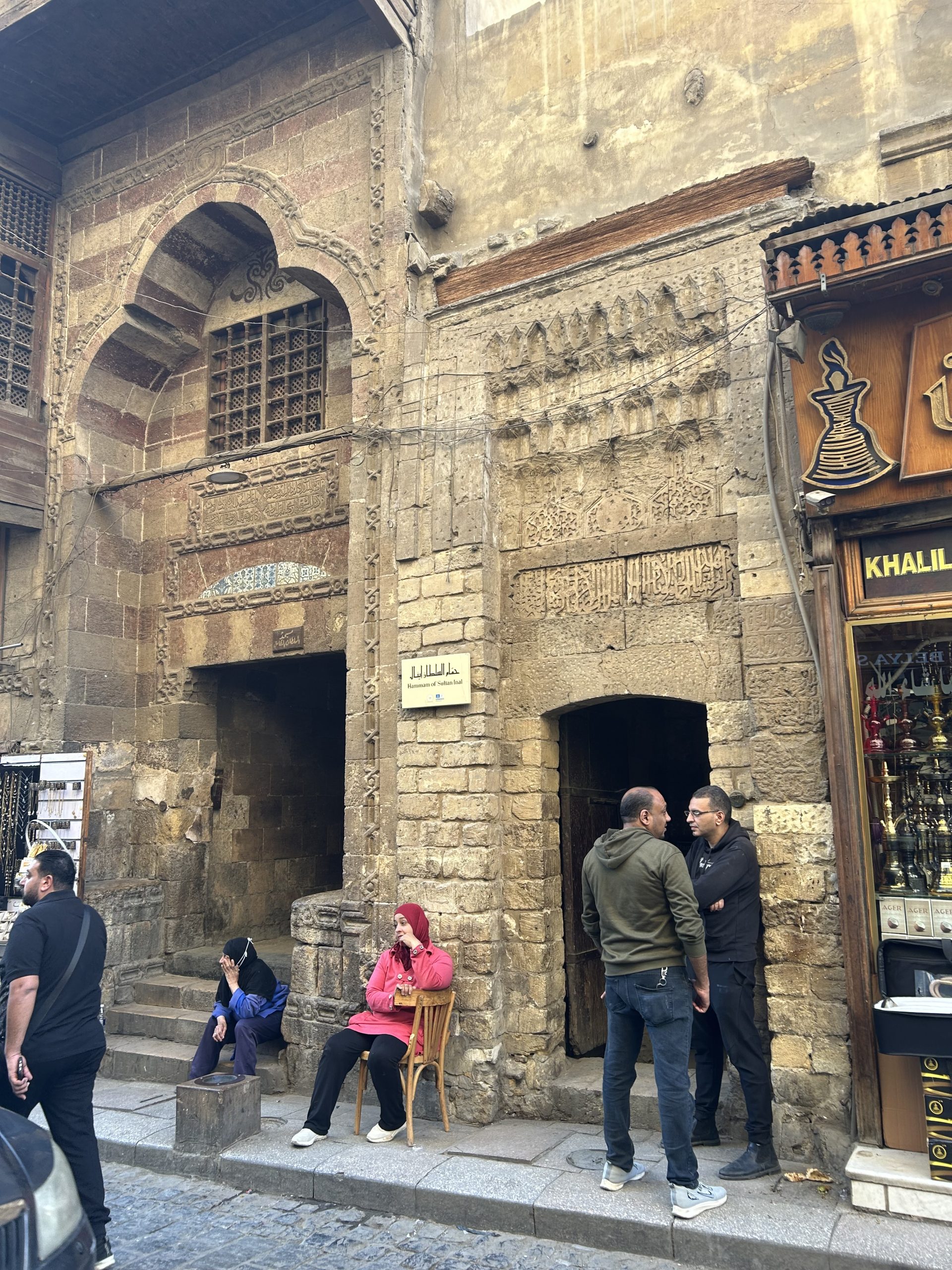
Cairo alone can make centuries appear to occupy the same street. A medieval mosque may stand beside a modern apartment building covered in satellite dishes. A delivery motorcycle passes beneath walls built by a dynasty whose name many pedestrians no longer remember. A mobile phone rings inside a workshop where techniques have travelled through generations.
Nearby, someone invokes the pharaohs in a football argument or describes Egypt, with affectionate exaggeration, as Umm al-Dunya—the Mother of the World.
The past is never entirely absent, but neither does it dominate every moment.
Most Egyptians do not wake each morning contemplating the Eighteenth Dynasty. They wake because the city is already making noise. There is work to reach, traffic to negotiate, bread to buy, children to prepare, messages to answer and a thousand small arrangements through which daily life maintains itself.
To understand Egypt, therefore, we should not begin by asking only what it has preserved.
We should ask how it lives.
Egypt at Eye Level
Egyptian life unfolds through relationships.
Family extends beyond the neat boundaries suggested by the word. Hospitality can turn a brief visit into a meal and a meal into an evening. Advice is offered generously, sometimes before it is requested.
Privacy and participation are negotiated differently than in more individualistic societies. A stranger may ask a question that elsewhere would seem personal, then devote surprising energy to helping solve a problem that is not his own. In some communities, that same sense of shared responsibility also shapes how disagreements are mediated and peace is restored without reducing reconciliation to victory or defeat.
The same society can feel warm and intrusive, chaotic and intimate, exhausting and extraordinarily generous.
Egypt rarely presents one quality without its opposite.
A Country of Contradictions
It is ancient and impatient, proud and self-critical, deeply conservative in some moments and endlessly inventive in others.
It respects hierarchy yet delights in mocking authority. It carries an immense sense of national importance while remaining brutally honest about its own failures. It complains about disorder and then improvises brilliantly inside it.
It speaks the language of fate, but spends enormous energy negotiating with fate’s practical consequences.
Perhaps this is why certainty is a poor instrument with which to approach the country.
Egypt asks for attention rather than conclusions.
Listening to the Living Country
To understand Egypt, we must listen to the way Egyptians describe themselves.
That description does not occur only in books, political speeches or formal histories. It appears in proverbs, nicknames, songs, films, advertisements, street conversations and, above all, jokes.
Humour is one of the doors through which Egypt becomes visible.
An Egyptian joke may last only a few seconds, but inside it one can find bureaucracy, economic pressure, family life, political frustration, historical pride and the stubborn refusal to be intellectually defeated by circumstances.
The joke often begins where patience ends.
It takes a difficulty that cannot immediately be removed and changes the relationship between the difficulty and the person enduring it.
The Country That Laughs at Itself
This is why Egyptians so frequently make themselves the subject of their own comedy.
They joke about arriving late while still getting dressed. They joke about traffic while pressing the horn. They joke about government offices while carrying another folder of documents back to the same unhelpful desk.
They joke about prices, improvised repairs, football disappointments and the enormous contrast between building the pyramids and trying to complete an ordinary administrative procedure.
The laughter is not evidence that the problem is unimportant.
It is evidence that the problem has been understood.
And perhaps this is where our journey into Egypt should truly begin—not with a date, a dynasty or a monument, but with the intelligence contained in that laughter.
The People Who Remained
The history to come will be filled with rulers.
Some were born in Egypt; others arrived as conquerors. They built capitals, founded dynasties, changed religions, collected taxes, raised armies and claimed permanence.
Almost all of them eventually disappeared.
The Egyptian people remained.
They adapted, remembered, forgot, absorbed, resisted and continued. They inherited the consequences of decisions made centuries before their birth and transformed those consequences into ordinary life.
When power became too imposing to confront directly, they sometimes reduced it to a story. When hardship became too heavy, they gave it a punchline.
That continuity—not an untouched bloodline or an unchanging culture, but the continuous reinvention of life in the same extraordinary landscape—is the thread we will follow backwards.
Turning Around
We will begin with the Egypt that can answer us.
With the crowded, contradictory, talkative and humorous country of the present. With its streets and expressions, its frustrations and affections, its pride and its merciless self-awareness.
Only then will we turn around.
The Road Backwards
From the republic, we will travel towards the monarchy.
From modern Cairo, towards the city of khedives, sultans and caliphs.
From the Arab and Islamic centuries, towards Christian Egypt; from Rome, towards Alexandria and the Ptolemies; and from the Greek-speaking court, deeper still, towards the kingdoms of the Nile.
With every step backwards, familiar Egypt will become stranger.
Names will change. Languages will recede. Religions will rise and disappear. The country’s borders, capitals and ideas of itself will be repeatedly remade.
Yet perhaps, beneath those transformations, we will occasionally recognise a gesture: an instinct for survival, a talent for adaptation, a suspicion of official promises, a reverence for the Nile—or a voice in the crowd finding something amusing at precisely the moment when laughter seems least appropriate.
Where Our Journey Begins
Our journey through Egyptian history therefore begins with no excavation.
It begins with an introduction.
Before meeting the Egypt that built monuments for eternity, we must meet the Egypt that lives from one unpredictable day to the next.
And it is laughing.
THE COUNTRY THAT LAUGHS AT ITSELF
There are many conventional ways to introduce Egypt.
One could begin with the Nile, carrying history through the desert. One could begin with Cairo, whose streets seem to contain several centuries at once. Or with the pyramids, standing in magnificent silence while the city around them negotiates traffic, prices, paperwork, football, family obligations, and the unpredictable details of an ordinary Tuesday.
But perhaps Egypt is best introduced through a joke.
Not because Egyptians take nothing seriously, but because they have mastered the more difficult art of taking serious things and making them bearable. Their humour does not look away from hardship. It looks directly at it, recognises its absurdity and, at the last possible moment, adds a punchline.
Egyptians have a name for the brief, quick joke that passes from one person to another: the nokta. There is even a popular description of the Egyptian people as shaʿb ibn nokta—a people born of the joke.
The expression captures something essential. In Egypt, humour is rarely ornamental. It is a way of interpreting reality.
It is how people establish complicity in a crowded queue, survive an impossible office, endure a delayed journey, discuss prices they can no longer understand, or prepare themselves for another football disappointment without surrendering the right to hope.
Most importantly, Egyptians are often the first target of their own humour.
They do not merely laugh at the world. They step inside the joke themselves.
Seven thousand years of rest
“The Egyptians built the pyramids—and have been resting ever since.”
The joke begins with one of humanity’s greatest achievements and ends with a nation taking an exceptionally long break.
Behind its apparent irreverence lies a familiar Egyptian contradiction: the enormous weight of a glorious past and the untidy improvisations of the present.
Modern Egyptians inherit monuments that appear to defy explanation. Their ancestors moved stones of impossible size, aligned structures with the heavens and built tombs that survived entire civilisations. Faced with such an inheritance, one might respond with solemn pride.
The Egyptian response is often to smile and say: apparently, after all that work, we became tired.
The joke brings the pyramids down from the pedestal and places them in an ordinary Egyptian conversation. It allows people to honour the past without becoming imprisoned by its grandeur.
It also takes control of a potentially uncomfortable comparison. The Egyptian does not wait for an outsider to contrast ancient magnificence with contemporary disorder. He makes the comparison first, sharpens it into a joke and invites everyone else to laugh with him.
This is not self-humiliation. It is narrative sovereignty.
If we are going to discuss the distance between who we were and who we are, the joke seems to say, then we will be the authors of that discussion.
The elasticity of time
“When an Egyptian says, ‘I’m on my way,’ it means he has started thinking about what to wear.”
Time in Egypt does not always behave like time elsewhere.
It stretches in traffic. It pauses for tea. It becomes distracted by a neighbour, delayed by a telephone call, redirected by a family obligation and finally defeated by a conversation that was supposed to last two minutes.
“I’m on my way” is therefore not necessarily a geographical statement. It can be an expression of intention, affection or optimism. The speaker may not yet have left home, but spiritually, at least, the journey has begun.
Everyone involved understands this.
The person waiting knows that “five minutes” may contain more than five actual minutes. The person arriving late knows that the excuse will not be entirely believed. Both participate in the same fiction, and the fiction survives because it is shared.
Egyptian humour frequently grows in the space between what words officially mean and what everyone knows they mean in practice.
The joke about punctuality is funny because it exposes that secret agreement. It allows Egyptians to confess, collectively and without embarrassment, that the clock is only one of the forces governing their lives—and not always the most powerful one.
The eternal tomorrow
“When will my document be ready?”
“Come back tomorrow.”
“But tomorrow is a public holiday.”
“Exactly—so you won’t have to wait.”
Few phrases contain as much bureaucratic philosophy as “Come back tomorrow.”
Tomorrow is where the missing signature will be found. Tomorrow is when the manager will return. Tomorrow is when the computer system will work, the correct employee will be sitting at the correct desk and the stamp—whose existence nobody mentioned yesterday—will finally be available.
Tomorrow is full of administrative possibility.
It is today that presents the difficulty.
Egyptian comedy has long understood the government office as a kind of theatre. Its scenery consists of crowded corridors, towers of paper and closed doors. Its characters include the absent official, the exhausted citizen, the employee eating breakfast at noon and the mysterious authority who alone can sign the final page.
The citizen in these jokes is not merely laughing at inefficient bureaucracy. He is laughing at himself as he learns to navigate it: returning with additional photocopies, collecting contradictory instructions and slowly becoming an expert in rules that appear to have been invented during his previous visit.
Humour offers no stamp and accelerates no application. Yet it restores something the process threatens to remove: the citizen’s sense of intellectual superiority over the absurdity confronting him.
The office may keep his document.
It cannot prevent him from understanding the joke.
The language of the horn
“Why are you honking? Nobody can move.”
“I’m not asking them to move. I just want them to know I’m angry.”
Cairo traffic is less a system of transportation than a continuous negotiation.
Lanes are treated as suggestions. Distances are measured not in kilometres but in possible delays. Cars approach one another with astonishing intimacy, while drivers communicate through gestures, expressions and an elaborate language of horns.
In a motionless traffic jam, the horn is obviously powerless. It cannot dissolve the cars ahead or widen the road. It cannot persuade thousands of people to disappear.
And yet someone honks.
The beauty of the joke is that the driver admits the uselessness of his own action. He is not presenting himself as the sensible man surrounded by fools. He knows he is part of the noise. He contributes to the chaos while complaining about it and recognises the contradiction even as his hand returns to the horn.
This is one of the most attractive qualities of Egyptian self-mockery: the speaker rarely claims complete innocence.
The Egyptian observer is usually inside the scene he describes. He laughs at the disorder, but he also acknowledges his small role in producing it.
The laughter therefore contains criticism without self-righteousness.
A cultural experience
“How much does this cost?”
“Two hundred pounds.”
“Thank you. I was only asking. I wasn’t planning to buy it.”
And its more philosophical variation:
“We used to enter shops to buy things. Now we enter to learn the prices and leave with a cultural experience.”
Economic hardship changes the texture of everyday life.
It changes what people buy, what they postpone, what they substitute and what they quietly return to the shelf. It also changes the meaning of a simple question.
“How much is it?” may no longer indicate a commercial intention. It can express curiosity, disbelief or a desire to measure how dramatically reality has changed since last week.
Egyptian humour does not trivialise this anxiety. On the contrary, the joke works only because the anxiety is real.
A sudden increase in prices travels quickly from the market to the national imagination. Within hours, it becomes a meme, a quotation from an old film, a photograph with a caption or a joke repeated at work. Private shock is transformed into public language.
The price remains high, but the individual is no longer alone before it.
Someone else has seen the same absurdity. Someone else has found the exact words for it. Thousands of people recognise themselves in the punchline.
Laughter becomes a form of communal accounting: a record of what has been lost, disguised as entertainment.
A haircut for the group stage
Before the 2026 World Cup, Orange Egypt released an advertisement featuring national-team footballer Ahmed Fattouh.

He enters a barbershop for a haircut. The barber, entirely without malice, cuts his hair according to the length of time he expects Egypt to remain in the tournament.
Not very long.
In the barber’s imagination, Egypt will play the group stage, leave the competition and return from the United States in time for Fattouh’s next appointment. The elimination is treated not as a possibility but as a scheduling detail.
The player finally protests:
“This time, we’re staying longer.”
The advertisement is funny because the barber voices a fear shared by millions of Egyptian supporters.
Egyptian football exists between two emotional extremes. Before a tournament, the national team may carry the destiny of an ancient civilisation. After one poor pass, the same team may be declared hopeless, badly managed and psychologically incapable of crossing the halfway line.
The supporter knows this pattern. He has lived through the optimism, the disappointment and the solemn promise never to believe again.
Then the next match begins, and he believes again.
The barber represents accumulated experience: affectionate, pessimistic and already prepared for the early flight home. Fattouh represents the hope that refuses to die, even when surrounded by people making practical arrangements for its failure.
The joke does not weaken national feeling. It makes that feeling more honest.
Egyptians can doubt the team, mock their own doubt and still gather in enormous numbers to cheer. Their irony and their loyalty do not cancel each other. They coexist.
Hope, in Egypt, often arrives already laughing at itself.
The cousin with the tape
“An Egyptian does not need an instruction manual. He needs some wire, some tape and a cousin who says, ‘Leave it to me.’”
Somewhere in Egypt, at almost any moment, an object is being repaired in a manner its manufacturer never imagined.
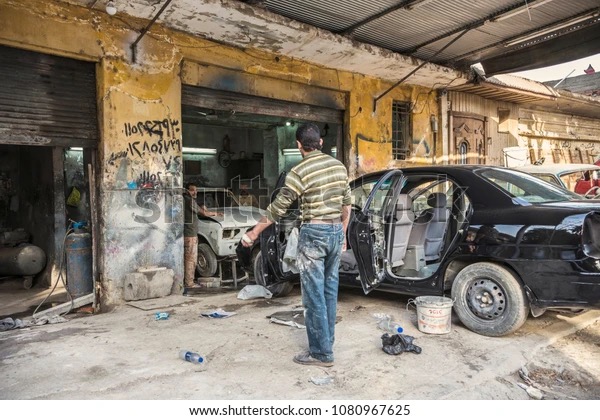
A missing component is replaced with something from an entirely different machine. A broken handle acquires wire. A loose connection is persuaded into cooperation. Tape enters the scene with responsibilities far beyond those envisioned by its inventor.
Then someone steps back, examines the result and asks the most important question:
“It works, doesn’t it?”
This joke mocks the Egyptian genius for improvisation, but the mockery is inseparable from admiration.
Improvisation is what happens when the proper part is unavailable, the official repair is unaffordable or the recommended procedure requires more time and patience than reality permits. What begins as necessity gradually becomes a philosophy.
Naturally, the improvised solution may create additional difficulties. It may work only when held at a particular angle. It may require a slap, a prayer or detailed instructions known exclusively to the person who repaired it.
But for the moment, it works.
The Egyptian laughs at his tendency to replace method with confidence. Yet he also takes pride in the resourcefulness behind it: the refusal to remain helpless simply because the official solution is out of reach.
The joke contains both confession and celebration.
Yes, we improvise.
But look—we are still moving.
The intelligence inside the laughter
It would be easy to describe all this as resilience, although the word has been used so often that it risks becoming sentimental.
Egyptian humour is sharper than that.
It does not merely endure reality. It interprets it. It identifies the contradiction, removes its solemn disguise and presents it to the community in a form everyone can recognise.
The joke says: This is happening to us. We know how absurd it is. We know that we sometimes contribute to it. And we refuse to let it pass without comment.
To laugh at oneself requires a particular kind of confidence. It means exposing one’s weaknesses without surrendering one’s dignity. It means recognising the distance between the person one imagines oneself to be and the person struggling through traffic, arriving late, losing another morning to paperwork or repairing an appliance with a piece of wire.
Egyptians repeatedly place themselves at the centre of the joke because doing so gives them control over the story.
They are simultaneously its authors, its characters and its audience.
Perhaps that is why Egyptian humour feels so intimate. The person telling the joke is not standing outside the suffering and pointing at it. He is sitting beside you in the same traffic jam, carrying the same useless document, checking the same prices and waiting for the same football miracle.
The laughter does not announce that everything is fine.
It says something more credible:
Everything is not fine—but we have seen through it.
The obstacle may still be there tomorrow. The traffic may not move. The price may rise again. The document may require another stamp. The improvised repair may collapse.
But the difficulty will not possess the whole story.
Before that can happen, an Egyptian will turn to the person beside him, raise an eyebrow and find the sentence that makes everyone laugh.