

Contact me via WhatsApp Chat with Catalina on WhatsApp

Tag: women in ancient Egypt

  • How Two Queens Made Peace Possible: The Untold Story Behind the Treaty of Qadesh

    How Two Queens Made Peace Possible: The Untold Story Behind the Treaty of Qadesh

    Where History Credits Kings, but Silence Reveals Queens

    For centuries, history has credited kings with war and peace. Names like Ramses II dominate the narrative of the Treaty of Qadesh, signed around 1259 BCE after years of conflict between Egypt and the Hittite Empire.

    But beneath monumental inscriptions and carefully crafted royal propaganda, a quieter and more durable diplomacy was unfolding — one not carved in stone, but written in correspondence, exchange, and recognition.

    It was led not by kings, but by queens.


    The First Peace Treaty in History

    The Treaty of Qadesh is widely considered the earliest known international peace agreement. It formalised a balance of power between two empires that had reached military exhaustion without decisive victory.

    Key Provisions of the Treaty

    • Mutual non-aggression
    • Clearly defined spheres of influence
    • Military alliance against external threats
    • Extradition of political fugitives

    This was not symbolic language. It was a juridical structure designed to stabilise a contested geopolitical landscape stretching across the Eastern Mediterranean.
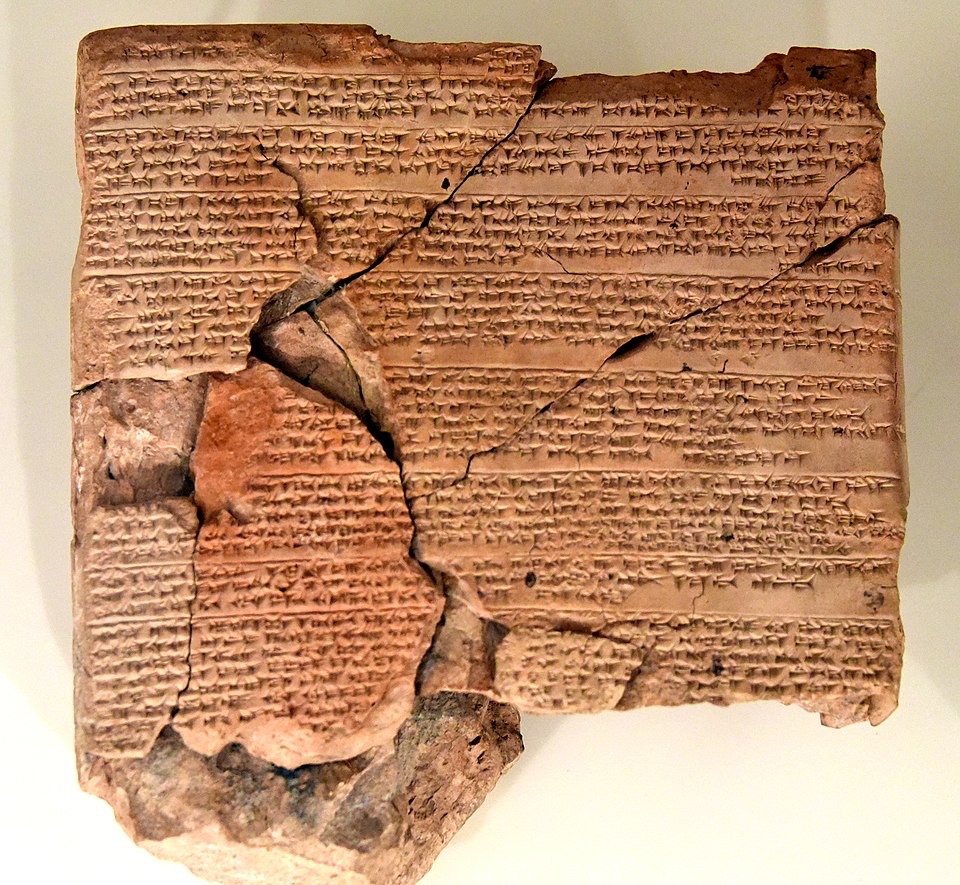
    Cuneiform clay tablet of the Treaty of Qadesh between Egypt and the Hittites, showing ancient diplomatic agreement in Akkadian script
    Clay tablet with cuneiform inscription of the Treaty of Qadesh, one of the earliest known peace agreements between Egypt and the Hittite Empire (c. 1259 BCE)

    A Fragile Peace

    A treaty can end a war. It cannot eliminate its causes.

    Egypt and the Hittite Empire had spent years contesting control over strategic territories in Syria, particularly around Kadesh. Trade routes, military corridors, and regional influence were at stake. Neither side had achieved definitive supremacy.

    The result was not victory, but equilibrium.

    And equilibrium, by its nature, is unstable.

    Distrust persisted. Alliances could shift. Borders, even when defined, remained vulnerable to reinterpretation. The treaty created a framework, but not yet a durable reality.

    This is where the axis of power subtly moved.


    Nefertari and Puduhepa: Diplomacy Beyond Power

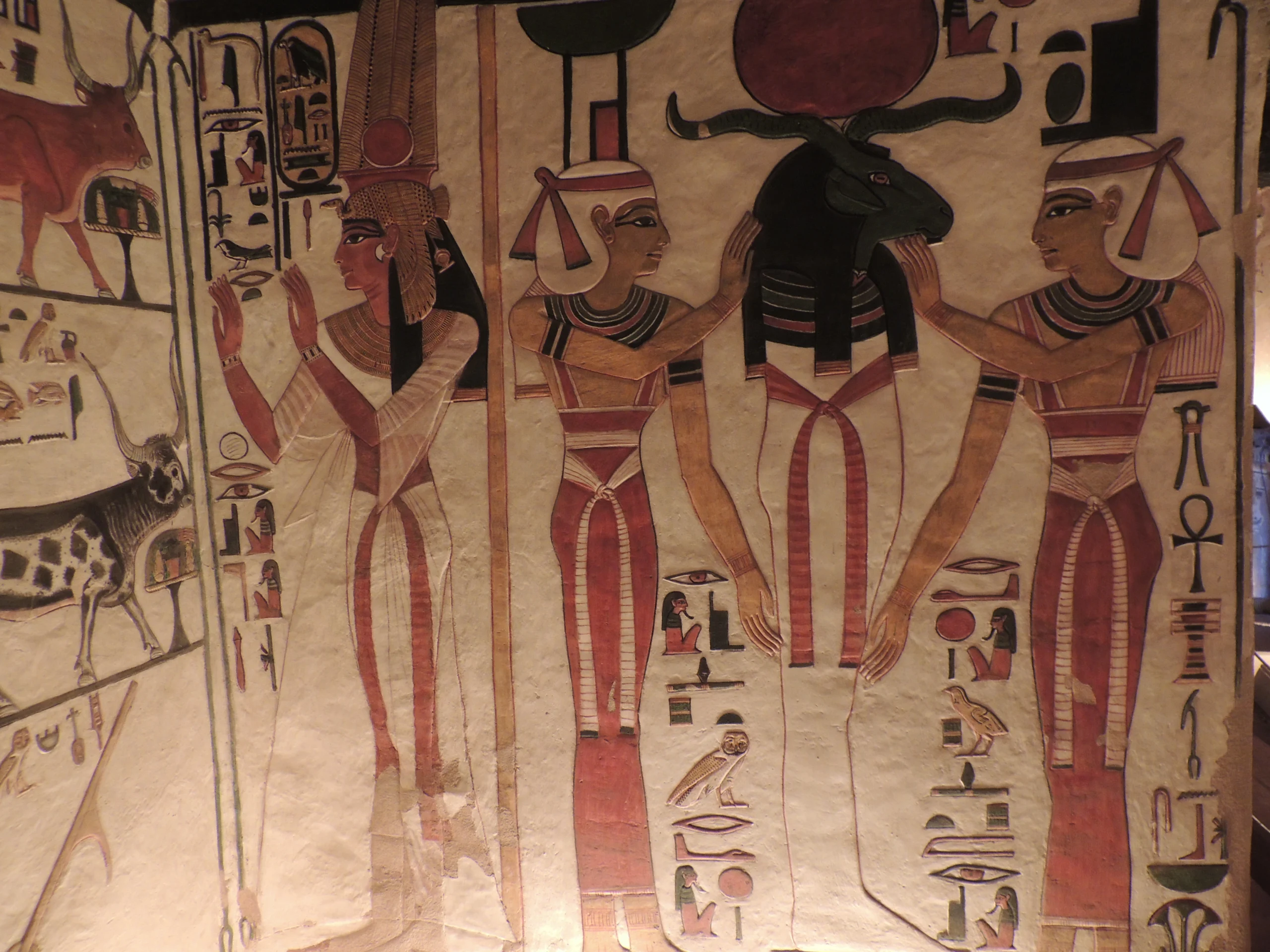
    Queen Nefertari of Egypt and Queen Puduhepa of the Hittites entered into direct diplomatic correspondence — a rare and strategically significant exchange between royal women of equal standing.

    A Different Language of Diplomacy

    Their letters reveal a different register of diplomacy:

    • They addressed one another as “sister,” establishing parity and mutual recognition
    • They exchanged valuable gifts, reinforcing symbolic and material bonds
    • They communicated continuity, not conquest

    This was not rhetoric for public display. It was relational diplomacy, operating beyond the visibility of monumental inscriptions.

    Where kings formalised peace, queens normalised it.


    Why Their Role Matters

    The treaty ended the war.
    The queens altered the conditions under which war could return.

    They did not command armies or redraw borders. Their intervention operated at a different structural level:

    Structural Impact of Their Diplomacy

    • They stabilised perception: transforming former enemies into recognised partners
    • They reduced volatility: embedding personal and dynastic relationships into political interaction
    • They created continuity: ensuring that peace was not a single event, but an ongoing process

    In pre-modern geopolitics, where communication was slow and misinterpretation frequent, trust was not abstract — it had to be actively produced and maintained.

    Through sustained correspondence, Nefertari and Puduhepa introduced a layer of diplomatic infrastructure that the treaty alone could not provide.

    A Principle Proven in Practice

    At this level, a different principle emerges — one rarely stated in ancient sources, yet clearly demonstrated in practice:

    What war can do, peace can do better.

    War can impose control.
    Peace can stabilise it.

    War can open territories.
    Peace can integrate them.

    War can force submission.
    Peace can create recognition.

    The queens operated precisely in that second dimension.

    They made rupture more costly.
    They made hostility less immediate.
    They shifted the logic from confrontation to coexistence.


    The Queens Prevented Its Return

    Peace does not fail in its signing. It fails in its erosion.

    The Real Post-Treaty Risk

    The real risk after Qadesh was not immediate war, but gradual deterioration:

    • Miscommunication between courts
    • Shifts in political leadership
    • External pressures from third powers
    • Internal instability within either empire

    The queens’ diplomacy intervened precisely at this level.

    How They Sustained Peace

    Their exchanges:

    • Maintained direct channels of communication independent of military structures
    • Humanised the opposing court, replacing abstraction with familiarity
    • Reinforced reciprocity, making each side visible and accountable to the other

    This reduced the probability of escalation.

    Not because conflict became impossible, but because it became less rational.

    In strategic terms, they increased the cost of returning to war while decreasing the uncertainty of maintaining peace.

    That is the decisive shift.

    The treaty established obligations.
    The queens sustained conditions.


    A Different Kind of Legacy

    Today, the Treaty of Qadesh is often displayed as a milestone in the history of diplomacy. Its text survives in hieroglyphs in Egypt and in cuneiform tablets in Anatolia, a rare dual record of the same agreement.

    Yet the endurance of that peace suggests something more complex than legal formulation.

    Political agreements define terms.
    Diplomatic relationships determine whether those terms survive.

    In this sense, the correspondence between Nefertari and Puduhepa reveals an early form of international relations that goes beyond power projection — one based on recognition, continuity, and controlled stability.
    It is here, in this less visible layer, that peace becomes durable.

  • Hatshepsut: The Woman Who Became Pharaoh

    Hatshepsut: The Woman Who Became Pharaoh

    A Queen Who Redefined Power in Ancient Egypt

    Among the rulers of Ancient Egypt, few figures are as remarkable as Hatshepsut. She was not only one of the most successful female leaders in history but also a monarch who transformed how kingship itself could be understood. Rising from queen and regent to full pharaoh, Hatshepsut reshaped royal authority, political legitimacy, and gender expectations in one of the world’s greatest civilisations.

    Her reign during the 18th Dynasty (1479–1458 BCE) marked a period of stability, prosperity, and monumental building that continues to inspire visitors today, particularly at her extraordinary mortuary temple at Deir el-Bahri near Luxor.

    From Regent to Pharaoh: Breaking Tradition

    Hatshepsut was the daughter of Pharaoh Thutmose I and later became the wife of her half-brother, Thutmose II. After his death, the throne passed to his young son, Thutmose III. As the child king was too young to rule independently, Hatshepsut initially served as regent — a traditional role for royal women.

    However, within a few years, she took an unprecedented step: she declared herself pharaoh.

    Rather than ruling only in the background, Hatshepsut adopted full royal titles, regalia, and authority. She wore the double crown of Upper and Lower Egypt, carried the crook and flail, and was often depicted with the ceremonial false beard associated with kingship.

    Her imagery sometimes presented her with traditionally male attributes, not to conceal her identity, but to align her with the established visual language of royal power.

    The Meaning of the Title “Pharaoh”

    The word “pharaoh” derives from the Egyptian term per-aa, meaning “great house”, originally referring to the royal palace or institution of kingship rather than the individual ruler. Over time, the term evolved into a direct designation for the king himself.

    During and after Hatshepsut’s period, this linguistic transition became increasingly formalised. Her reign therefore represents an important moment in the development of royal identity, when the concept of kingship expanded beyond traditional male succession.

    More importantly, Hatshepsut demonstrated that royal authority could be legitimised through divine ideology, political competence, and public works — not solely through gender.

    A Reign of Peace and Prosperity

    Unlike many rulers remembered primarily for military conquest, Hatshepsut’s legacy is defined by economic growth and cultural development. She initiated extensive trade expeditions, most famously to the land of Punt, bringing exotic goods, incense trees, and wealth back to Egypt.

    Her building programme was equally impressive. Temples, monuments, and obelisks across Egypt reflected both artistic innovation and political stability.

    The most spectacular achievement remains her mortuary temple at Deir el-Bahri, a masterpiece of architecture integrated harmoniously into the cliffs of western Thebes. Today, it stands as one of Egypt’s most iconic archaeological sites.

    Women and Power Before Hatshepsut

    Hatshepsut was not the first woman to hold authority in Egypt. Earlier figures such as Queen Merneith of the First Dynasty may have ruled as regent or monarch in their own right. However, Hatshepsut elevated female rulership to an entirely new level by assuming full pharaonic identity and sustaining it successfully for decades.

    Her reign proved that leadership in Ancient Egypt could transcend conventional gender boundaries when supported by religious legitimacy and political skill.

    Legacy and Historical Memory

    After Hatshepsut’s death, some of her monuments were altered or her images removed, possibly during the later reign of Thutmose III. Yet her achievements could not be erased. Archaeology and historical research have restored her place as one of Egypt’s most influential rulers.

    Today, she is recognised not only as a pioneering female leader but also as a symbol of innovation, resilience, and political intelligence.

    Experiencing Hatshepsut’s Egypt Today

    Travellers visiting Luxor can explore the landscapes associated with her reign — the temples of Karnak, the Valley of the Kings, and especially Deir el-Bahri. Standing before her temple offers a direct connection to a ruler who reshaped Egyptian history more than three thousand years ago.

    At Egypt Discovering, journeys through Upper Egypt allow visitors to experience these sites within the broader cultural and historical context that defined Hatshepsut’s era.

    A Queen Who Changed the Rules

    Hatshepsut’s story is ultimately about transformation — of identity, power, and possibility. She did not simply inherit authority; she redefined it.

    In doing so, she ensured that her legacy would endure alongside the greatest pharaohs of Egypt.