News travels fast. Often faster than understanding.
In recent weeks, much of the global narrative has been dominated by the conflict involving the United States, Israel, and Iran. For many travellers, such headlines raise a simple question: is it safe to travel to Egypt?
The answer, however, is not found in headlines.
It requires a more careful distinction between regional geopolitics and local reality.
What the News Does Not Show
Modern conflicts are complex, and increasingly shaped by technology, data, and rapid decision-making. They unfold across multiple layers—political, economic, strategic—many of which have little direct impact on daily life in places like Upper Egypt.
Egypt is a vast country.
What happens in one part of the region does not automatically define another. The Nile, particularly in the south between Luxor and Aswan, follows a rhythm that has remained remarkably constant over time—far removed from the urgency of global narratives.
The Distance Between Perception and Reality
One of the consequences of today’s information environment is that distance collapses.
Events that are geographically and politically complex are often perceived as immediate and universal. The result is a form of compression: different places, different realities, and different risks are grouped together into a single impression.
For travellers, this can lead to hesitation—not always grounded in the actual conditions on the ground.
Travelling Egypt Today
Egypt continues to welcome travellers every day.
In Upper Egypt, life along the Nile moves with a pace that resists urgency. Villages, landscapes, and ancient sites exist within a continuity that is not easily disrupted by external events.
This does not mean that global developments are irrelevant. It means that they must be understood with precision, not assumption.
Travelling here is not about ignoring reality. It is about seeing it clearly.
Why Experience Matters More Than Distance
Understanding a place from afar is always limited.
Egypt, perhaps more than most countries, requires proximity. It reveals itself slowly—through movement, conversation, and time spent along the river.
To travel the Nile is not simply to visit monuments. It is to experience a structure of life that has existed for thousands of years, largely independent of the fluctuations of modern headlines.
Closing Without Alarm
Concern is natural. It is also necessary.
But it should be guided by informed perspective rather than by the speed of information alone.
Egypt remains, as it has always been, a place that rewards those who take the time to see beyond first impressions.
A Different Way to Travel
If this way of travelling resonates with you, you may explore our upcoming journeys here.
For a deeper geopolitical analysis of the current situation,
Where travel slows down and the Nile sets the rhythm
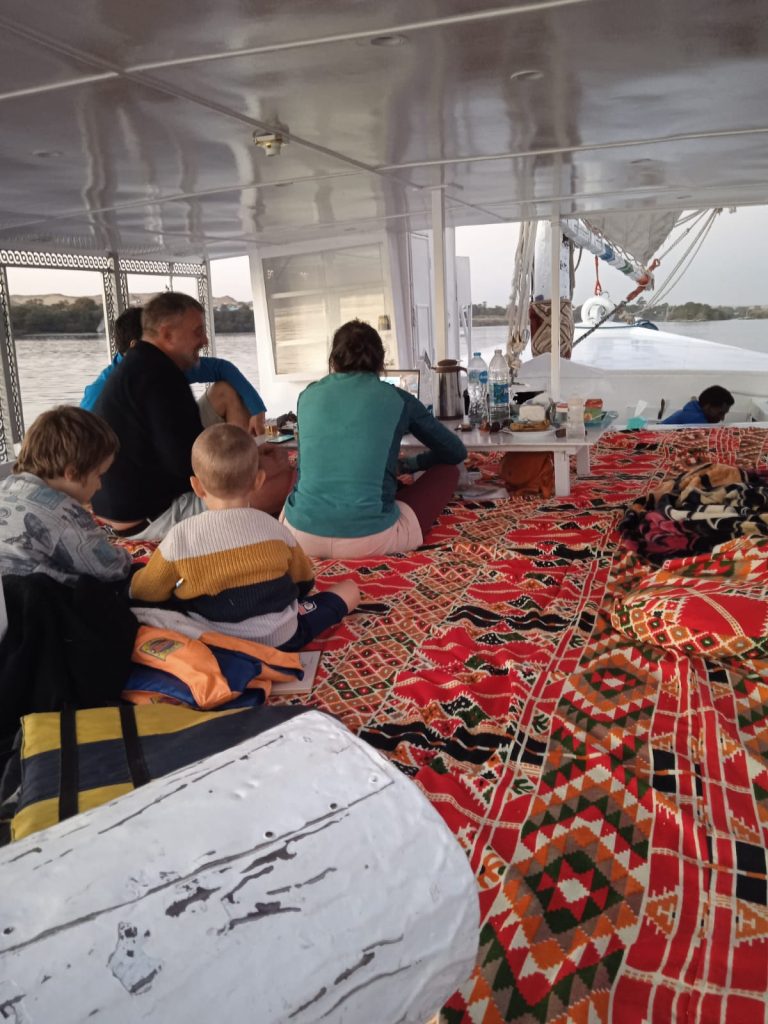
Guests from France relaxing on the carpeted deck of the felucca Maitea while sailing on the Nile near Aswan
There is another way to experience Egypt — not through rushing, noise or crowded itineraries, but through the rhythm of the Nile itself. On a felucca, time changes. Families sit together, children watch the river, and the journey becomes part of what Egypt really is.
There is the Egypt of headlines, and there is the Egypt of the Nile.
They are not the same reality.
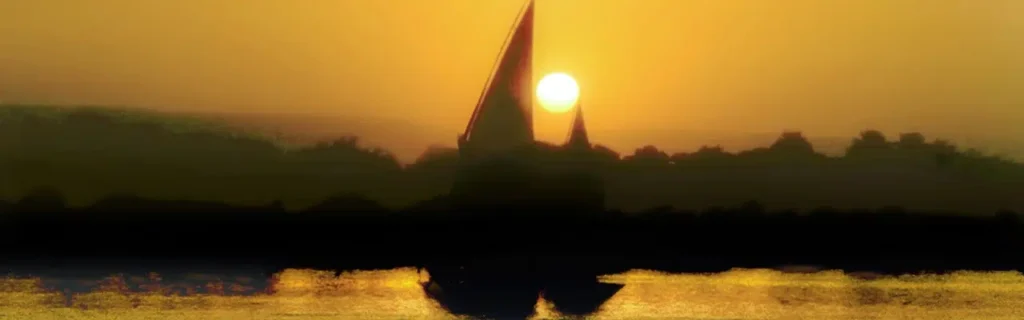
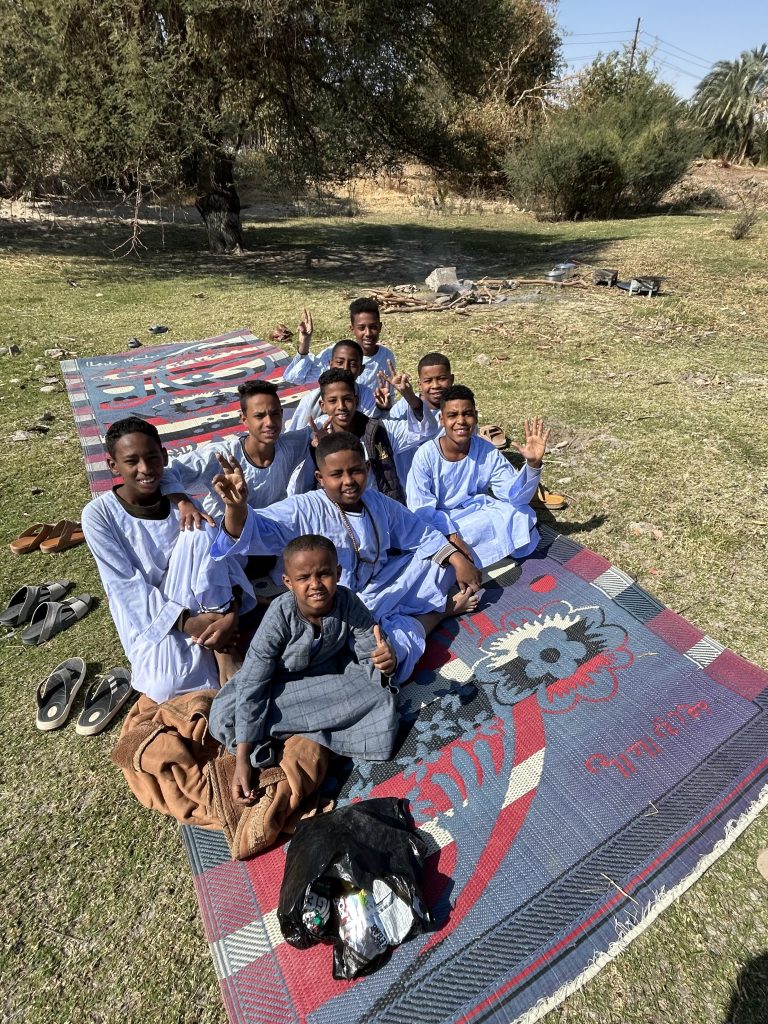
Along the river, far from noise and distance, life continues with a rhythm that has not changed for centuries. Boats move with the wind. Children run along the banks. Fishermen pass silently at dawn. The light falls slowly over the water, as it always has.
To travel here is not to ignore reality. It is to see it without distortion.
Upper Egypt, between Aswan and Luxor, exists in a dimension that is often invisible to those who have not experienced it. It is not defined by external narratives, but by continuity — of landscape, of culture, of daily life.
Sailing the Nile by Felucca: A Natural Way to Travel
Egypt is often reduced to images, to narratives, to distance.
But along the Nile, none of that remains.
For the youngest travellers, this becomes more than a trip — a space to discover, imagine, and grow, where learning happens effortlessly and creativity awakens with the rhythm of the Nile.
There is only the river, the light, the movement, and the quiet certainty that some things do not need to change.
And perhaps that is why, once experienced this way, it becomes difficult to travel differently again.
Discover ancient temples, desert landscapes, and living traditions while sailing along the legendary Nile River
Sailing the Nile where desert, river, and life meet.
The Nile River has been the lifeblood of Egypt for more than five thousand years. Along its fertile banks rose temples, cities, and monuments that still inspire wonder today. From the pyramids of Giza to the temples of Luxor and the quiet villages of Upper Egypt, the Nile tells the story of one of the world’s most extraordinary civilizations.
A journey along the Nile is not simply a trip through a landscape. It is a passage through history, where every bend of the river reveals traces of pharaohs, explorers, and ancient myths that shaped the civilization of ancient Egypt.
At EgyptDiscovering, our journeys invite travelers to experience Egypt slowly and authentically, sailing the river as generations have done for millennia.
Sailing the Nile: Egypt’s Ancient Highway
For thousands of years, the Nile served as the main artery of Egyptian life. Goods, people, and ideas moved along its waters, connecting cities from the Mediterranean to Nubia.
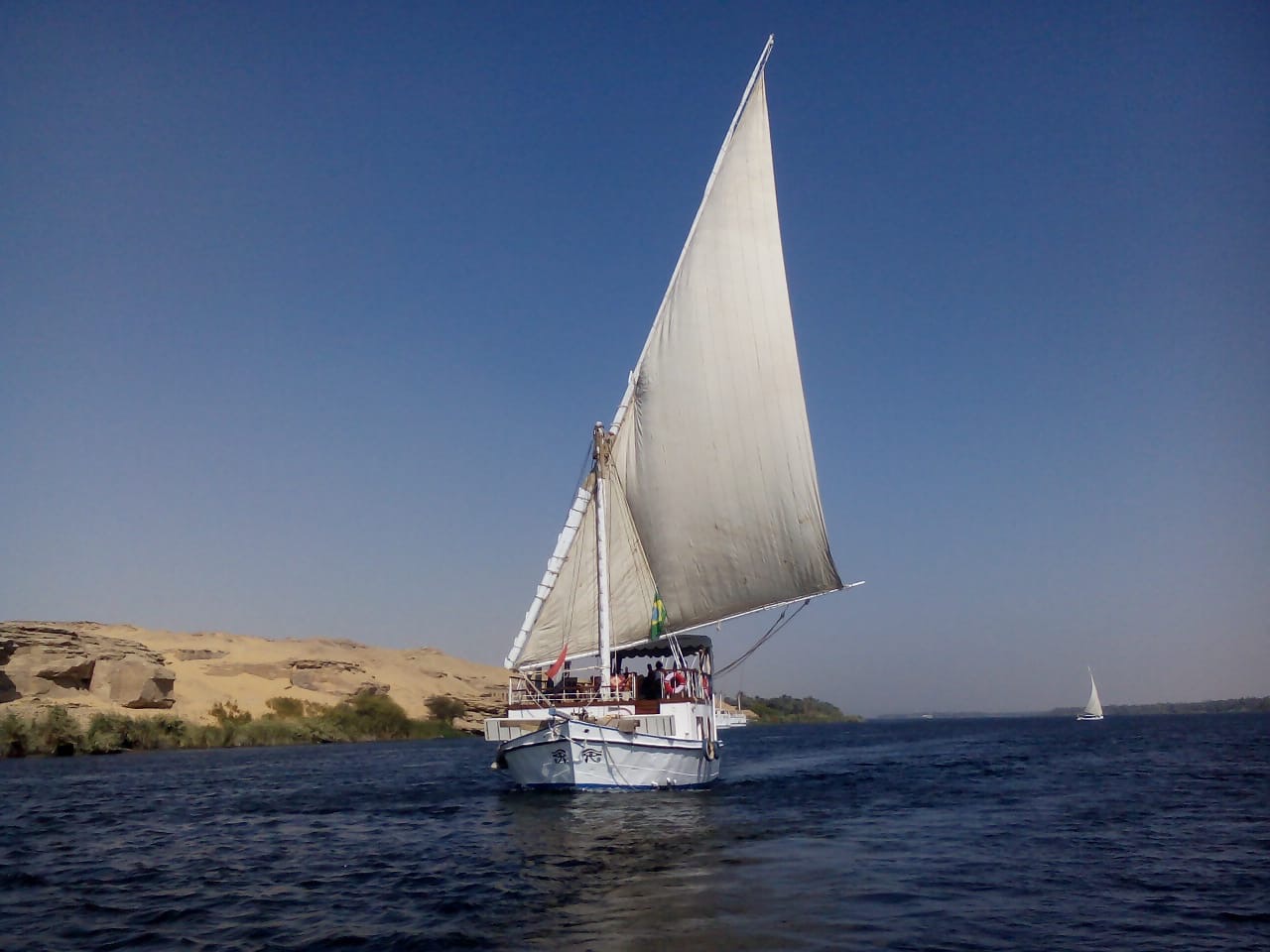
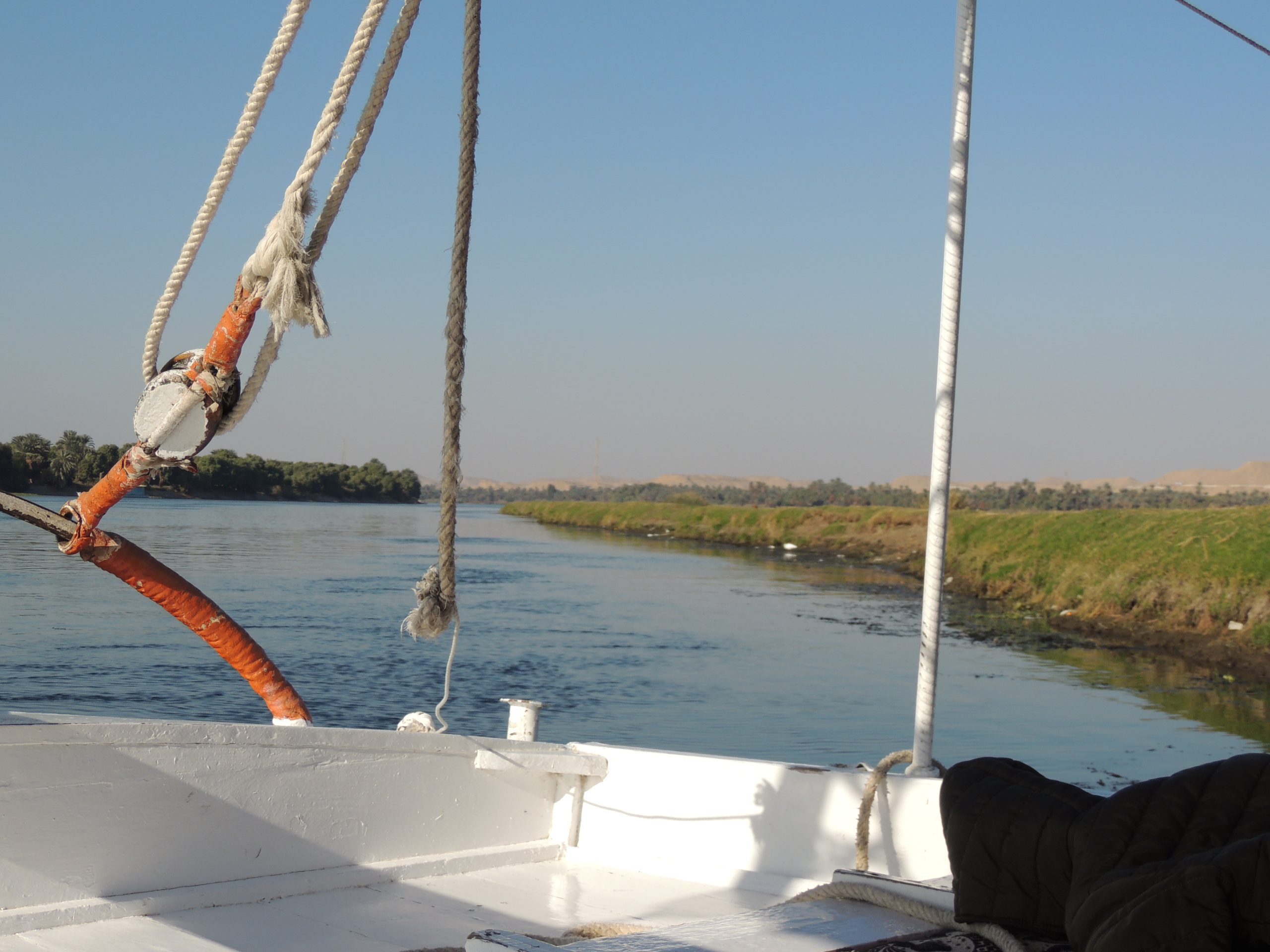
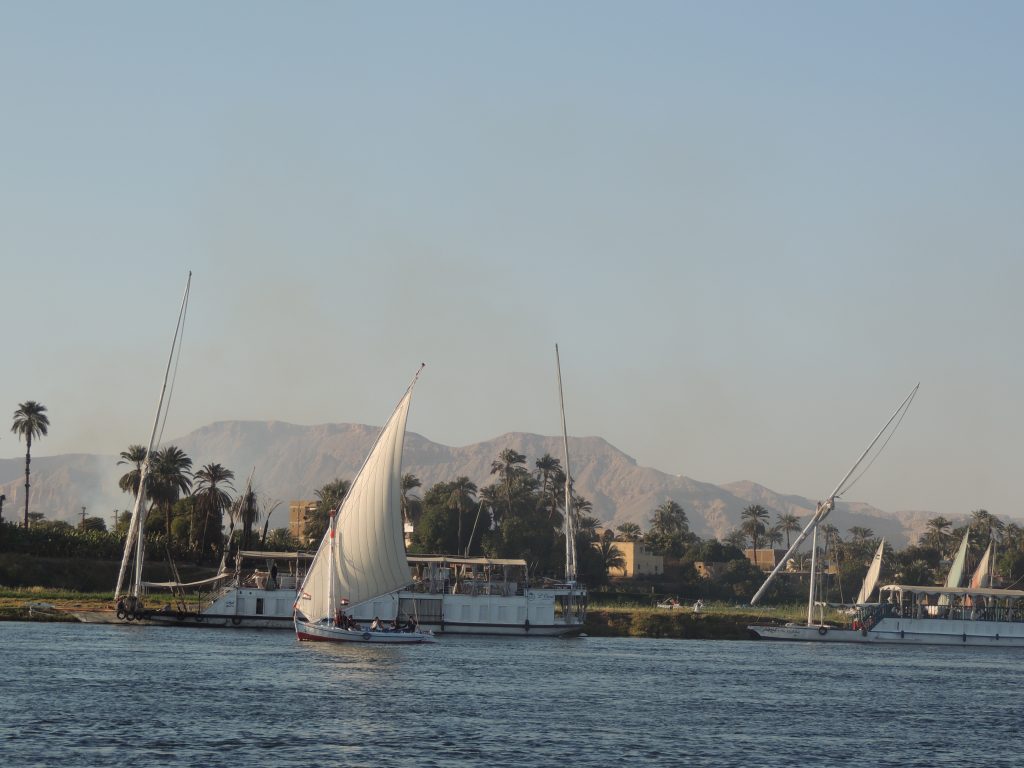
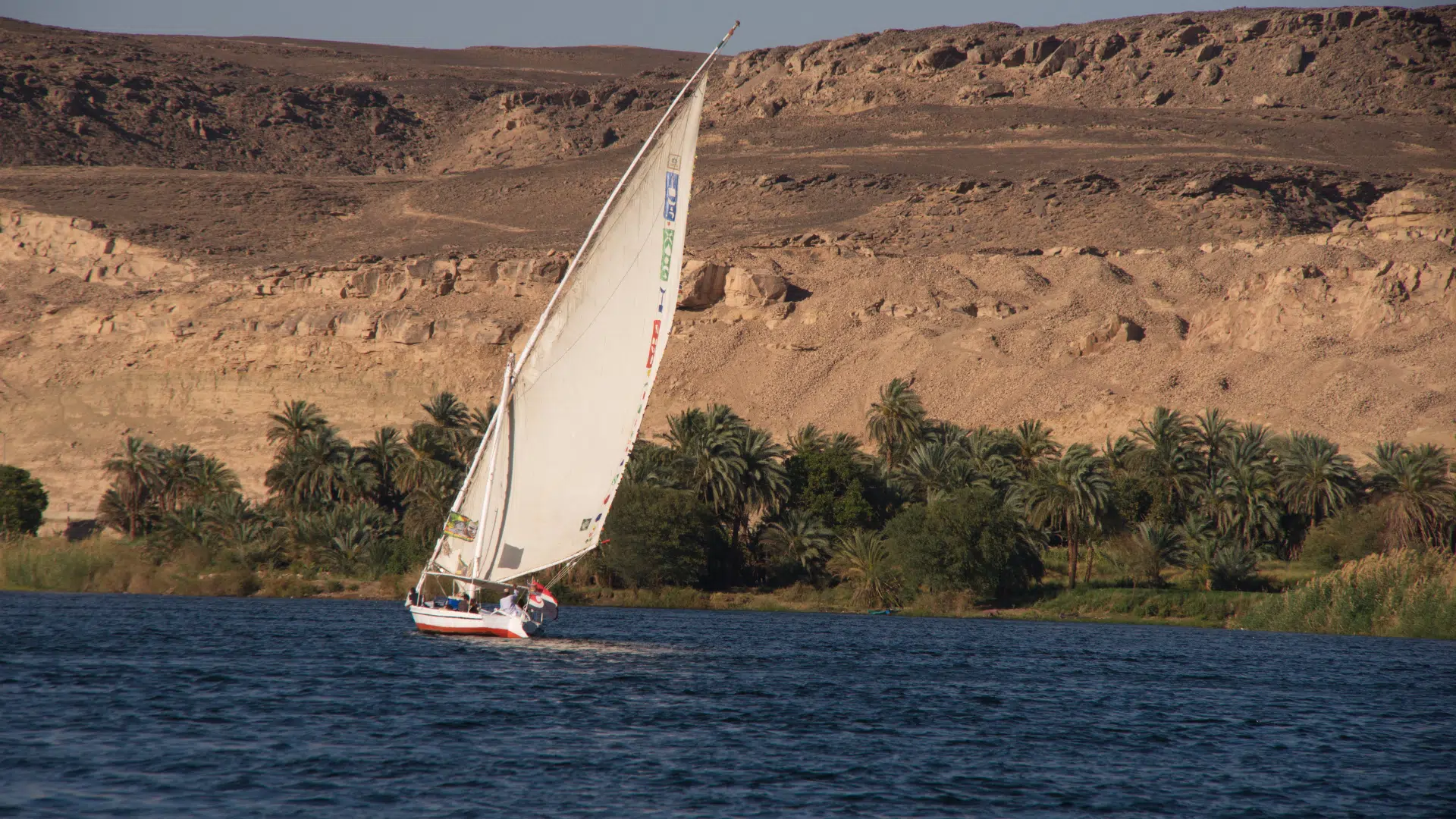
Today, sailing the Nile remains one of the most extraordinary ways to explore Egypt. Traditional felucca boats glide quietly across the water, offering a peaceful and intimate way to experience the landscape that shaped Egyptian civilization.
As the sail catches the desert wind and the river flows gently beneath the boat, travelers experience Egypt in a rhythm that has changed little since the age of the pharaohs.
Ancient Monuments Along the Nile
The Nile Valley is home to some of the most famous archaeological sites in the world. Many of Egypt’s greatest monuments were built along the river, linking religion, power, and geography.
The Pyramids of Giza
The Pyramids of Giza, built more than 4,500 years ago, remain one of the most remarkable architectural achievements in human history. These monumental tombs symbolize the power of the pharaohs and their belief in eternity.
Karnak and Luxor Temples
Further south, the vast temple complexes of Karnak and Luxor reveal the grandeur of Egypt’s New Kingdom. Massive columns, towering obelisks, and sacred processional avenues reflect centuries of devotion to the gods of ancient Egypt.
Abu Simbel
Near the southern border of Egypt stands Abu Simbel, the spectacular temple built by Ramses II. Its colossal statues carved into the rock face guard the entrance to one of the most impressive monuments of ancient Egyptian architecture.
Life Along the Nile Today
The Nile is not only a river of ancient history. It is also the heart of modern Egyptian life.
Villages along the riverbanks maintain traditions that stretch back thousands of years. Farmers cultivate the fertile floodplains, fishermen cast their nets at sunrise, and markets bustle with the colors and aromas of daily life.
Traveling along the Nile allows visitors to witness this living culture while discovering how ancient traditions continue to shape Egypt today.
Nights Under the Egyptian Stars
Far from the lights of large cities, the Nile Valley offers extraordinary views of the night sky.
As a felucca drifts quietly along the river, the desert sky fills with stars. These same constellations once guided ancient Egyptian astronomers and priests as they studied the heavens and connected the movement of the stars with the cycles of the Nile.
Few travel experiences compare with watching the stars reflected in the waters of the Nile while the desert grows silent around you.
Experience the Nile with EgyptDiscovering
At EgyptDiscovering, our journeys are designed to connect travelers deeply with Egypt’s landscapes, history, and culture.
Our Nile experiences combine:
traditional felucca sailing
visits to iconic temples and archaeological sites
encounters with local communities
peaceful nights under the desert sky
We believe travel should be immersive, respectful, and meaningful—an opportunity not only to see Egypt but to truly understand it.
Begin Your Nile Journey
The Nile has carried travelers, traders, and explorers for thousands of years. Today it invites you to discover Egypt in the most timeless way possible.
Join EgyptDiscovering and experience the magic of sailing through the heart of one of the world’s greatest civilizations.
To learn more about our journeys or reserve your Nile experience:
book@egyptdiscovering.com
Let the Nile guide you through Egypt’s past, present, and enduring stories.
As winter fades and early spring arrives, the Nile enters one of its most beautiful travel seasons. Between March and April, temperatures are warm yet comfortable, days are filled with golden sunlight, and evenings remain pleasantly cool — ideal conditions for sailing, sightseeing, and relaxation along Egypt’s most legendary river.
Travelling the Nile in early spring offers a perfect balance: excellent weather, vibrant landscapes, and an atmosphere that feels both lively and peaceful. Whether you seek adventure, authenticity, or refined comfort, this season is an exceptional time to explore Upper Egypt.
A Felucca Journey: Authentic Adventure on the Nile
For travellers drawn to simplicity, nature, and meaningful experiences, sailing on a traditional Egyptian felucca offers something truly unique. These elegant wooden sailing boats move with the wind, creating a calm rhythm far removed from modern noise and stress.
Without engines or rigid schedules, felucca journeys allow guests to connect deeply with the Nile’s timeless atmosphere. Days unfold slowly as the boat glides past palm-lined shores, desert landscapes, ancient temples, and small riverside villages where life continues much as it has for generations.
Sleeping beneath clear spring skies along quiet riverbanks often becomes one of the most memorable parts of the journey.
A felucca voyage is not simply travel — it is immersion.
Dahabiya Cruises: Luxury and Elegance on the River
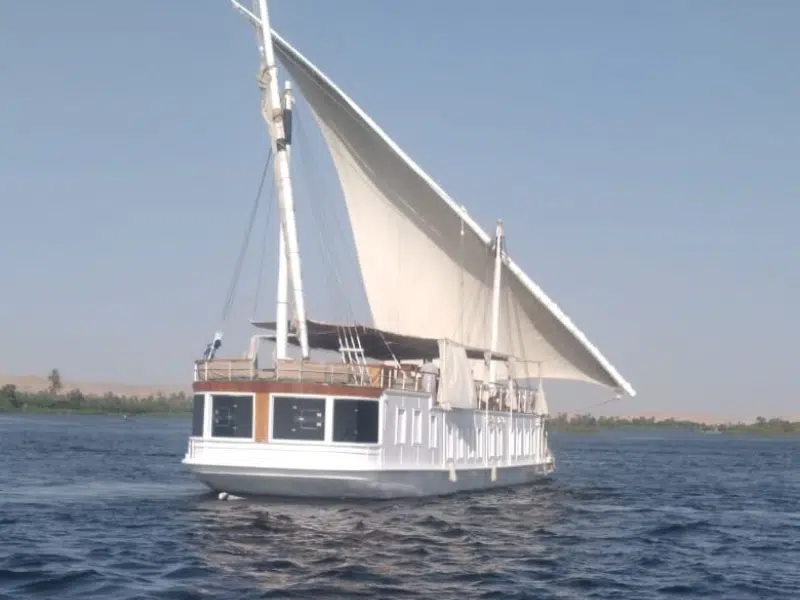
For travellers seeking comfort and sophistication, a dahabiya cruise provides a refined way to experience the Nile. Historically favoured by Egyptian nobility and nineteenth-century explorers, modern dahabiyas combine traditional sailing charm with contemporary comfort.
Spacious cabins, attentive service, and elegant decks create a relaxed atmosphere of luxury. Guests enjoy private temple visits, fine cuisine, and breathtaking sunsets over landscapes that have inspired travellers for centuries.
A dahabiya journey offers both cultural depth and comfort — the hallmark of premium Nile travel.
Why Early Spring Is an Ideal Time to Visit the Nile
Travelling during early spring offers several advantages:
Comfortable temperatures for sightseeing and sailing
Pleasant evenings for outdoor dining and relaxation
Ideal light conditions for photography
Vibrant river landscapes and greenery
Excellent travel conditions before peak summer heat
This season allows visitors to experience Egypt with comfort while still enjoying warm sunshine and clear skies.
A Different Kind of Spring Escape
While many European destinations are still emerging from winter, the Nile offers warmth, light, and history in abundance. Instead of crowded resorts, travellers encounter ancient temples, desert horizons, and peaceful riverbanks shaped by thousands of years of civilisation.
The experience feels both restorative and inspiring.
Discover the Nile with Egypt Discovering
At Egypt Discovering, journeys along the Nile are designed to reveal the authentic spirit of Egypt — whether through adventurous felucca sailing or elegant dahabiya cruises. Each itinerary combines historical discovery, local encounters, and moments of quiet connection with nature.
Early spring departures offer particularly rewarding conditions for exploring Upper Egypt in comfort.
Imagine travelling along the Nile not on a crowded cruise ship, but on a traditional Egyptian felucca — powered only by wind, guided by experienced local sailors, and surrounded by landscapes unchanged for thousands of years. A 6-day, 5-night journey from Aswan to Esna offers one of the most authentic travel experiences in Egypt, combining history, nature, culture, and simplicity.
This is not luxury tourism. It is something far more meaningful: connection.
Day 1: Discover Abu Simbel — Monumental Egypt
Your journey begins with a visit to the extraordinary temples of Abu Simbel, one of Egypt’s most impressive archaeological sites and a UNESCO World Heritage location. Carved directly into the rock cliffs during the reign of Pharaoh Ramses II, the colossal statues create an unforgettable introduction to Ancient Egyptian civilisation.
This powerful encounter with Egypt’s monumental past sets the tone for the days ahead.
Day 2: Sailing from Aswan Towards Kom Ombo
As your felucca departs from Aswan, the rhythm of the Nile immediately takes over. The landscape shifts between golden desert dunes and lush green riverbanks, offering peaceful scenery rarely experienced by conventional travellers.
Stops along quiet river beaches allow time for swimming, relaxation, and immersion in nature. By evening, you reach Kom Ombo, home to the remarkable twin temple dedicated to Sobek, the crocodile god, and Horus, the falcon god. Visiting the temple at sunset creates a magical atmosphere.
Days 3–4: Life Along the Nile and Village Encounters
One of the highlights of felucca travel is the opportunity to connect with local communities along the Nile. Small villages, palm groves, and agricultural fields reveal daily life that has changed little over generations.
Guests may step ashore, meet local families, and experience the warmth and hospitality that define Upper Egypt. Meals are freshly prepared on board using local ingredients, offering traditional Egyptian flavours in an authentic setting.
This is cultural travel at its most genuine.
Day 5: Sleeping Beneath the Stars
Each night, the felucca anchors on peaceful riverbanks far from urban light pollution. Guests sleep under open skies filled with stars, accompanied by the gentle sounds of the Nile.
This simple experience often becomes the most memorable part of the journey. Without distractions, travellers reconnect with nature, silence, and the rhythm of the river.
It is Egypt at its most timeless.
Day 6: Arrival in Esna and the Temple of Khnum
The journey concludes in Esna, a historic town known for the Temple of Khnum, dedicated to the ram-headed creator god. The temple’s detailed carvings and unique architecture offer a final glimpse into Egypt’s layered history before departure.
Leaving the felucca, travellers carry with them memories of landscapes, friendships, and moments that cannot be replicated elsewhere.
An Authentic Nile Experience with Egypt Discovering
At Egypt Discovering, felucca journeys are designed for travellers seeking authenticity rather than mass tourism. Sailing with experienced local crews allows guests to experience the Nile in its purest form — peaceful, cultural, and deeply human.
This itinerary is flexible and may vary depending on weather conditions, wind, and guest preferences for visiting temples along the route. It is suitable for couples, families, and small groups looking for a meaningful adventure in Egypt.
In the heart of Luxor, on the eastern bank of the Nile, stands one of the most extraordinary monuments ever created by humanity — Karnak Temple. More than a historical site, Karnak is a vast sacred city built over nearly two thousand years, dedicated primarily to the god Amun-Ra, the supreme deity of ancient Thebes.
For travellers exploring Egypt, visiting Karnak is not simply sightseeing. It is an immersion into the spiritual, architectural, and political power of Ancient Egyptian civilisation. Every column, statue, and carved wall reflects a culture that sought permanence, cosmic harmony, and connection with the divine.
Karnak is not just a monument of the past. It is an experience that transforms the way visitors understand Egypt.
Entering Karnak: Walking Through the Gateway of the Gods
Approaching Karnak Temple is unforgettable. The grand avenue of ram-headed sphinxes leads visitors towards monumental pylons that once marked the entrance to sacred space. Crossing this threshold feels like stepping into another world — one where gods and pharaohs shaped reality together.
The scale of Karnak is astonishing. Covering more than 100 hectares, it remains the largest religious complex ever built in the ancient world. Generations of pharaohs expanded the temple, each leaving architectural signatures that still stand today.
This continuity makes Karnak unique: it is not the creation of one ruler but the achievement of an entire civilisation across centuries.
The Hypostyle Hall: Architecture Beyond Imagination
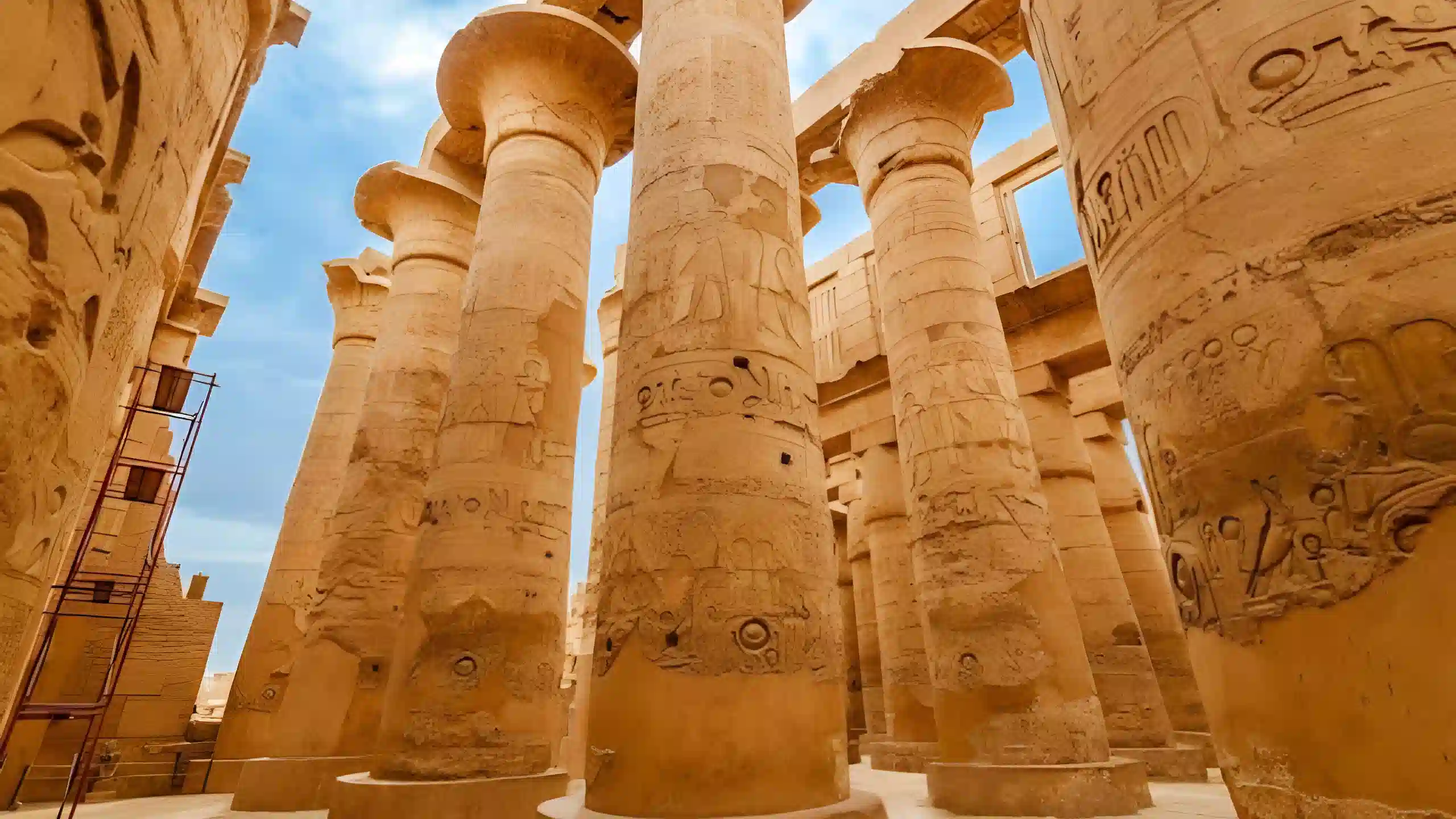
The most famous section of Karnak is the Great Hypostyle Hall, a breathtaking forest of 134 colossal stone columns, some reaching over 20 metres high. Walking between them creates a powerful sense of human scale against monumental ambition.
Hieroglyphic inscriptions cover the columns, recording religious rituals, royal victories, and offerings to the gods. Sunlight filtering through the stone structures creates shifting shadows that change throughout the day, enhancing the sense of timelessness.
For many visitors, this is one of the most awe-inspiring spaces in all of Egypt.
Sacred Spaces and Spiritual Meaning
Karnak was not only an architectural masterpiece; it was a living religious centre. Priests performed daily rituals, festivals honoured the gods, and ceremonies connected the divine world with human society.
One of the most peaceful areas within the complex is the Sacred Lake, used for ritual purification. Its still waters reflect surrounding monuments, creating a moment of calm within the vast temple environment.
Ancient Egyptians believed temples were places where cosmic order — Ma’at — was maintained. Standing inside Karnak today, travellers often sense this profound spiritual dimension that transcends time.
Karnak and the Nile: The Heart of Egyptian Power
The temple’s location near the Nile was not accidental. The river served as the main transport route, allowing statues, obelisks, and building materials to reach the site. Religious processions also travelled between Karnak and Luxor Temple along ceremonial avenues.
This connection between temple and river reveals how geography shaped Egyptian civilisation. The Nile was not only a source of life but also a pathway of belief, politics, and cultural unity.
Travellers exploring Luxor as part of a Nile journey experience this same historical landscape that once connected temples, cities, and kingdoms.
Visiting Karnak Today: A Highlight of Any Egypt Journey
Today, Karnak remains one of the most important destinations for anyone travelling to Egypt. Whether visiting Luxor independently or as part of a Nile cruise from Aswan to Luxor, the temple offers a direct encounter with one of the world’s greatest civilisations.
Exploring Karnak with knowledgeable local guides deepens the experience, revealing stories hidden within hieroglyphs, symbolism, and architecture.
At Egypt Discovering, journeys through Upper Egypt are designed to connect travellers not only with monuments but with the living culture surrounding them — from the Nile landscapes to local communities and traditions.
A Timeless Monument of Human Ambition
Karnak stands as a reminder that human creativity can reach beyond centuries. Built stone by stone across generations, it embodies the ancient Egyptian pursuit of eternity — the desire to create something lasting, meaningful, and aligned with the cosmos.
For modern visitors, Karnak is more than a historical site. It is a place where past and present meet, where imagination expands, and where the scale of human achievement becomes tangible.
Standing among its towering columns, one understands why Egypt continues to inspire travellers from around the world.