There is a decisive moment when planning a journey through Egypt. Not Luxor or Aswan. Not temples or tombs.
But how you will travel the Nile.
Because here, the method is not secondary. It defines everything.
Felucca vs Dahabiya vs Nile Cruise: Understanding Your Options
The Nile Cruise Experience in Egypt
A Nile cruise is often presented as the “classic” way to travel the Nile in Egypt. Large vessels, air conditioning, structured itineraries, buffet dinners, and a carefully managed flow from one monument to the next.
Apparently efficient. Predictable. Comfortable in a familiar way.
And that familiarity is precisely where the contradiction begins.
Because if you have travelled across continents to reach Egypt, only to enter a floating environment defined by regulated time, background music, organised excursions, and shared spaces that can feel crowded like an underground station at rush hour, then something essential has already been filtered out.
The experience becomes controlled, curated, and — in a subtle but decisive way — detached.
You move along the Nile.
But the Nile does not quite reach you.
Sailing the Nile: Felucca and Dahabiya Experience
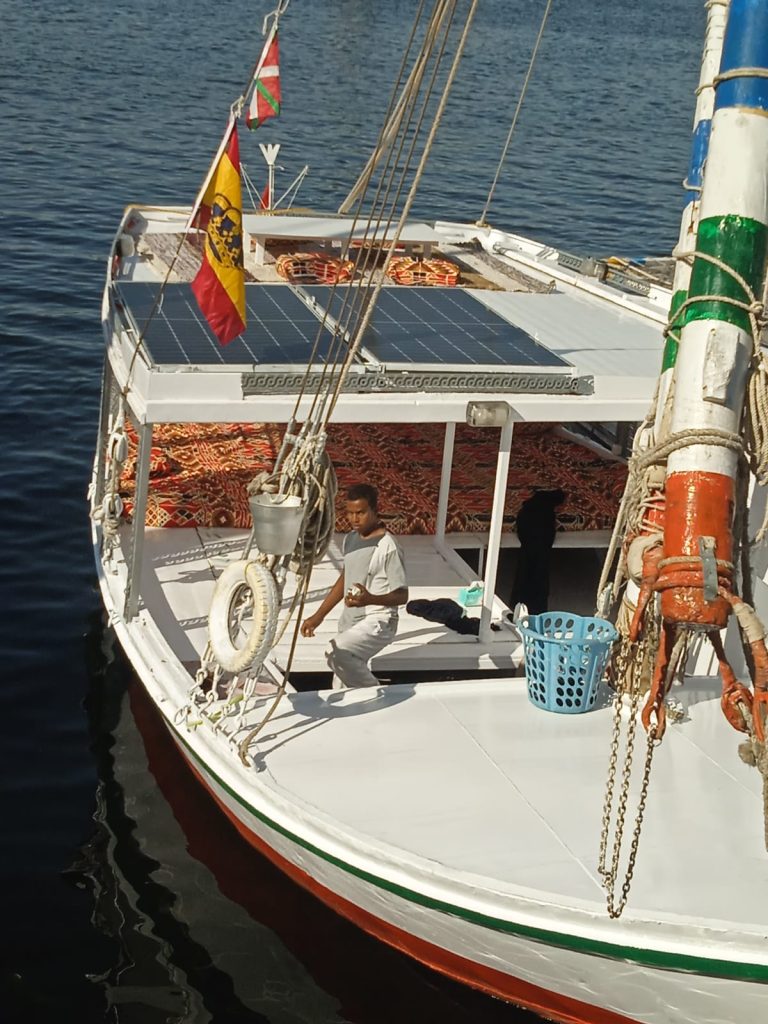
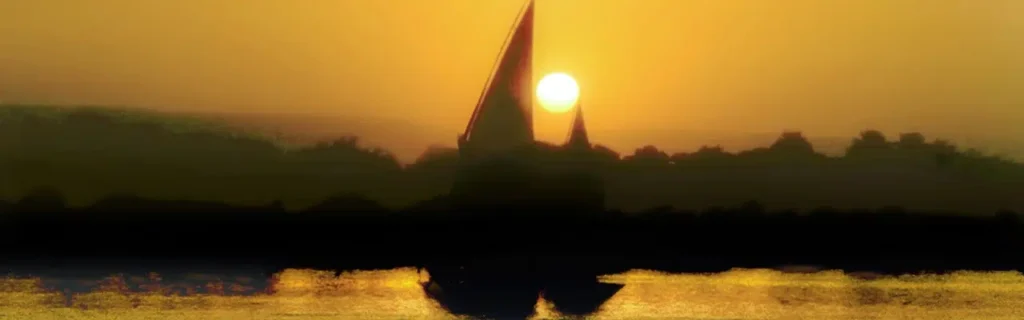
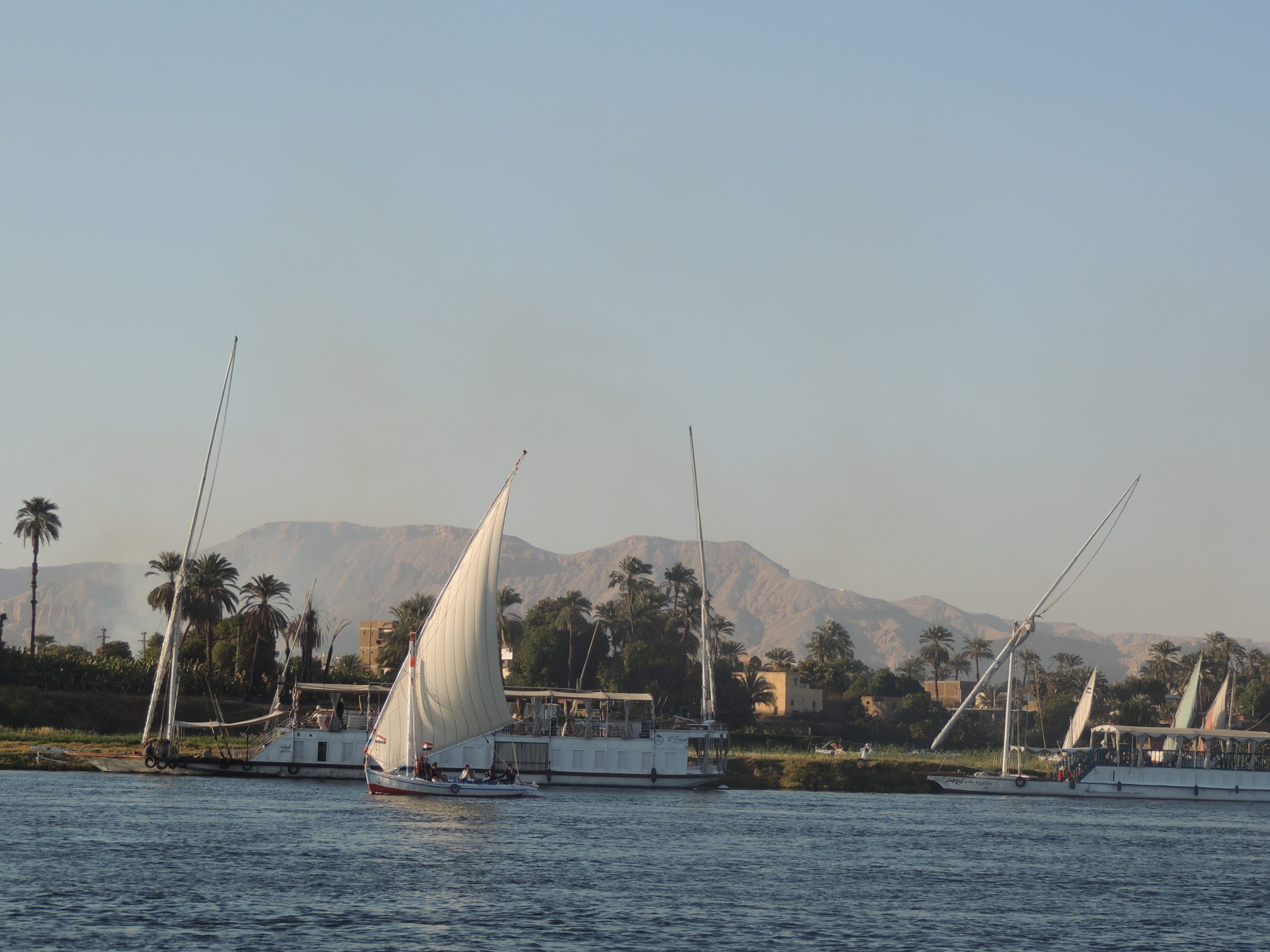
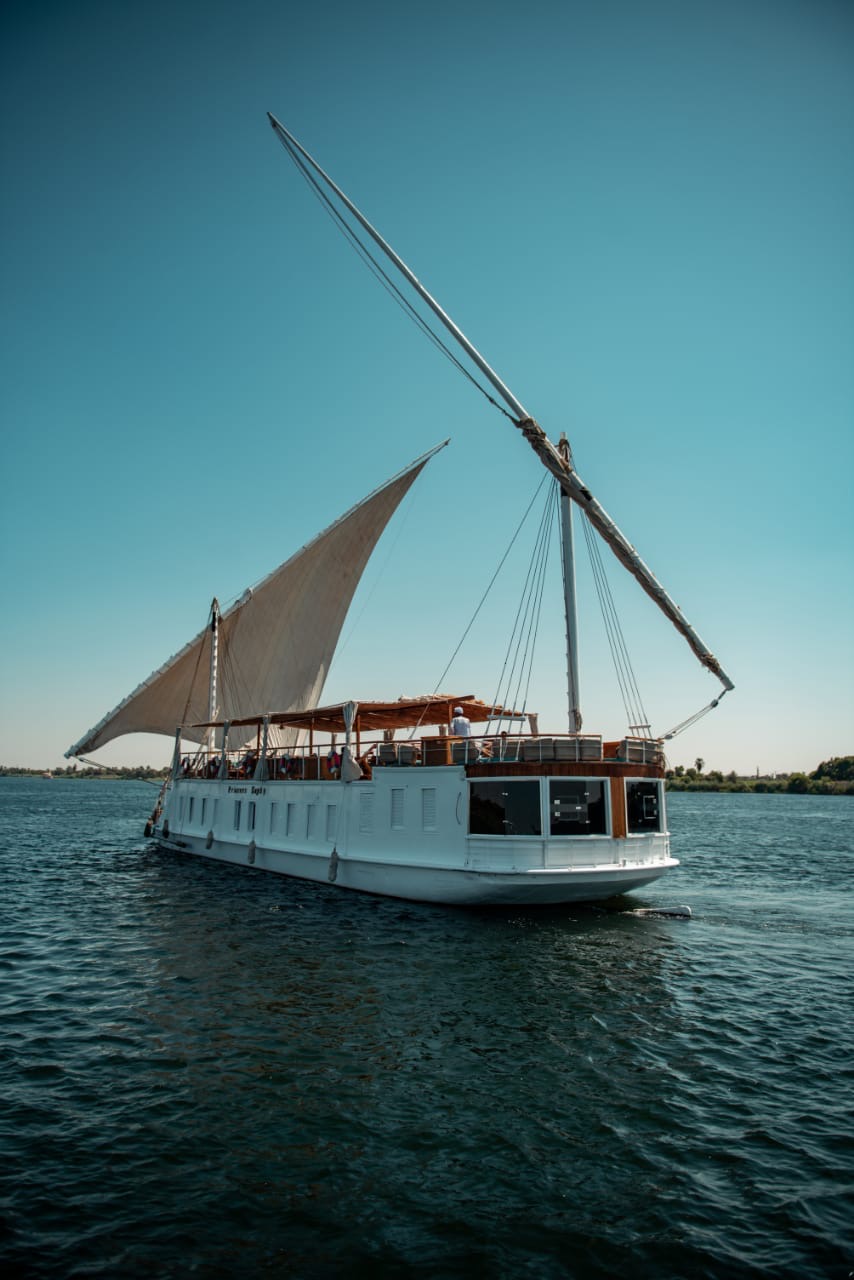
A felucca or a dahabiya represents a completely different way to travel the Nile.
No industrial scale. No imposed rhythm. No attempt to dominate the river.
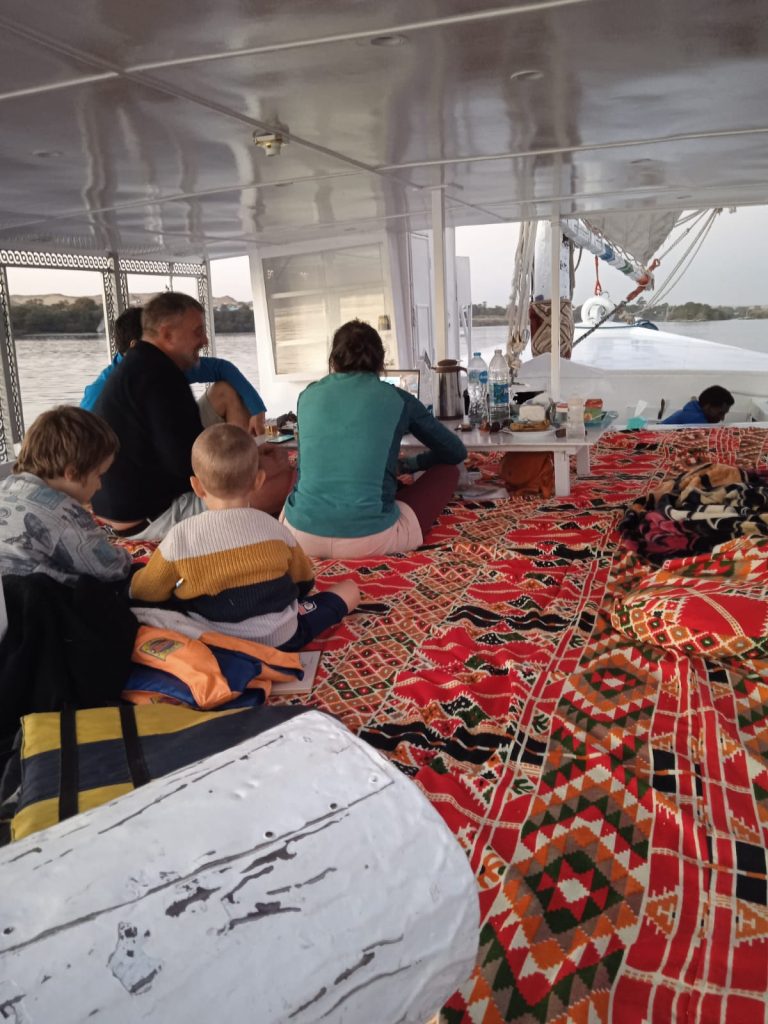
The felucca, minimal and essential, strips the journey down to its pure form. The dahabiya, more spacious yet still intimate, offers comfort without breaking that relationship with the river.
In both cases, movement is not forced — it is negotiated.
You do not pass through the Nile.
You belong to it, even if only for a few days.
Is a Felucca or Dahabiya Eco-Friendly ?
The Environmental Impact of Nile Cruises
This is where the conversation stops being aesthetic and becomes structural.
A large Nile cruise ship is not simply a means of transport. It is a floating infrastructure. It requires continuous fuel consumption to maintain schedules, permanent air conditioning systems, and generators sustaining an artificial environment disconnected from the river itself.
Everything produced on board — emissions, waste, noise — remains within the same ecosystem that travellers come to admire.
The Nile is not an abstract landscape. It is a living system under pressure.
And when multiple large cruise ships move simultaneously, docking in clusters and operating without interruption, the river absorbs a density it was never designed to sustain.
Why Feluccas and Dahabiyas Are the Most Ecological Way to Travel the Nile
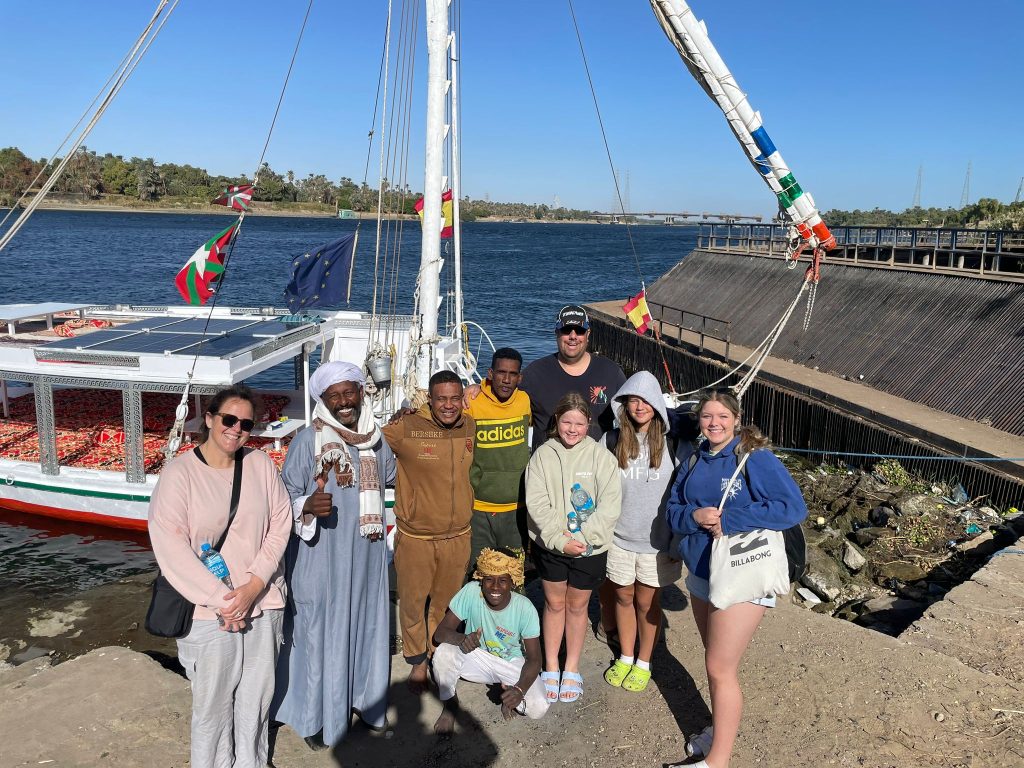
A felucca — and, in a slightly more structured but still respectful way, a dahabiya — belongs to a completely different logic.
There is no engine dictating movement. No fuel required when the sail is raised. No constant mechanical vibration reshaping the experience.
Life on board adapts to the river instead of forcing the river to adapt.
Stops happen where the current allows. Nights unfold in silence. Light is natural. Time is real.
This is not a marketing label of “eco-friendly travel.”
It is the difference between imposing a system onto nature and moving within it.
Cruise vs Felucca vs Dahabiya
Modern Comfort on Nile Cruises
A cruise offers immediate, recognisable comfort. Climate control, private cabins, defined routines.
But it also reproduces the same sensory environment you left behind.
Natural Comfort on Felucca and Dahabiya Journeys
A felucca or dahabiya introduces a different form of comfort — one that modern travel has almost eliminated.
Silence. Space. Absence of constant stimulation.
You sleep without engines humming beneath you.
You wake with natural light, not schedules.
You experience distance — not from civilisation, but from noise.
And that shift, for many travellers, becomes the real luxury.
Nile Cruise or Felucca: Which Is the Best Way to Travel the Nile?
A Nile cruise organises Egypt around you.
A felucca or dahabiya allows Egypt to unfold on its own terms.
On a cruise, the Nile is something you observe between stops.
On a sailing boat, the Nile is the journey itself.
Travelling the Nile Is More Than Tourism
There is a quiet paradox in modern travel.
People come to Egypt searching for origin — the beginnings of writing, structured governance, monumental architecture, medicine, symbolic thought — and yet often choose to experience it through the most standardised format available.
A floating system that could exist almost anywhere.
But the Nile is not interchangeable.
It is one of the few places on earth where the relationship between landscape and civilisation remains visible, almost intact.
And the way you travel it determines whether you simply see that — or truly experience it.
Discover the Nile Differently with Egypt Discovering
At Egypt Discovering, we specialise in private felucca and dahabiya journeys on the Nile designed for travellers who seek more than tourism.
No mass structures. No artificial layers. No distance.
Just the Nile — as it has always been.