Contact me via WhatsApp Chat with Catalina on WhatsApp

Tag: Nile travel

  • The Nile Right Now: What Travel in Egypt Really Feels Like

    The Nile Right Now: What Travel in Egypt Really Feels Like

    Where travel slows down and the Nile sets the rhythm
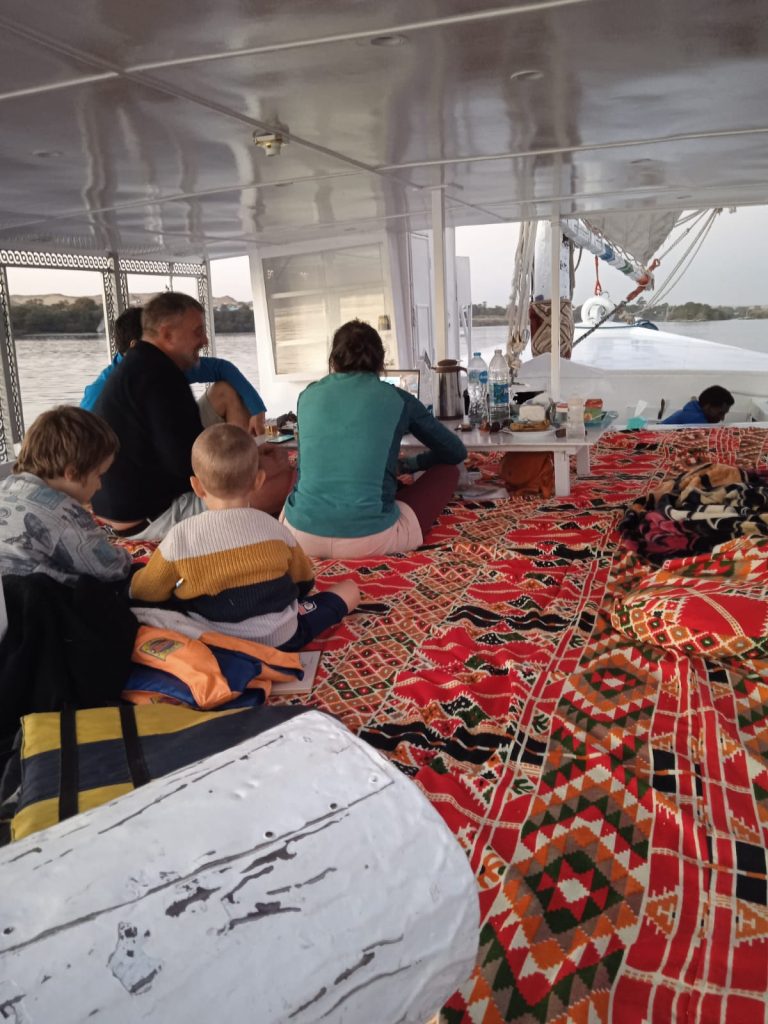
    Family from France relaxing on the deck of the felucca Maitea while sailing on the Nile near Aswan Egypt
    Guests from France relaxing on the carpeted deck of the felucca Maitea while sailing on the Nile near Aswan

    There is another way to experience Egypt — not through rushing, noise or crowded itineraries, but through the rhythm of the Nile itself. On a felucca, time changes. Families sit together, children watch the river, and the journey becomes part of what Egypt really is.

    There is the Egypt of headlines, and there is the Egypt of the Nile.

    They are not the same reality.

    Along the river, far from noise and distance, life continues with a rhythm that has not changed for centuries. Boats move with the wind. Children run along the banks. Fishermen pass silently at dawn. The light falls slowly over the water, as it always has.

    To travel here is not to ignore reality. It is to see it without distortion.

    Upper Egypt, between Aswan and Luxor, exists in a dimension that is often invisible to those who have not experienced it. It is not defined by external narratives, but by continuity — of landscape, of culture, of daily life.

    Sailing the Nile by Felucca: A Natural Way to Travel

    A felucca is not a means of transport. It is a way of being on the Nile.

    No engines most of the time. No constant noise. Only wind, water, and direction.

    You move as the river allows. You stop where it feels right. You are not following a schedule — you are part of a rhythm.

    This is how the Nile has always been travelled. And it remains, today, the most authentic way to understand it.

    Eco-Travel on the Nile: Simplicity as a Luxury

    There is a quiet form of travel that leaves little trace.

    No large infrastructure. No excess consumption. No artificial environments separating you from the place you came to see.

    On a felucca, everything is reduced to what matters.

    Small groups. Minimal environmental impact. Respect for the river and for the communities that live along its banks.

    The less you impose, the more Egypt reveals itself.

    This is not a trend. It is a return.

    A Felucca Designed for Comfort — Without Losing Its Soul

    Tradition does not mean discomfort.

    Our felucca remains true to its essence — simple, open, connected to the river — with just enough innovation to make the experience effortless.

    Solar panels provide energy without noise or pollution. There is no generator breaking the silence of the Nile.

    An onboard bathroom offers comfort and dignity in a setting where this is still rare.

    WiFi is available if needed, but never imposed. You can remain connected — or choose not to be.

    And sometimes, at sunset, a speaker brings your own music into the landscape.

    The Nile has its own rhythm. But sometimes, you bring yours.

    Why This Journey Is Perfect for Children
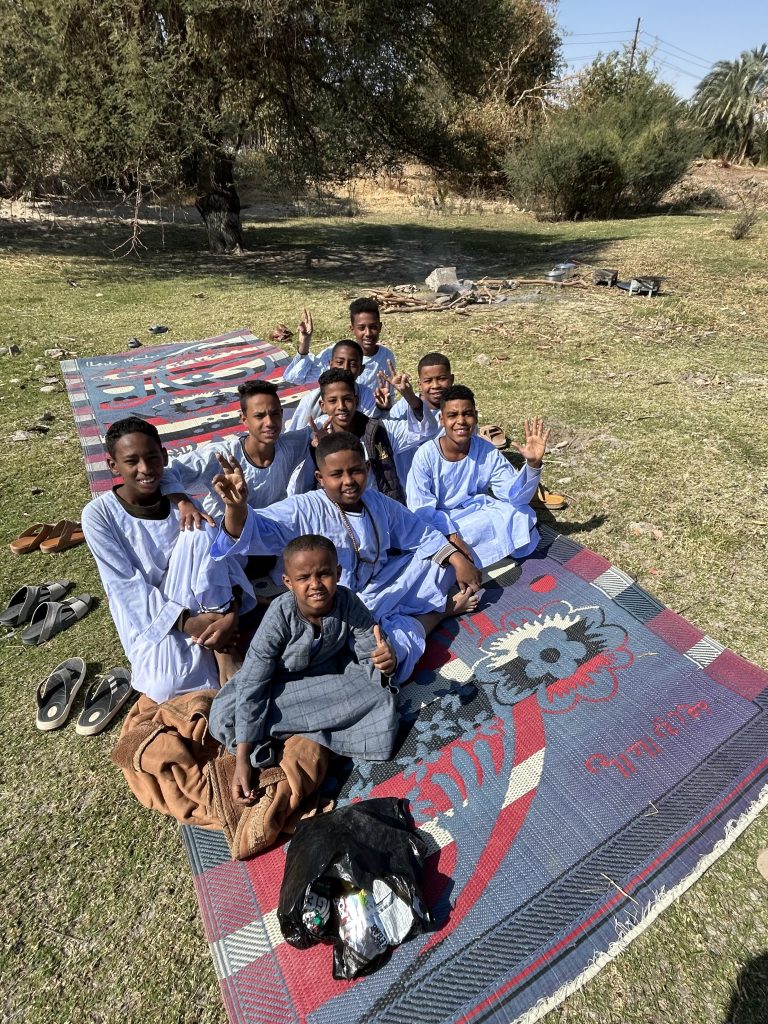
    Children enjoying a day by the Nile in Upper Egypt during a felucca travel experience
    Moments like these are what children remember — simple, real, and alive along the Nile

    For children, this is not a trip. It is a discovery.

    From the age of five or six, the Nile becomes a space of freedom — safe, open, and alive.

    There are no crowds, no rush, no constant instructions. Just water, sand, sky, and movement.

    They learn without being taught. They observe, they ask, they absorb.

    Very often, this becomes their favourite experience.

    After days on a felucca, floating hotels no longer make sense to them.

    Like Camping Along the Nile — With What You Need

    There is something deeply natural in living close to the river.

    Evenings are simple. Light fades. The air cools. Conversations slow down.

    You arrive at quiet beaches where the welcome is already music — not organised, not performed, simply present.

    The river meets people, not structures.

    It feels like camping, but without effort or roughness. With just enough comfort to let the experience remain pure.

    What the Nile Feels Like Right Now

    This time of year, the Nile is at its most generous.

    The light is soft. The temperature is balanced. The air is clear.

    There is space — not only physically, but mentally.

    Fewer boats. Fewer interruptions. More silence.

    The river becomes something you do not just see, but inhabit.

    Calm, Safety, and the Rhythm of Daily Life

    Along the Nile, life follows its own continuity.

    Farming, fishing, small crossings from one side to the other. Children waving from the shore. Daily routines unchanged.

    Upper Egypt is not defined by distant tensions, but by proximity — to the river, to people, to time.

    Safety here is not declared. It is perceived in how life unfolds.

    Felucca or Cruise: Two Ways of Seeing Egypt

    There are two ways to travel the Nile.

    One is structured, scheduled, and contained. Large boats, fixed routes, distance from the shore.

    The other is open, flexible, and direct. A felucca, moving with the wind, stopping where life happens.

    Both exist. But they are not the same experience.

    Why Travelling Now Is a Unique Opportunity

    There are moments when a place becomes more itself.

    Fewer crowds allow for closer encounters. More silence allows for deeper perception.

    The Nile, at this time, offers something increasingly rare: space to experience without interference.

    Who Travels This Way — and Why

    This is not for everyone.

    It is for those who prefer presence over speed. Simplicity over excess. Experience over consumption.

    For travellers who are curious, attentive, and open.

    For families who want their children to remember something real.

    Egypt Is Not a Headline — It Is an Experience

    Many travellers begin by asking whether Egypt is safe — a question that often comes from distance rather than experience.

    Egypt is often reduced to images, to narratives, to distance.

    But along the Nile, none of that remains.

    For the youngest travellers, this becomes more than a trip — a space to discover, imagine, and grow, where learning happens effortlessly and creativity awakens with the rhythm of the Nile.

    There is only the river, the light, the movement, and the quiet certainty that some things do not need to change.
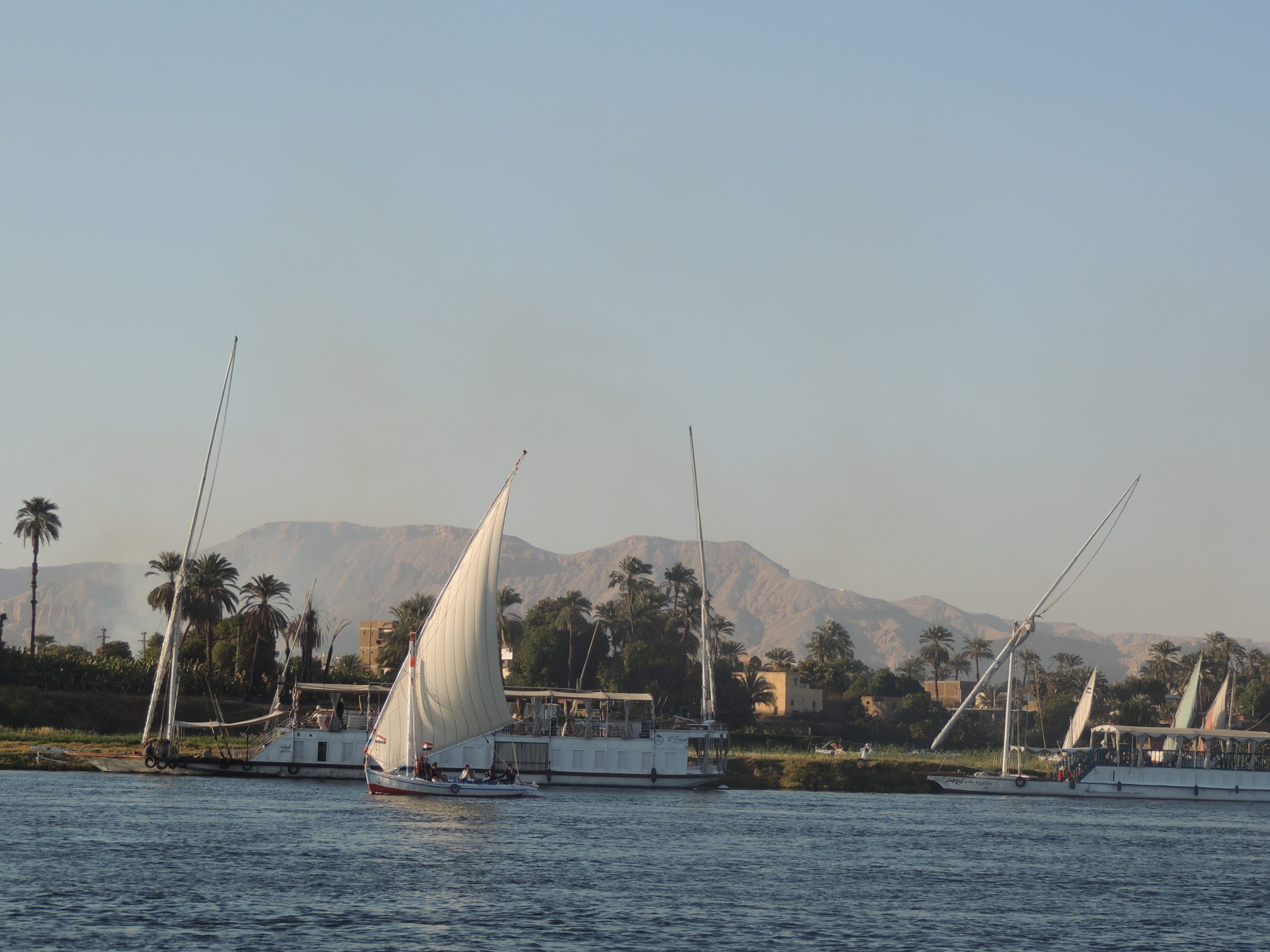
    And perhaps that is why, once experienced this way, it becomes difficult to travel differently again.

  • A New Chapter for Egypt — and for the World’s Heritage

    A New Chapter for Egypt — and for the World’s Heritage

    Will This Bring a New Era of Authentic Cultural Tourism on the Nile?

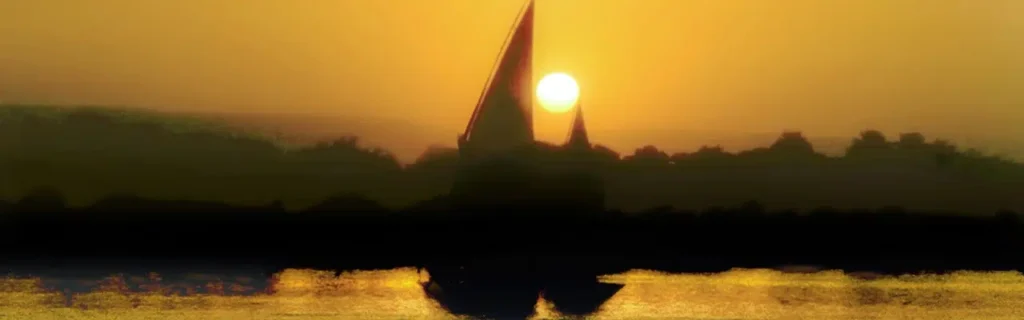
    Felucca Maitea moored on the Nile River at sunset with golden sky and traditional sailing boat in Aswan, Egypt
    Evening calm on the Nile — felucca Maitea ready for the night.

    On 6 October 2025, the world witnessed a moment of profound symbolism. For the first time, an Egyptian was elected Director-General of UNESCO.

    Khaled El-Anany — once a young guide among the timeless stones of Giza — now leads the international organisation responsible for protecting humanity’s cultural and natural heritage.

    Only a few months earlier, in January 2025, he had been appointed Rapporteur of the African World Heritage Fund, reflecting the continent’s confidence in his vision for safeguarding heritage for future generations.¹

    Egypt, Guardian of the Flame of Human Memory

    This achievement is more than a personal success. It represents global recognition of Egypt’s unique role as the cradle of one of the world’s oldest continuous civilisations.

    Across millennia, Egypt has preserved an extraordinary cultural legacy along the Nile — temples, tombs, language, art, and traditions that continue to shape human understanding of history itself.

    While other ancient cultural centres, including parts of Mesopotamia, have suffered devastating losses through war and instability, Egypt has retained a remarkable continuity of heritage.

    The rediscovery of ancient Egypt by European scholars during Napoleon Bonaparte’s expedition in 1799 — including the Rosetta Stone — reignited global fascination and laid the foundations of modern Egyptology. From that moment onward, the Nile returned to the centre of humanity’s historical consciousness.

    Today, Egypt remains a bridge between past and present, where heritage is not only preserved in monuments but lived daily through culture, crafts, and community life.

    Protecting this legacy is not solely an Egyptian responsibility. Cultural heritage belongs to humanity as a whole. Once destroyed, it cannot be replaced.

    Recent conflicts in the Middle East have shown how fragile our shared historical memory can be. Libraries, archaeological sites, and monuments have been lost forever. The preservation of Egypt’s heritage therefore carries global significance.

    A Turning Point for Cultural Tourism in Egypt?

    This historic moment also raises an important question.

    Could new international leadership help reshape the future of tourism in Egypt?

    Egypt does not need more tourists. It needs conscious travellers — visitors who seek understanding, connection, and respect for culture rather than rapid consumption of monuments.

    For decades, mass tourism on the Nile has been dominated by large cruise ships with tight schedules and heavy environmental impact. Noise, pollution, and overcrowding can diminish the very atmosphere that makes Egypt extraordinary.

    Authentic cultural tourism offers another path.

    Travel experiences that move slowly along the river, in harmony with nature and local communities, allow visitors to engage more deeply with Egypt’s history and living traditions.

    The real Egypt is not found in hurried itineraries. It is experienced in the silence of sunset on the Nile, in Nubian villages, in conversations with local families, and in the rhythm of the river itself.

    Traditional sailing journeys — whether on a felucca or a dahabiya — reconnect travellers with this timeless dimension.

    Sailing the Nile — The Living Experience of Heritage

    The most meaningful way to experience Egypt’s heritage is not simply by visiting monuments, but by travelling between them.

    Sailing from Aswan to Luxor on a traditional Nile boat allows visitors to witness landscapes, temples, and daily life as travellers have done for centuries.

    The Nile becomes more than a river. It becomes a teacher.

    Empires have risen and fallen along its banks, yet Egypt’s cultural identity continues to flow forward — resilient, creative, and alive.

    This is the spirit behind EgyptDiscovering.

    Through small-scale Nile journeys guided by local expertise and respect for culture, travellers can experience Egypt beyond tourism — as a living civilisation.

    A New Renaissance of Authentic Travel?

    Perhaps this new chapter at UNESCO will encourage a global shift toward sustainable and culturally respectful tourism.

    Heritage is not only what we preserve in stone. It is what we experience, protect, and share.

    Egypt invites the world not to consume history, but to connect with it.

    And the Nile continues to flow — patient, eternal, and ready to reveal its stories.

    Sail slowly. Travel deeply. Discover Egypt.Egypt, Guardian of the Flame of Human Memory

    Egypt Cultural Tourism and Nile Travel: A New Chapter for Heritage | EgyptDiscovering