Contact me via WhatsApp Chat with Catalina on WhatsApp

Tag: felucca Nile

  • Experience the Nile in Early Spring

    Experience the Nile in Early Spring

    The Perfect Escape Along Egypt’s Timeless River

    As winter fades and early spring arrives, the Nile enters one of its most beautiful travel seasons. Between March and April, temperatures are warm yet comfortable, days are filled with golden sunlight, and evenings remain pleasantly cool — ideal conditions for sailing, sightseeing, and relaxation along Egypt’s most legendary river.

    Travelling the Nile in early spring offers a perfect balance: excellent weather, vibrant landscapes, and an atmosphere that feels both lively and peaceful. Whether you seek adventure, authenticity, or refined comfort, this season is an exceptional time to explore Upper Egypt.

    A Felucca Journey: Authentic Adventure on the Nile

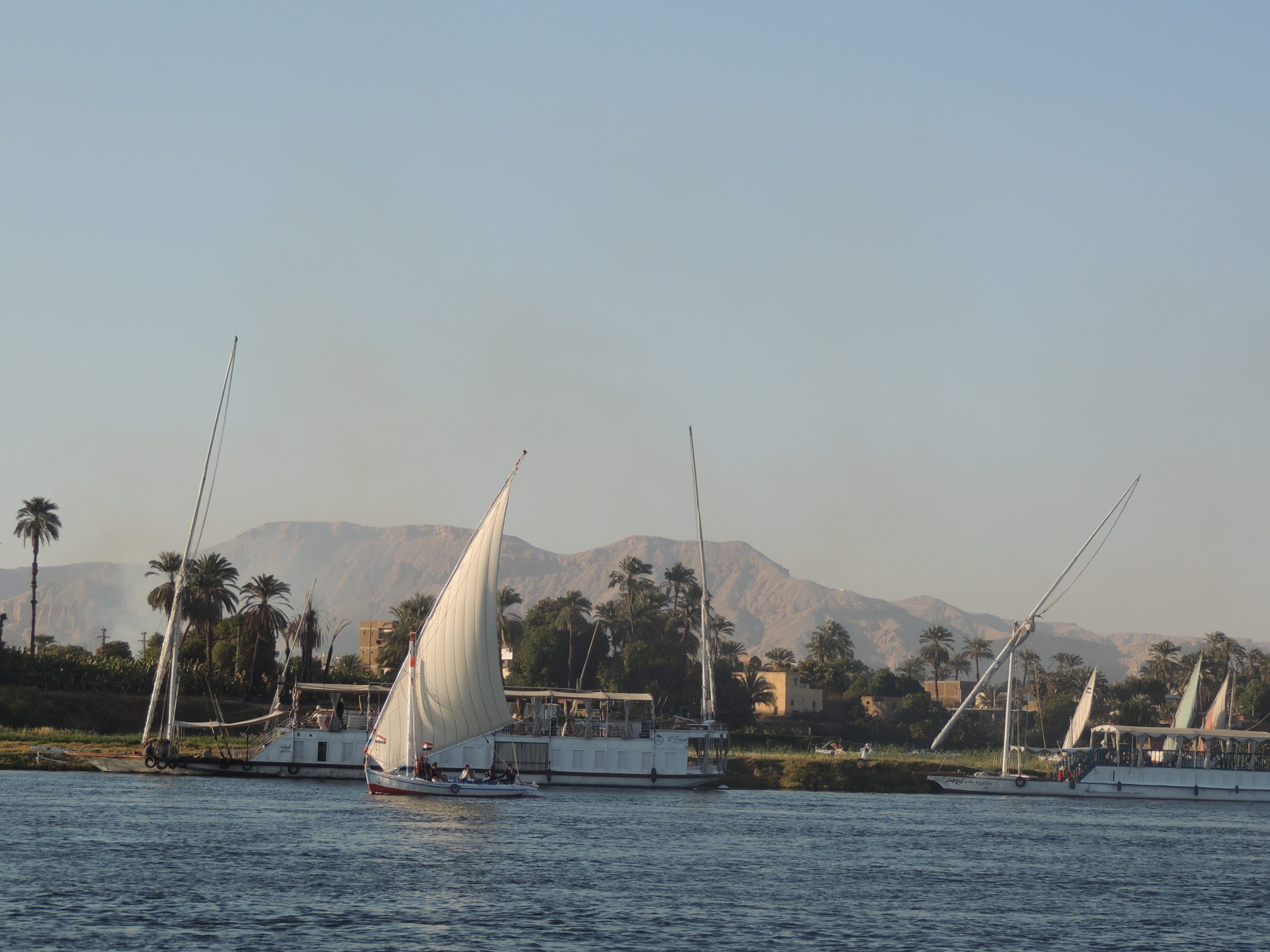
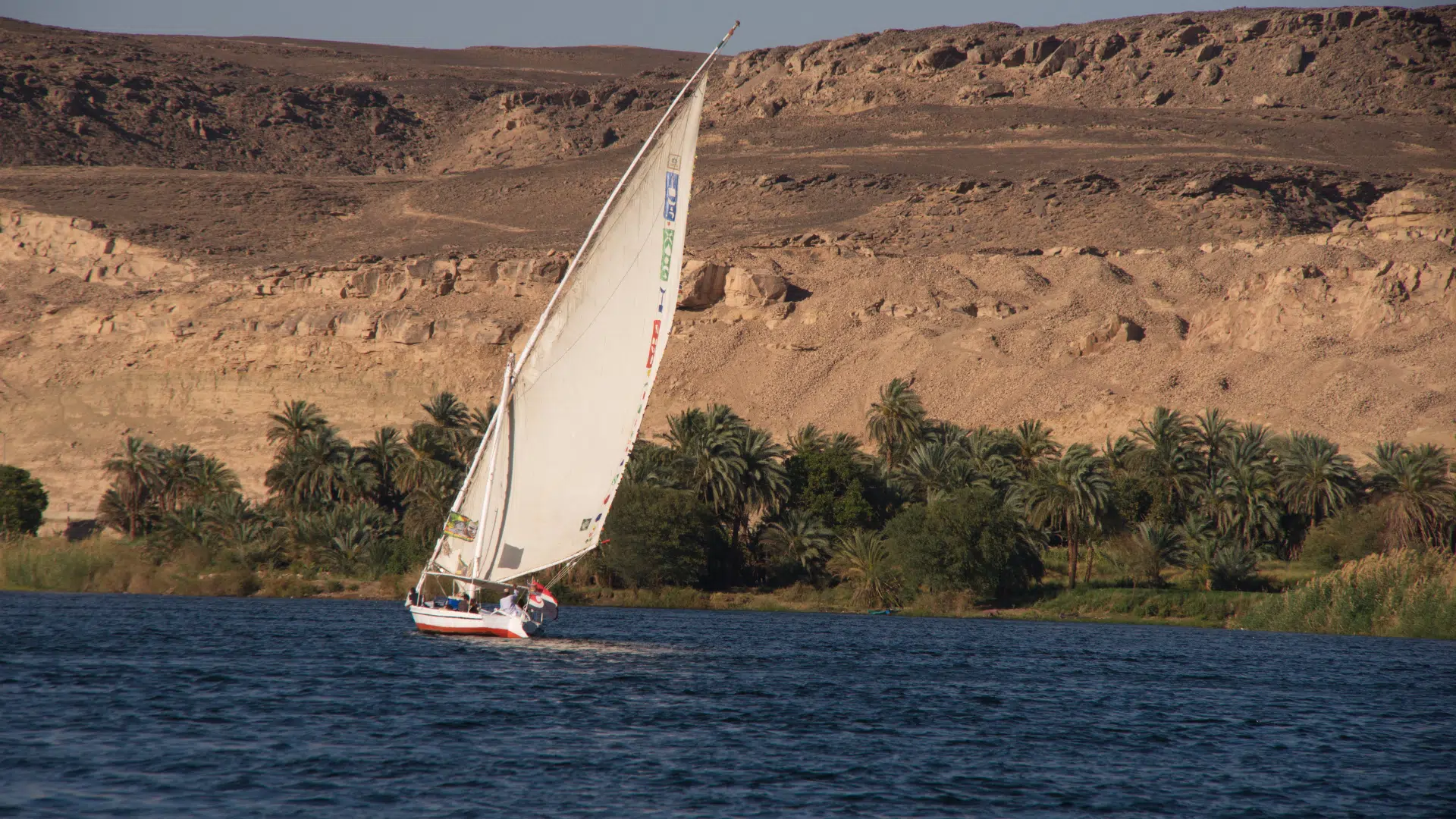
    For travellers drawn to simplicity, nature, and meaningful experiences, sailing on a traditional Egyptian felucca offers something truly unique. These elegant wooden sailing boats move with the wind, creating a calm rhythm far removed from modern noise and stress.

    Without engines or rigid schedules, felucca journeys allow guests to connect deeply with the Nile’s timeless atmosphere. Days unfold slowly as the boat glides past palm-lined shores, desert landscapes, ancient temples, and small riverside villages where life continues much as it has for generations.

    Sleeping beneath clear spring skies along quiet riverbanks often becomes one of the most memorable parts of the journey.

    A felucca voyage is not simply travel — it is immersion.

    Dahabiya Cruises: Luxury and Elegance on the River

    For travellers seeking comfort and sophistication, a dahabiya cruise provides a refined way to experience the Nile. Historically favoured by Egyptian nobility and nineteenth-century explorers, modern dahabiyas combine traditional sailing charm with contemporary comfort.

    Spacious cabins, attentive service, and elegant decks create a relaxed atmosphere of luxury. Guests enjoy private temple visits, fine cuisine, and breathtaking sunsets over landscapes that have inspired travellers for centuries.

    A dahabiya journey offers both cultural depth and comfort — the hallmark of premium Nile travel.

    Why Early Spring Is an Ideal Time to Visit the Nile

    Travelling during early spring offers several advantages:

    • Comfortable temperatures for sightseeing and sailing
    • Pleasant evenings for outdoor dining and relaxation
    • Ideal light conditions for photography
    • Vibrant river landscapes and greenery
    • Excellent travel conditions before peak summer heat

    This season allows visitors to experience Egypt with comfort while still enjoying warm sunshine and clear skies.

    A Different Kind of Spring Escape

    While many European destinations are still emerging from winter, the Nile offers warmth, light, and history in abundance. Instead of crowded resorts, travellers encounter ancient temples, desert horizons, and peaceful riverbanks shaped by thousands of years of civilisation.

    The experience feels both restorative and inspiring.

    Discover the Nile with Egypt Discovering

    At Egypt Discovering, journeys along the Nile are designed to reveal the authentic spirit of Egypt — whether through adventurous felucca sailing or elegant dahabiya cruises. Each itinerary combines historical discovery, local encounters, and moments of quiet connection with nature.

    Early spring departures offer particularly rewarding conditions for exploring Upper Egypt in comfort.

    The Nile has carried travellers for millennia.

    Now it is your turn.
  • Sailing the Nile on a Traditional Felucca

    Sailing the Nile on a Traditional Felucca

    A 6-Day Adventure from Aswan to Esna

    Imagine travelling along the Nile not on a crowded cruise ship, but on a traditional Egyptian felucca — powered only by wind, guided by experienced local sailors, and surrounded by landscapes unchanged for thousands of years. A 6-day, 5-night journey from Aswan to Esna offers one of the most authentic travel experiences in Egypt, combining history, nature, culture, and simplicity.

    This is not luxury tourism. It is something far more meaningful: connection.

    Day 1: Discover Abu Simbel — Monumental Egypt

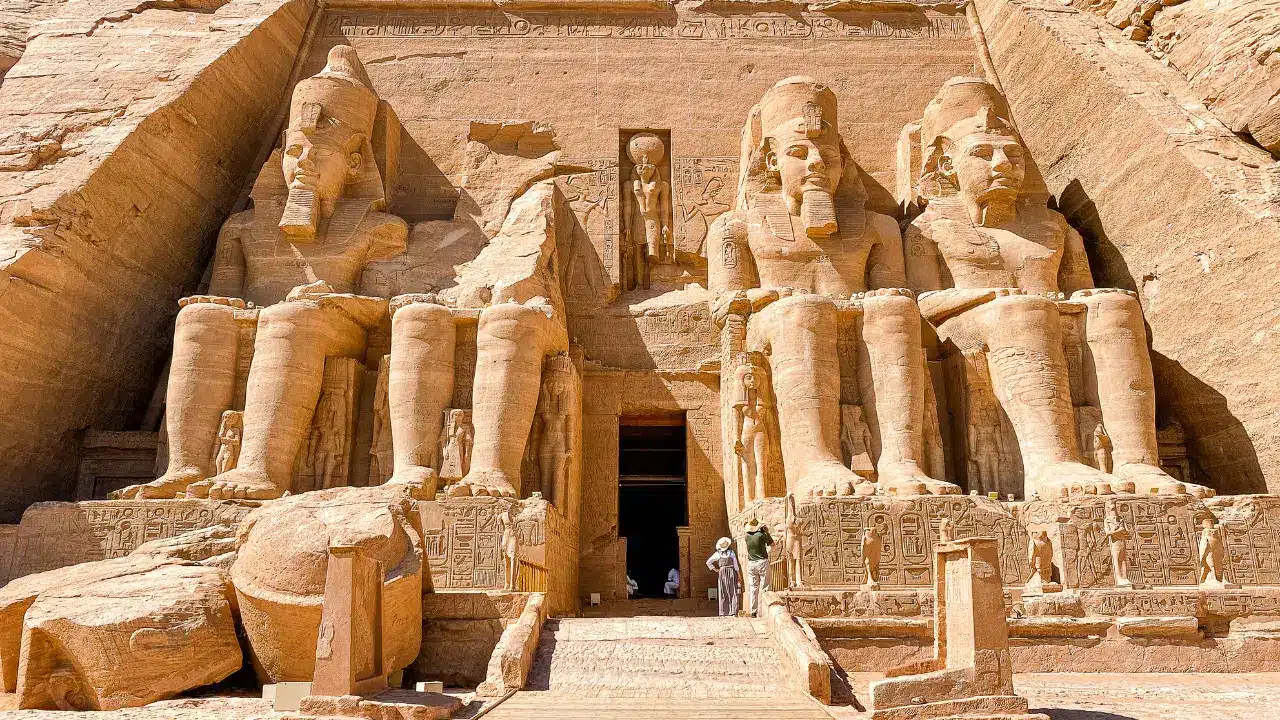
    Your journey begins with a visit to the extraordinary temples of Abu Simbel, one of Egypt’s most impressive archaeological sites and a UNESCO World Heritage location. Carved directly into the rock cliffs during the reign of Pharaoh Ramses II, the colossal statues create an unforgettable introduction to Ancient Egyptian civilisation.

    This powerful encounter with Egypt’s monumental past sets the tone for the days ahead.

    Day 2: Sailing from Aswan Towards Kom Ombo

    As your felucca departs from Aswan, the rhythm of the Nile immediately takes over. The landscape shifts between golden desert dunes and lush green riverbanks, offering peaceful scenery rarely experienced by conventional travellers.

    Stops along quiet river beaches allow time for swimming, relaxation, and immersion in nature. By evening, you reach Kom Ombo, home to the remarkable twin temple dedicated to Sobek, the crocodile god, and Horus, the falcon god. Visiting the temple at sunset creates a magical atmosphere.

    Days 3–4: Life Along the Nile and Village Encounters

    One of the highlights of felucca travel is the opportunity to connect with local communities along the Nile. Small villages, palm groves, and agricultural fields reveal daily life that has changed little over generations.

    Guests may step ashore, meet local families, and experience the warmth and hospitality that define Upper Egypt. Meals are freshly prepared on board using local ingredients, offering traditional Egyptian flavours in an authentic setting.

    This is cultural travel at its most genuine.

    Day 5: Sleeping Beneath the Stars

    Each night, the felucca anchors on peaceful riverbanks far from urban light pollution. Guests sleep under open skies filled with stars, accompanied by the gentle sounds of the Nile.

    This simple experience often becomes the most memorable part of the journey. Without distractions, travellers reconnect with nature, silence, and the rhythm of the river.

    It is Egypt at its most timeless.

    Day 6: Arrival in Esna and the Temple of Khnum

    The journey concludes in Esna, a historic town known for the Temple of Khnum, dedicated to the ram-headed creator god. The temple’s detailed carvings and unique architecture offer a final glimpse into Egypt’s layered history before departure.

    Leaving the felucca, travellers carry with them memories of landscapes, friendships, and moments that cannot be replicated elsewhere.

    An Authentic Nile Experience with Egypt Discovering

    At Egypt Discovering, felucca journeys are designed for travellers seeking authenticity rather than mass tourism. Sailing with experienced local crews allows guests to experience the Nile in its purest form — peaceful, cultural, and deeply human.

    This itinerary is flexible and may vary depending on weather conditions, wind, and guest preferences for visiting temples along the route. It is suitable for couples, families, and small groups looking for a meaningful adventure in Egypt.

  • The Nile’s Role in Ancient Egyptian Civilisation

    The Nile’s Role in Ancient Egyptian Civilisation

    The River That Created Egypt

    The history of Ancient Egypt cannot be understood without the Nile River. More than a geographical feature, the Nile was the foundation of Egyptian civilization — economically, culturally, spiritually, and politically. It transformed desert landscapes into fertile land, connected cities and temples, and shaped one of the most influential cultures in human history.

    For thousands of years, life in Egypt followed the rhythm of the river. Agriculture, trade, religion, and daily life all depended on the Nile’s predictable cycles. Without the Nile, there would have been no pyramids, no temples, and no pharaonic civilization as we know it today.

    Even now, travelers sailing along the Nile between Aswan and Luxor experience landscapes and traditions that remain deeply connected to this ancient relationship between people and river.

    The Nile as a Source of Life and Prosperity

    Ancient Egypt flourished because of the Nile’s annual flooding. Each year, the river overflowed its banks, depositing nutrient-rich black silt across the valley. This fertile soil allowed Egyptians to cultivate wheat, barley, vegetables, and flax, creating agricultural abundance in the middle of the desert.

    This natural cycle supported population growth, economic stability, and political power. Surplus crops could be stored, traded, and taxed, enabling the rise of centralized government and monumental architecture.

    The Nile was also Egypt’s main transportation route. Boats carried goods, people, and ideas between Upper and Lower Egypt, linking major cities such as Thebes (Luxor), Memphis, and Aswan. In many ways, the Nile functioned as the ancient world’s most efficient highway, making long-distance communication and trade possible.

    Today, a Nile cruise still follows these historic routes, allowing visitors to travel through the same landscapes that sustained Egyptian civilization for millennia.

    The Spiritual Meaning of the Nile in Ancient Egypt

    The Nile was not only a physical lifeline but also a sacred presence. Egyptians believed the river was a divine gift, personified by the god Hapi, associated with fertility, abundance, and nourishment. The annual flood was seen as a blessing from the gods — a sign that cosmic order, known as Ma’at, remained in balance.

    The river was also deeply connected to ideas of death and rebirth. The god Osiris, ruler of the afterlife, was linked symbolically to the Nile’s cycles. Just as the river flooded, receded, and renewed the land, human life was understood as part of a continuous cycle of transformation.

    This spiritual symbolism influenced Egyptian architecture and geography. Temples were often built along the Nile’s banks, and burial sites were typically located on the western side of the river, where the sun set — representing the transition to the afterlife.

    Travelers visiting temples in Luxor, Kom Ombo, Edfu, and Aswan can still sense how closely religion, landscape, and daily life were intertwined.

    The Nile as Egypt’s Cultural and Political Backbone

    Control of the Nile meant control of Egypt. Pharaohs managed irrigation systems, agricultural production, and transportation networks, reinforcing their authority as both political rulers and divine intermediaries.

    The river unified Upper and Lower Egypt, making centralized governance possible and helping sustain one of the longest-lasting civilizations in human history.

    Beyond politics, the Nile shaped Egyptian identity. Festivals, myths, calendars, and artistic representations all reflected the river’s importance. The Nile was not separate from Egyptian culture — it was its foundation.

    Experiencing the Nile Today: A Journey Through Living History

    Modern travelers can still experience the profound connection between Egypt and the Nile. Sailing on a traditional felucca or exploring ancient temples along the river offers insight into how geography shaped civilization.

    From the peaceful landscapes of Aswan to the monumental temples of Luxor, the Nile remains the thread connecting Egypt’s past and present.

    At Egypt Discovering, journeys along the Nile are designed to go beyond sightseeing. They allow travelers to experience authentic Egyptian culture, local communities, and timeless landscapes that reflect thousands of years of history.

    The River That Made a Civilisation Possible

    Ancient Egypt was not built despite the desert — it was built because of the Nile. The river created fertile land, enabled trade, inspired religion, and unified a nation.

    Understanding Egypt means understanding the Nile.

    And traveling along the Nile is not simply a trip through geography. It is a journey through the origins of civilization itself.

  • Egypt Is Not to Be Defined –   It Is to Be Experienced

    Egypt Is Not to Be Defined – It Is to Be Experienced

    Simply, Proudly, Eternally Egyptian

    When people think about Egypt, the first images that often appear are the pyramids of Giza, the Nile River, and the golden desert landscapes. Yet Egypt is far more than monuments or geography. Egypt is a living civilization — continuous, evolving, and deeply human — shaped over thousands of years by culture, trade, spirituality, and resilience.

    Egypt has never belonged to a single category, race, or region. Its identity cannot be reduced to modern labels.

    Ancient Egypt was not purely Mediterranean, even though it traded across the sea.

    It was not solely African, though the pulse of Africa flows through the Nile Valley.

    It was not limited to Semitic or Hamitic classifications, nor to modern ideas of black or white.

    Egypt was — and remains — something greater: uniquely, irreducibly Egyptian.

    Egypt: A Bridge Between Worlds

    The strength of Egyptian civilization has always been its ability to connect worlds. For millennia, Egypt welcomed merchants, travelers, scholars, and explorers from across Africa, the Middle East, Europe, and Asia. Along the Nile, cultures met, ideas merged, and knowledge flourished.

    Rather than losing its identity, Egypt absorbed influences while maintaining its own cultural core. This balance between openness and continuity is one of the reasons Egypt became one of the most influential civilizations in human history.

    Today, that same spirit continues.

    Modern Egypt stands at the crossroads of continents — geographically, culturally, and spiritually — offering travelers an experience that is both ancient and alive.

    Travel to Egypt: Beyond Monuments and History

    For modern travelers, Egypt is not only about visiting archaeological sites. It is about immersion.

    From Cairo’s vibrant streets to the peaceful landscapes of Aswan, from the temples of Luxor to the timeless rhythm of life along the Nile, Egypt offers experiences that go beyond tourism.

    A Nile cruise is not simply a journey between destinations. It is a passage through history, culture, and daily life. Watching the riverbanks pass slowly by reveals villages, palm groves, farmers, fishermen, and traditions that have existed for centuries.

    This is where Egypt becomes real.

    The Spiritual Dimension of Egypt

    Egypt has always carried a profound spiritual presence. The ancient temples dedicated to deities such as Sekhmet, Maat, Nut, and Serket were not only religious spaces but centers of knowledge, philosophy, and cosmic understanding.

    Travelers today often feel something difficult to explain — a sense of connection, stillness, or recognition — when standing inside a temple or sailing at sunset on the Nile.

    Egypt offers more than history. It offers perspective.

    Authentic Egypt Experiences with Egypt Discovering

    At Egypt Discovering, our journeys are designed to go beyond traditional tours. We focus on authentic experiences along the Nile, connecting travelers with local communities, landscapes, and stories that reveal the true spirit of Egypt.

    Whether sailing on a traditional felucca, exploring ancient temples, or sharing moments with local families, our goal is simple: to help travelers experience Egypt as a living culture, not just a historical destination.

    Our routes from Aswan to Luxor, and beyond, allow visitors to discover the diversity, beauty, and humanity that define this country.

    Egypt Is a Living Journey

    Egypt cannot be placed inside categories such as East or West, Africa or Middle East. It is all of these, and more. Egypt is a meeting point of civilizations, a cradle of human creativity, and a bridge across time.

    For travelers seeking authenticity, depth, and meaning, Egypt offers something rare — an experience that continues to evolve long after the journey ends.

    Come and feel the warmth of a land shaped by millennia of sunlight.

    Let the Nile carry you through landscapes unchanged by time.

    Discover a civilization that is not frozen in the past but alive in the present.

    Egypt is not a destination to define.

    Egypt is a journey to experience — simply, proudly, eternally Egyptian.

  • Sustainable Tourism in Egypt: Sailing the Nile Without Pollution — A Real Case Study from EgyptDiscovering

    Sustainable Tourism in Egypt: Sailing the Nile Without Pollution — A Real Case Study from EgyptDiscovering

    Eco-Friendly Nile Cruises on Traditional Boats Supporting Local Communities and Protecting the River

    Sustainable tourism in Egypt is no longer a theory — it is a necessity. The Nile, one of the world’s most fragile cultural and cultural ecosystems, faces increasing pressure from mass tourism and large diesel-powered cruise ships. While these floating hotels promise luxury, they often contribute to pollution, noise, and economic leakage away from local communities.

    But there is another way to travel the Nile — slower, cleaner, and profoundly more human.

    EgyptDiscovering offers eco-friendly Nile sailing experiences on traditional boats such as feluccas, dahabiyas, and sendals. These journeys are powered primarily by wind, guided by local captains, and rooted in authentic cultural exchange. The goal is simple: protect the river, support local families, and preserve a heritage that has existed for thousands of years.

    Watch: Sustainable Nile Sailing Experience with EgyptDiscovering

    A Different Kind of Nile Cruise: Wind Instead of Diesel

    Ah yes, the infamous Nile cruises — those behemoth floating hotels gliding up and down the river like misplaced shopping malls. They promise five-star luxury, but often deliver crowded decks, constant engine noise, and a faceful of fumes. Romantic, perhaps… if carbon monoxide with a sunset view and a soundtrack of repetitive pop music is your thing.

    Traditional sailing offers something entirely different. Silence. Space. Time.

    EgyptDiscovering operates feluccas, dahabiyas, and traditional sendals — elegant wooden boats that once carried pharaohs, merchants, and travelers for centuries. We do it the old-fashioned way: with sails, with patience, and with genuine human connection.

    Sustainable Tourism Means Supporting Real People

    We are not a conventional travel agency. EgyptDiscovering is a family-rooted initiative built around sustainable tourism principles and respect for the Nile ecosystem.

    When you travel with us, your investment directly supports the local economy. Captains, cooks, farmers, artisans, and village families benefit from tourism income that stays within the region rather than flowing to international corporations. This model creates economic resilience while maintaining cultural identity.

    Your journey pays the captain who learned to read the wind from his grandfather.

    It supports the cook whose lentil soup becomes a memory you carry home.

    It sustains families whose knowledge of the river is older than most modern nations.

    That is the kind of tourism economy we believe in — not for the few, but for the future.

    Protecting the Nile Through Responsible Travel

    Sustainable tourism is not only about environmental protection — it is about dignity. Tourism should improve the lives of host communities, not overwhelm them.

    Large cruise ships can transport hundreds of passengers at once, but they often disconnect travellers from the very culture they came to experience. Traditional sailing, by contrast, creates space for conversation, learning, and genuine encounters with daily life along the Nile.

    Guests share meals prepared from local ingredients, listen to Nubian music at sunset, and wake to landscapes that have changed little since ancient times. This is not staged authenticity — it is lived reality.

    By relying primarily on wind power and maintaining small group experiences, EgyptDiscovering reduces environmental impact while preserving cultural heritage and traditional navigation knowledge.

    More Than Travel: Preserving a Living Heritage

    EgyptDiscovering is committed to long-term sustainable development. In a region where industrial tourism increasingly dominates the river, traditional sailing risks disappearing. Promoting responsible travel helps protect maritime knowledge, local employment, and cultural continuity.

    Tourism should not only delight the traveller — it should also dignify the host.

    With EgyptDiscovering, you don’t just float through Egypt. You become part of its living story. You sip tea under the stars, hear drums at dusk, and wake up to the sun rising over a river that still breathes ancient secrets.

    Choosing Sustainable Tourism in Egypt Is an Ethical Decision

    Choosing sustainable tourism in Egypt is not only a travel choice — it is a conscious one.

    By sailing with EgyptDiscovering, travellers reduce environmental impact, support local communities, and experience the Nile in a way that large cruise ships simply cannot offer.

    The wind becomes the engine.

    The river becomes the guide.

    And the journey becomes part of something larger than tourism — the preservation of a living heritage.

    The Nile has carried civilizations for millennia. With responsible travel, it can continue to do so for generations to come.

  • A New Chapter for Egypt — and for the World’s Heritage

    A New Chapter for Egypt — and for the World’s Heritage

    Will This Bring a New Era of Authentic Cultural Tourism on the Nile?

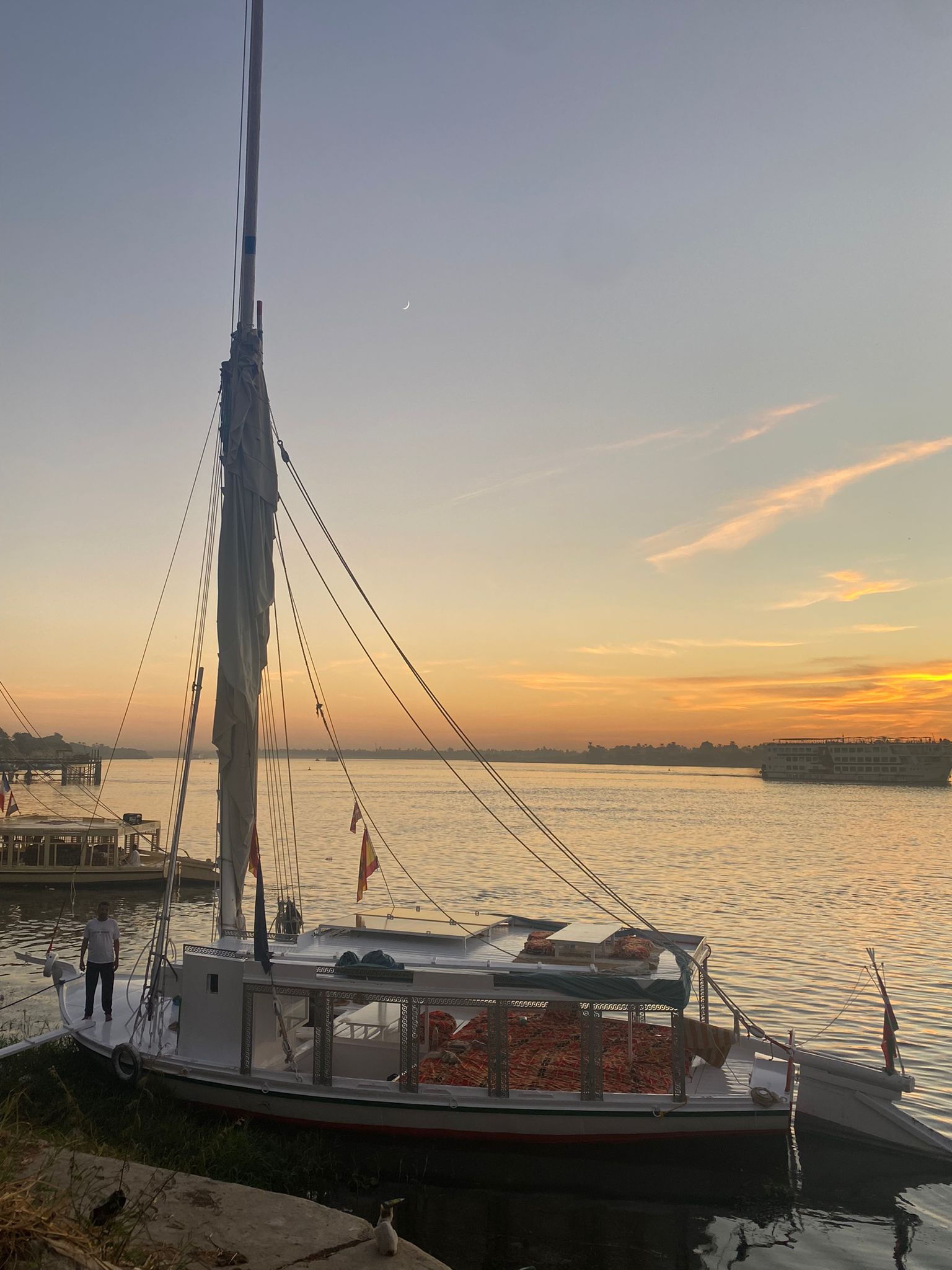
    Felucca Maitea moored on the Nile River at sunset with golden sky and traditional sailing boat in Aswan, Egypt
    Evening calm on the Nile — felucca Maitea ready for the night.

    On 6 October 2025, the world witnessed a moment of profound symbolism. For the first time, an Egyptian was elected Director-General of UNESCO.

    Khaled El-Anany — once a young guide among the timeless stones of Giza — now leads the international organisation responsible for protecting humanity’s cultural and natural heritage.

    Only a few months earlier, in January 2025, he had been appointed Rapporteur of the African World Heritage Fund, reflecting the continent’s confidence in his vision for safeguarding heritage for future generations.¹

    Egypt, Guardian of the Flame of Human Memory

    This achievement is more than a personal success. It represents global recognition of Egypt’s unique role as the cradle of one of the world’s oldest continuous civilisations.

    Across millennia, Egypt has preserved an extraordinary cultural legacy along the Nile — temples, tombs, language, art, and traditions that continue to shape human understanding of history itself.

    While other ancient cultural centres, including parts of Mesopotamia, have suffered devastating losses through war and instability, Egypt has retained a remarkable continuity of heritage.

    The rediscovery of ancient Egypt by European scholars during Napoleon Bonaparte’s expedition in 1799 — including the Rosetta Stone — reignited global fascination and laid the foundations of modern Egyptology. From that moment onward, the Nile returned to the centre of humanity’s historical consciousness.

    Today, Egypt remains a bridge between past and present, where heritage is not only preserved in monuments but lived daily through culture, crafts, and community life.

    Protecting this legacy is not solely an Egyptian responsibility. Cultural heritage belongs to humanity as a whole. Once destroyed, it cannot be replaced.

    Recent conflicts in the Middle East have shown how fragile our shared historical memory can be. Libraries, archaeological sites, and monuments have been lost forever. The preservation of Egypt’s heritage therefore carries global significance.

    A Turning Point for Cultural Tourism in Egypt?

    This historic moment also raises an important question.

    Could new international leadership help reshape the future of tourism in Egypt?

    Egypt does not need more tourists. It needs conscious travellers — visitors who seek understanding, connection, and respect for culture rather than rapid consumption of monuments.

    For decades, mass tourism on the Nile has been dominated by large cruise ships with tight schedules and heavy environmental impact. Noise, pollution, and overcrowding can diminish the very atmosphere that makes Egypt extraordinary.

    Authentic cultural tourism offers another path.

    Travel experiences that move slowly along the river, in harmony with nature and local communities, allow visitors to engage more deeply with Egypt’s history and living traditions.

    The real Egypt is not found in hurried itineraries. It is experienced in the silence of sunset on the Nile, in Nubian villages, in conversations with local families, and in the rhythm of the river itself.

    Traditional sailing journeys — whether on a felucca or a dahabiya — reconnect travellers with this timeless dimension.

    Sailing the Nile — The Living Experience of Heritage

    The most meaningful way to experience Egypt’s heritage is not simply by visiting monuments, but by travelling between them.

    Sailing from Aswan to Luxor on a traditional Nile boat allows visitors to witness landscapes, temples, and daily life as travellers have done for centuries.

    The Nile becomes more than a river. It becomes a teacher.

    Empires have risen and fallen along its banks, yet Egypt’s cultural identity continues to flow forward — resilient, creative, and alive.

    This is the spirit behind EgyptDiscovering.

    Through small-scale Nile journeys guided by local expertise and respect for culture, travellers can experience Egypt beyond tourism — as a living civilisation.

    A New Renaissance of Authentic Travel?

    Perhaps this new chapter at UNESCO will encourage a global shift toward sustainable and culturally respectful tourism.

    Heritage is not only what we preserve in stone. It is what we experience, protect, and share.

    Egypt invites the world not to consume history, but to connect with it.

    And the Nile continues to flow — patient, eternal, and ready to reveal its stories.

    Sail slowly. Travel deeply. Discover Egypt.Egypt, Guardian of the Flame of Human Memory

    Egypt Cultural Tourism and Nile Travel: A New Chapter for Heritage | EgyptDiscovering