
Contact me via WhatsApp Chat with Catalina on WhatsApp

Tag: Egyptian civilisation

  • Hatshepsut: The Woman Who Became Pharaoh

    Hatshepsut: The Woman Who Became Pharaoh

    A Queen Who Redefined Power in Ancient Egypt

    Among the rulers of Ancient Egypt, few figures are as remarkable as Hatshepsut. She was not only one of the most successful female leaders in history but also a monarch who transformed how kingship itself could be understood. Rising from queen and regent to full pharaoh, Hatshepsut reshaped royal authority, political legitimacy, and gender expectations in one of the world’s greatest civilisations.

    Her reign during the 18th Dynasty (1479–1458 BCE) marked a period of stability, prosperity, and monumental building that continues to inspire visitors today, particularly at her extraordinary mortuary temple at Deir el-Bahri near Luxor.

    From Regent to Pharaoh: Breaking Tradition

    Hatshepsut was the daughter of Pharaoh Thutmose I and later became the wife of her half-brother, Thutmose II. After his death, the throne passed to his young son, Thutmose III. As the child king was too young to rule independently, Hatshepsut initially served as regent — a traditional role for royal women.

    However, within a few years, she took an unprecedented step: she declared herself pharaoh.

    Rather than ruling only in the background, Hatshepsut adopted full royal titles, regalia, and authority. She wore the double crown of Upper and Lower Egypt, carried the crook and flail, and was often depicted with the ceremonial false beard associated with kingship.

    Her imagery sometimes presented her with traditionally male attributes, not to conceal her identity, but to align her with the established visual language of royal power.

    The Meaning of the Title “Pharaoh”

    The word “pharaoh” derives from the Egyptian term per-aa, meaning “great house”, originally referring to the royal palace or institution of kingship rather than the individual ruler. Over time, the term evolved into a direct designation for the king himself.

    During and after Hatshepsut’s period, this linguistic transition became increasingly formalised. Her reign therefore represents an important moment in the development of royal identity, when the concept of kingship expanded beyond traditional male succession.

    More importantly, Hatshepsut demonstrated that royal authority could be legitimised through divine ideology, political competence, and public works — not solely through gender.

    A Reign of Peace and Prosperity

    Unlike many rulers remembered primarily for military conquest, Hatshepsut’s legacy is defined by economic growth and cultural development. She initiated extensive trade expeditions, most famously to the land of Punt, bringing exotic goods, incense trees, and wealth back to Egypt.

    Her building programme was equally impressive. Temples, monuments, and obelisks across Egypt reflected both artistic innovation and political stability.

    The most spectacular achievement remains her mortuary temple at Deir el-Bahri, a masterpiece of architecture integrated harmoniously into the cliffs of western Thebes. Today, it stands as one of Egypt’s most iconic archaeological sites.

    Women and Power Before Hatshepsut

    Hatshepsut was not the first woman to hold authority in Egypt. Earlier figures such as Queen Merneith of the First Dynasty may have ruled as regent or monarch in their own right. However, Hatshepsut elevated female rulership to an entirely new level by assuming full pharaonic identity and sustaining it successfully for decades.

    Her reign proved that leadership in Ancient Egypt could transcend conventional gender boundaries when supported by religious legitimacy and political skill.

    Legacy and Historical Memory

    After Hatshepsut’s death, some of her monuments were altered or her images removed, possibly during the later reign of Thutmose III. Yet her achievements could not be erased. Archaeology and historical research have restored her place as one of Egypt’s most influential rulers.

    Today, she is recognised not only as a pioneering female leader but also as a symbol of innovation, resilience, and political intelligence.

    Experiencing Hatshepsut’s Egypt Today

    Travellers visiting Luxor can explore the landscapes associated with her reign — the temples of Karnak, the Valley of the Kings, and especially Deir el-Bahri. Standing before her temple offers a direct connection to a ruler who reshaped Egyptian history more than three thousand years ago.

    At Egypt Discovering, journeys through Upper Egypt allow visitors to experience these sites within the broader cultural and historical context that defined Hatshepsut’s era.

    A Queen Who Changed the Rules

    Hatshepsut’s story is ultimately about transformation — of identity, power, and possibility. She did not simply inherit authority; she redefined it.

    In doing so, she ensured that her legacy would endure alongside the greatest pharaohs of Egypt.

  • Forbearance in Ancient Egypt

    Forbearance in Ancient Egypt

    What the Pyramids Teach Us About Patience, Endurance, and Time

    In today’s fast-moving world, patience often feels like a forgotten virtue. Technology delivers immediate results, expectations are shaped by speed, and waiting can feel uncomfortable. Yet one of the greatest civilisations in human history was built upon a very different relationship with time — one defined by endurance, discipline, and long-term vision.

    Ancient Egypt offers a powerful reminder that meaningful achievements rarely happen quickly. From the construction of pyramids to the organisation of society itself, Egyptian culture was rooted in forbearance — the ability to persist calmly over long periods toward a greater goal.

    Understanding this mindset provides insight not only into Egyptian civilisation but also into our own relationship with time and ambition.

    Building Eternity: The Pyramids as Symbols of Patience

    Around 2500 BCE, the construction of pyramids required years — sometimes decades — of coordinated effort. Thousands of workers transported stone, organised labour, and planned architectural structures with extraordinary precision. Many individuals involved in these projects would never see the final result completed during their lifetimes.

    This long-term commitment reflected a worldview centred on continuity rather than immediacy. The pyramids were not simply tombs; they were expressions of eternity, cosmic order, and belief in the afterlife.

    For the Egyptians, time extended far beyond individual lifespan. What mattered was contributing to something enduring.

    Ma’at: The Philosophy of Balance and Endurance

    At the heart of Egyptian thought was the concept of Ma’at — the principle of balance, order, harmony, and justice that governed both the universe and human society. Maintaining Ma’at required patience, responsibility, and perseverance.

    Forbearance was therefore not merely practical but spiritual. Stability, calm effort, and disciplined action were seen as ways of sustaining cosmic harmony.

    This worldview contrasts sharply with modern expectations of rapid results and immediate gratification.

    Ancient Perspective and Modern Life

    Modern society often rewards speed, efficiency, and instant outcomes. While technological progress has brought enormous benefits, it can also reduce tolerance for delay or uncertainty.

    Ancient Egyptians approached life differently. Agricultural cycles followed the Nile’s rhythms. Monumental projects unfolded over generations. Religious beliefs emphasised preparation for eternity rather than immediate success.

    Their achievements — temples, pyramids, and cultural traditions that still inspire the world — were made possible by this long-term perspective.

    Lessons from Ancient Egypt for Today

    The endurance demonstrated by Egyptian civilisation offers valuable lessons:

    • Significant accomplishments require time and consistency
    • Long-term thinking creates lasting impact
    • Patience supports clarity and stability
    • Effort invested today may benefit future generations

    These principles remain relevant in modern life, whether applied to personal goals, creative work, or societal development.

    Experiencing Timelessness in Egypt Today

    Travellers visiting Egypt often sense this different relationship with time. Standing before the pyramids, sailing along the Nile, or exploring ancient temples creates an awareness of continuity across thousands of years.

    Egypt is not only a destination of monuments but also an encounter with endurance — a civilisation shaped by patience and vision.

    At Egypt Discovering, journeys along the Nile offer moments of quiet reflection where travellers can experience this timeless atmosphere directly.

    A Civilisation Built on Patience

    Ancient Egypt reminds us that the most enduring creations emerge from persistence rather than speed. The pyramids still stand because they were built with patience measured not in days or years, but in generations.

    Forbearance, once central to Egyptian life, remains a powerful skill today.

    Sometimes, the greatest progress happens slowly.

  • Imhotep: The Genius of Ancient Egypt Who Became a God

    Imhotep: The Genius of Ancient Egypt Who Became a God

    Architect, Physician, and Visionary of the Pyramid Age

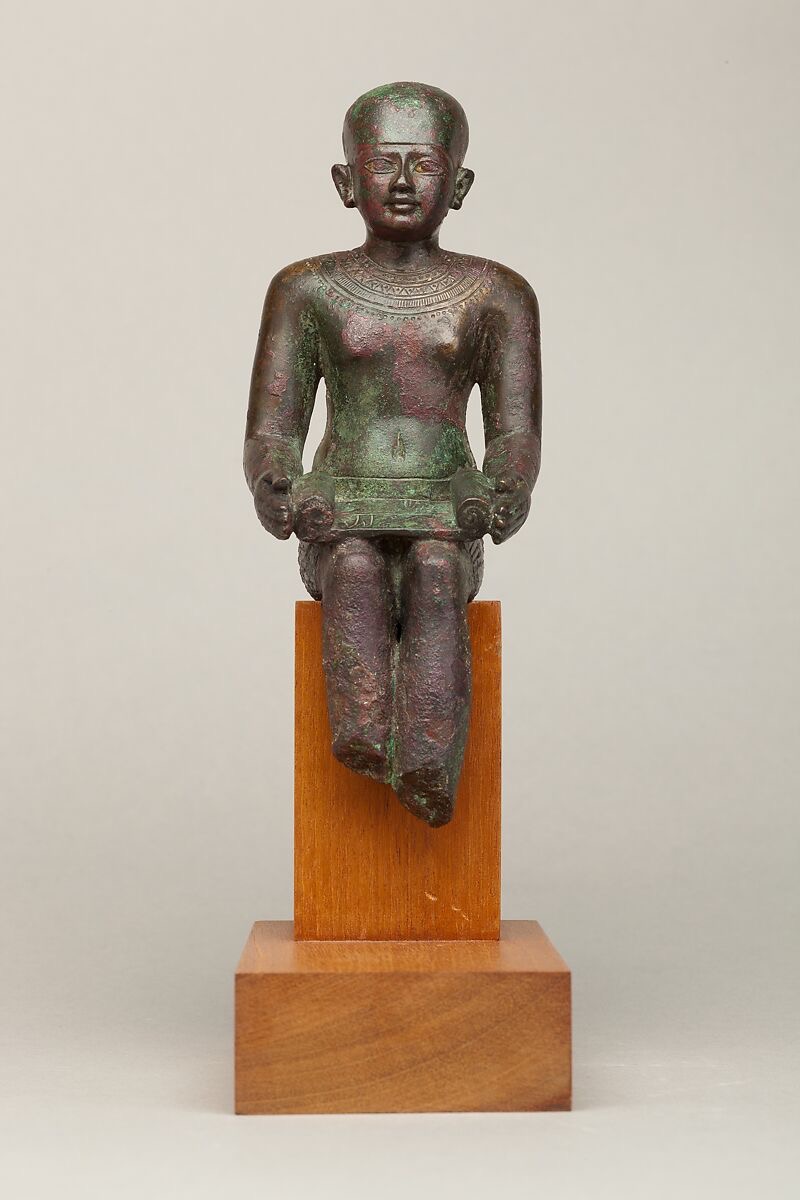
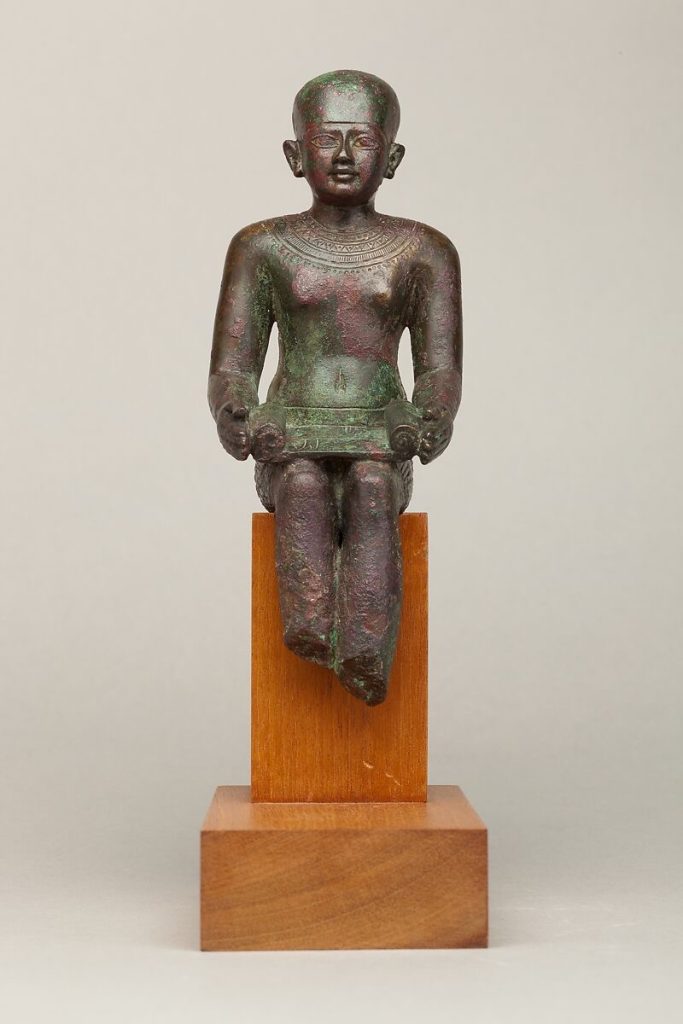
    Statue of Imhotep seated with papyrus scroll, ancient Egyptian architect and physician associated with the Step Pyramid at Saqqara.
    Statuette of Imhotep, Late Period–Ptolemaic Period (664–30 B.C.), from Memphis (Mit Rahina), Egypt. The seated figure represents Imhotep, architect of the Step Pyramid of Djoser and later revered as a god of wisdom and healing. Metropolitan Museum of Art, New York, Egyptian Art Collection.

    When people think of Ancient Egypt, they often imagine pyramids, pharaohs, and powerful gods. Yet one of the most extraordinary figures in Egyptian history began life not as a ruler or deity, but as a human whose brilliance transformed civilisation itself. His name was Imhotep — architect, physician, scholar, and eventually a god.

    Living during the Third Dynasty around 2650–2600 BCE, Imhotep served Pharaoh Djoser and rose to become one of the most influential individuals in early Egyptian history. His achievements were so remarkable that centuries later he was worshipped as a divine healer and patron of wisdom.

    Imhotep’s legacy bridges science, architecture, religion, and culture — making him one of the most fascinating personalities of the ancient world.

    Architect of the First Pyramid in History

    Imhotep is best known as the designer of the Step Pyramid of Djoser at Saqqara, widely recognised as the first monumental stone building ever constructed. Before this innovation, royal tombs were mastabas — flat, rectangular structures built from mudbrick.

    Imhotep introduced a revolutionary concept: stacking mastabas vertically to create a stepped structure rising toward the heavens. The result was the Step Pyramid complex, a vast architectural achievement that marked the beginning of the pyramid age.

    This innovation laid the foundations for the later pyramids of Giza, including the Great Pyramid of Khufu. In many ways, Imhotep changed the course of architectural history.

    Today, travellers visiting Saqqara encounter the origins of pyramid construction — a site that reflects the birth of monumental Egyptian architecture.

    Imhotep and the Origins of Medicine

    Beyond architecture, Imhotep gained legendary status as a physician. Although original medical texts attributed directly to him have not survived, ancient traditions consistently described him as a master healer with deep knowledge of anatomy, surgery, and herbal treatments.

    Centuries later, Egyptians honoured him as a god of medicine and healing. The Greeks identified him with their own healing deity, Asclepius, demonstrating how far his reputation spread beyond Egypt.

    Because of this association, Imhotep is often described as one of the earliest figures in the history of medical science.

    Political Power and Religious Influence

    Imhotep’s influence extended into government and religion. Serving as vizier under Pharaoh Djoser, he held one of the highest administrative positions in Egypt, effectively acting as chief advisor to the king.

    He also served as a high priest connected with the cult of Ra, the sun god, linking political authority with religious responsibility. This combination of intellectual, administrative, and spiritual roles elevated his status far beyond that of a typical official.

    Imhotep represented the ideal Egyptian scholar: knowledge combined with service to cosmic order, known as Ma’at.

    From Human to God: The Deification of Imhotep

    The transformation of Imhotep from historical figure to deity occurred gradually over centuries. By the New Kingdom period, around 1500 BCE, he was already revered as a semi-divine sage. During the Greco-Roman era, his worship expanded significantly, with temples dedicated to him across Egypt.

    Unlike most Egyptian gods, who were mythological from the beginning, Imhotep was a real person elevated to divine status — an exceptionally rare honour in Egyptian tradition.

    He was often depicted as a seated scholar holding a papyrus scroll, symbolising wisdom and learning.

    Imhotep’s Enduring Legacy

    Imhotep’s achievements shaped multiple fields:

    • Architecture — pioneering monumental stone construction
    • Medicine — early foundations of healing knowledge
    • Governance — administrative leadership under Pharaoh Djoser
    • Religion — later worship as a divine healer and sage

    Few individuals in human history have influenced so many domains simultaneously.

    For travellers exploring Egypt today, sites such as Saqqara provide direct connection to Imhotep’s world. Standing before the Step Pyramid allows visitors to witness the beginning of architectural innovation that would define Egyptian civilisation for millennia.

    A Legacy That Transcends Time

    Imhotep’s story demonstrates how knowledge, creativity, and vision can elevate a human life into legend. His transformation from scholar to god reflects the profound respect ancient Egyptians held for wisdom and achievement.

    More than 4,500 years later, his name remains synonymous with genius, innovation, and healing.

    Imhotep was not born a god.

    He became one.

  • Senet: The Ancient Egyptian Board Game of the Afterlife

    Senet: The Ancient Egyptian Board Game of the Afterlife

    How a Simple Game Became a Symbol of Spiritual Journey and Destiny

    Senet is one of the most fascinating windows into Ancient Egyptian daily life — and into Ancient Egyptian beliefs about death, rebirth, and the afterlife. Long before modern board games, Egyptians played Senet as entertainment, but also as something far more serious: a symbolic journey through the dangers and tests of the underworld.

    At EgyptDiscovering, we love the moments where history stops being “museum quiet” and becomes human again. Senet does exactly that. It shows Egyptians laughing, competing, thinking strategically — and at the same time preparing their souls for eternity.

    What Is Senet?

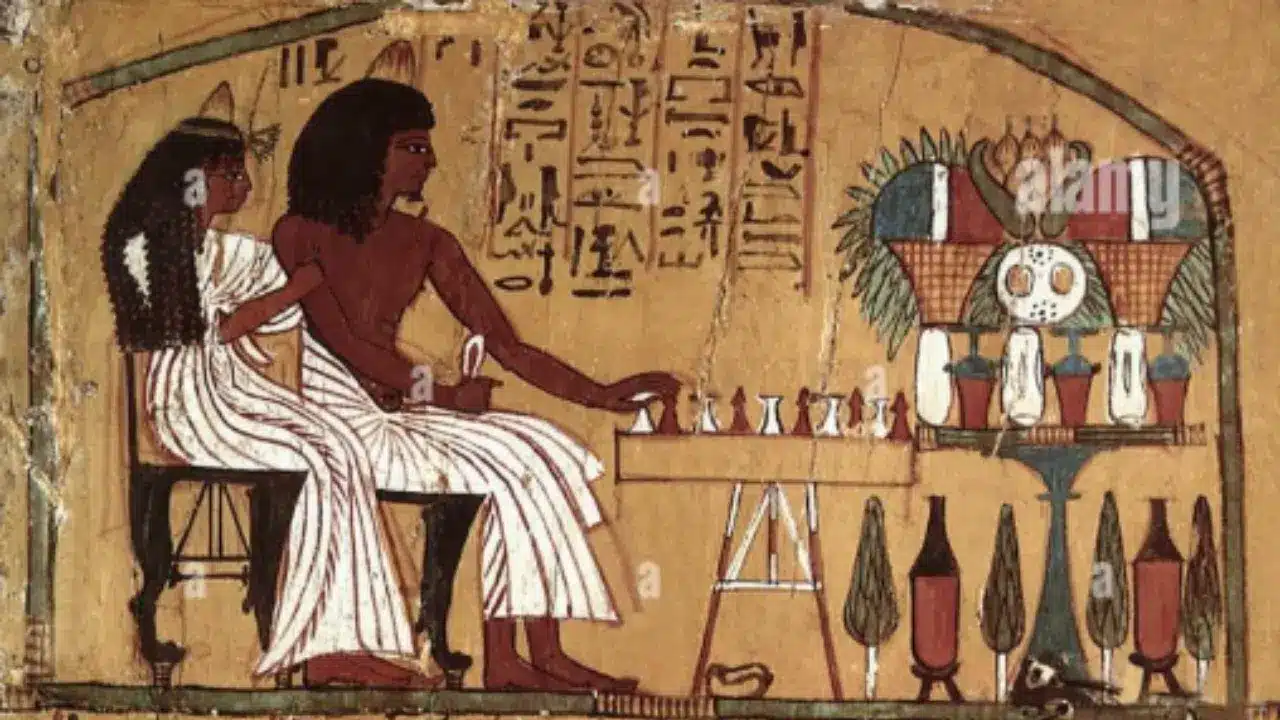
    Senet is widely considered the oldest known board game from Ancient Egypt. Its name is often translated as “passing”, a word that fits perfectly with the way Egyptians later understood the game: passing from one state to another, from life to death, and from death to the afterlife.

    Senet boards have been found in tombs and elite burials, indicating the game’s importance across centuries. It was not simply a pastime. It became part of the symbolic world that surrounded death and the hope of safe passage to the Field of Reeds — the ideal afterlife in Ancient Egyptian religion.

    Why Senet Was Placed in Tombs

    The presence of Senet in tombs was not accidental. Egyptians buried objects that could support the deceased in the next world: food, jewellery, amulets, texts, and sometimes games. Senet appears to have served as both comfort and protection — a familiar ritual object, and a spiritual metaphor for overcoming obstacles on the road to eternity.

    How Senet Was Played

    The Senet board is a grid of 30 squares, usually arranged in three rows of ten. Players moved their pieces according to the throw of casting sticks or knucklebones, functioning like an early form of dice.

    Even though not every rule has survived with certainty, the structure of the board and surviving depictions strongly suggest a mixture of strategy and chance. This balance mattered: in Ancient Egyptian thought, fate and divine order were always present, but human action still counted.

    The Board as a Map of the Afterlife

    Over time, Senet became increasingly symbolic. Certain squares appear to have represented key dangers and turning points in the soul’s journey. Many modern reconstructions refer to the “House of Water” as a perilous square and the final squares as zones of safety and fulfilment, sometimes described as a “House of Happiness”.

    Whether played in life or placed in a tomb for the dead, Senet became a miniature drama of passage: risk, judgement, protection, and arrival.

    Senet and Ancient Egyptian Religion

    Senet’s deeper power lies in how it blends play with belief. Egyptians did not sharply separate the everyday world from the sacred world. Ritual and daily life overlapped. A game could be entertainment and spiritual practice at the same time.

    Winning in Senet was more than a social victory. In later periods, it could be read as a sign of divine favour — an omen that the gods supported one’s passage, one’s balance with Ma’at, and one’s readiness for what came after death.

    Senet and Tutankhamun

    Senet boards were discovered among the treasures of Tutankhamun, reinforcing the idea that the game was not only popular but meaningful. For a pharaoh — a divine ruler expected to unite earthly and cosmic order — a game representing spiritual passage was an ideal companion for eternity.

    Why Senet Still Captivates Travellers Today

    Senet remains compelling because it makes Ancient Egypt feel close. It reveals a civilisation that was monumental, yes — but also intimate. People played games, argued over rules, celebrated luck, feared loss, and looked for meaning in patterns.

    For travellers exploring Egypt, these details matter. Temples and tombs show the grandeur of the civilisation. But objects like Senet show the human mind behind it: curiosity, strategy, humour, and the timeless desire to win against fate.

    At EgyptDiscovering, we share stories like Senet because they help visitors experience Egypt as a living culture, not just as a list of monuments. The past becomes real when it feels personal.

    A Board Game That Became a Journey

    Senet began as a game. It became a spiritual metaphor. And today, it remains one of the clearest reminders that Ancient Egypt was not only built in stone — it was lived in moments.

    One move at a time, Senet carried Egyptians through their greatest question of all: what happens after life ends?

  • Tutankhamun’s Mask Beard Incident: The Restoration Mistake That Shocked the World

    Tutankhamun’s Mask Beard Incident: The Restoration Mistake That Shocked the World

    A Modern Conservation Lesson from Ancient Egypt

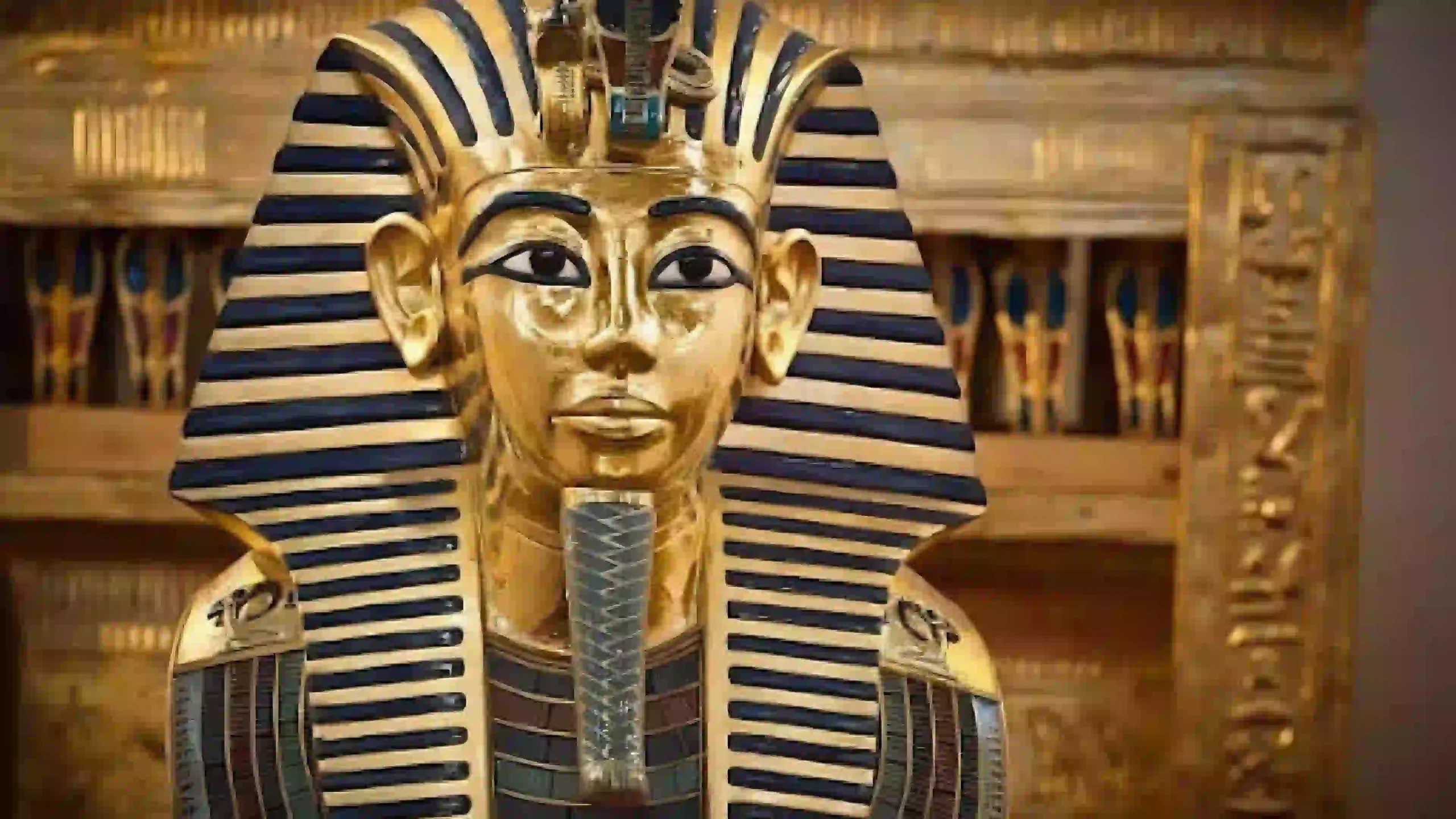
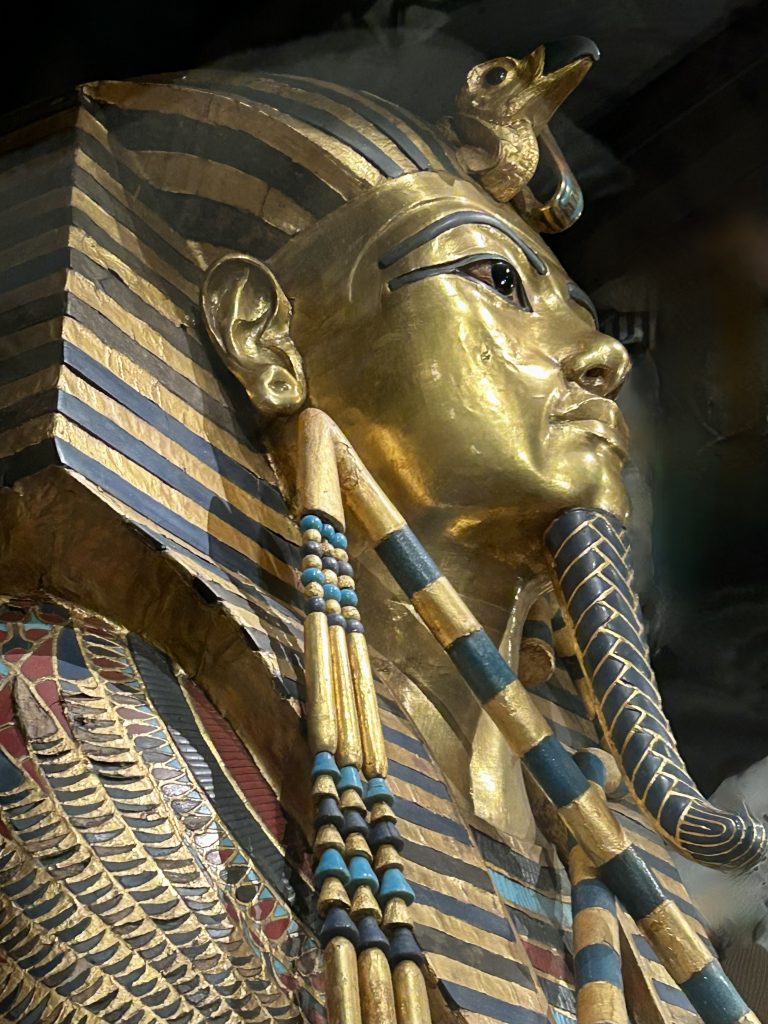
    Close view of Tutankhamun’s golden funerary mask showing the ceremonial beard and headdress
    Detail of the golden funerary mask of Tutankhamun, highlighting the ceremonial beard that became the focus of a restoration controversy

    When people think of Ancient Egypt, one of the most recognisable images in the world is the golden funerary mask of Pharaoh Tutankhamun. Discovered in 1922 in the Valley of the Kings, the mask has become a global symbol of Egyptian civilisation, royal power, and artistic mastery.

    Yet in 2014, this priceless artefact became the centre of an unexpected controversy — when the famous ceremonial beard attached to the mask broke off during handling at the Egyptian Museum in Cairo. What followed was a restoration mistake that attracted international attention and highlighted the importance of professional conservation methods in preserving world heritage.

    The Divine Beard of the Pharaoh

    Tutankhamun’s funerary mask, created more than 3,300 years ago, is crafted from gold, semi-precious stones, and coloured glass. Among its most significant features is the long, braided false beard attached to the chin.

    In Ancient Egyptian symbolism, the beard represented divine authority. Pharaohs were considered earthly manifestations of the gods, and the ceremonial beard visually reinforced this sacred status. It was not merely decorative — it was a statement of cosmic legitimacy and royal identity.

    Understanding this symbolism helps explain why damage to the beard caused such concern among historians, conservators, and the public alike.

    The 2014 Accident at the Egyptian Museum

    During routine maintenance and cleaning procedures in 2014, the beard accidentally detached from the mask. For museum staff, the situation was extremely stressful: one of the world’s most famous artefacts had been damaged unexpectedly.

    In an attempt to resolve the issue quickly, the beard was reattached using epoxy resin — a strong industrial adhesive unsuitable for delicate archaeological objects. The repair created visible residue and misalignment, and later cleaning attempts caused minor scratches to the gold surface.

    When images of the repair circulated publicly, criticism followed rapidly from the international conservation community.

    Professional Restoration and Scientific Conservation

    Following the controversy, a team of Egyptian and German conservators carried out a careful scientific restoration. The incorrect adhesive was removed, and the beard was reattached using reversible conservation materials specifically designed for historic artefacts.

    Reversible adhesives are essential in museum conservation because they allow future experts to make corrections without damaging the original object. The restoration successfully returned the mask to its proper condition while preserving its structural integrity.

    This episode ultimately became a valuable case study in modern conservation ethics and museum practice.

    Tutankhamun’s Legacy: Why Preservation Matters

    Tutankhamun remains one of the most important figures in Egyptian history, not because of political achievements, but because the discovery of his nearly intact tomb transformed our understanding of Ancient Egypt.

    Today, his treasures — including the famous mask — continue to attract millions of visitors to Egypt, particularly to Cairo’s museums and the archaeological sites of Luxor and the Valley of the Kings.

    For travellers exploring Egypt, encountering the legacy of Tutankhamun provides a direct connection to a civilisation that flourished over three millennia ago.

    Experiencing Ancient Egypt Today

    Visitors travelling along the Nile from Luxor to Aswan can explore the temples, tombs, and landscapes connected to the world of Tutankhamun. Sites such as the Valley of the Kings, Karnak Temple, and Luxor Temple reveal the cultural and spiritual environment in which the young pharaoh lived.

    At Egypt Discovering, journeys through Upper Egypt aim to connect travellers not only with monuments but with the deeper history and living heritage that define the country today.

    A Story of Human Error and Human Care

    The beard incident serves as a reminder that even the most precious cultural treasures depend on human responsibility for their preservation. While the mistake drew global attention, the successful restoration demonstrated the importance of expertise, patience, and scientific methods in protecting heritage.

    Tutankhamun’s mask endures as one of humanity’s greatest artistic achievements — a bridge between ancient craftsmanship and modern admiration.