Contact me via WhatsApp Chat with Catalina on WhatsApp

Tag: EgyptDiscovering

  • Ancient Egyptian Astronomy: Stargazing with the Pharaohs

    Ancient Egyptian Astronomy: Stargazing with the Pharaohs

    The stars of Egypt, from Sirius and Orion to the celestial ceilings of temples and pyramids

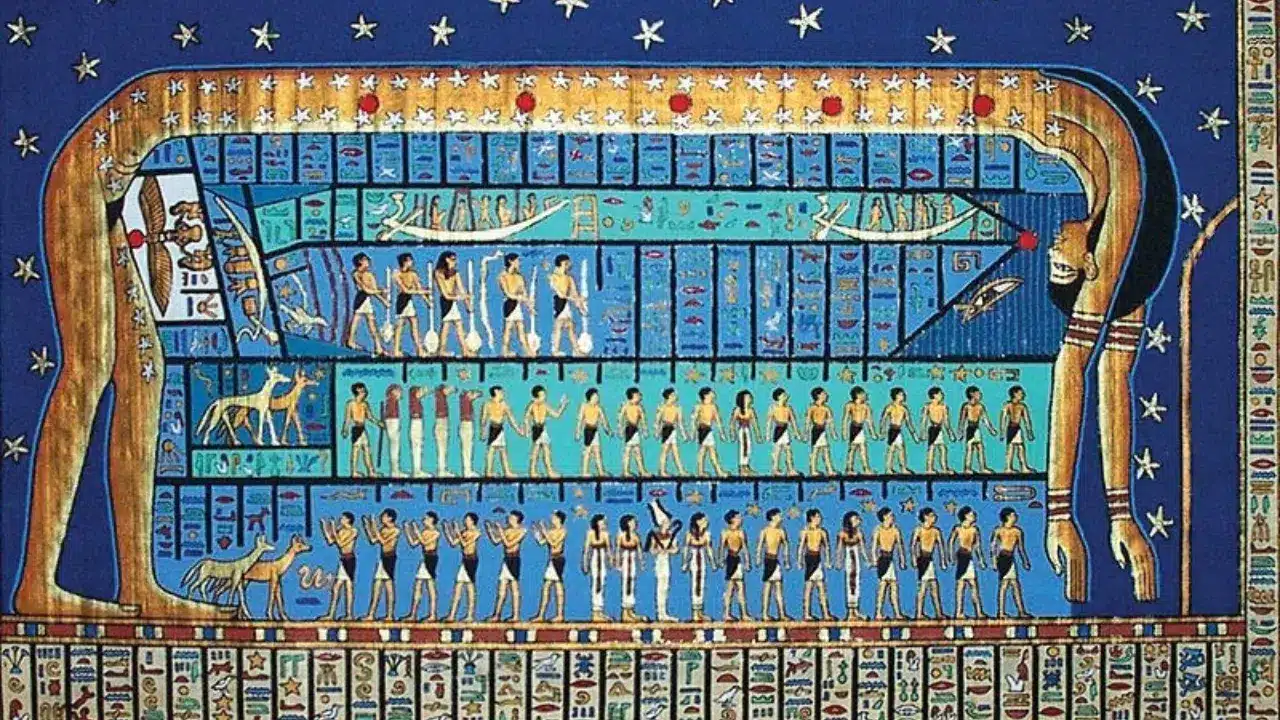
    Ancient Egyptian illustration of the sky goddess Nut arching over the world with solar boats and human figures representing the hours of night and day.
    The goddess Nut embodies the cosmos, containing the journey of the sun and the cycles of time within her celestial body.

    Ancient Egyptian astronomy is one of the earliest and most sophisticated systems of observing the night sky in human history. Thousands of years before telescopes, Egyptian priests and astronomers carefully studied the movement of stars, planets, and constellations to measure time, guide religious rituals, and understand the cosmos.

    For the ancient Egyptians, the sky was not simply a backdrop above the desert. It was a cosmic map that guided agriculture, religion, architecture, and the journey of the soul after death.

    Today, archaeological discoveries across Egypt—from desert stone circles to temple ceilings—reveal how deeply Egyptian civilization was connected to the stars.


    Why Astronomy Was Essential in Ancient Egypt

    Ancient Egyptian society depended heavily on the natural cycles of the Nile and the rhythms of the sky. Observing the stars allowed priests and scholars to develop calendars, predict seasonal changes, and organize religious festivals.

    One of the most important stars was Sirius, known in ancient Egypt as Sopdet. Each year, the heliacal rising of Sirius—its first appearance just before sunrise—announced the annual flooding of the Nile.

    This event marked the beginning of the Egyptian year and the renewal of agricultural life across the Nile Valley.

    The Egyptians also divided the night sky into decans, groups of stars used as a type of celestial clock. By observing the rising of these stars during the night, priests could measure time with remarkable accuracy.


    The Star Knowledge of Egyptian Priests

    Astronomy in Egypt was closely connected to religion and temple life. Priests were responsible for observing the sky and maintaining astronomical knowledge.

    Their observations influenced temple construction, sacred calendars, agricultural cycles, and royal symbolism.

    The pharaoh himself was believed to join the imperishable stars after death, becoming part of the eternal cosmos. This belief explains why many royal tombs and pyramids were aligned with particular celestial directions.


    Archaeological Sites That Reveal Egyptian Astronomy

    Across Egypt, several important archaeological discoveries demonstrate the deep astronomical knowledge of ancient Egyptian civilization.


    Nabta Playa: One of the World’s Oldest Astronomical Sites

    Located deep in the Nubian Desert, Nabta Playa is one of the earliest known astronomical sites on Earth, dating back nearly 7,000 years.

    Stone circles discovered there appear to align with the summer solstice and other celestial events. These structures suggest that prehistoric communities in the region were already observing the sky long before the pyramids of Egypt were built.


    The Dendera Zodiac

    Inside the Temple of Hathor at Dendera, visitors can see the famous Dendera Zodiac, a circular celestial map carved into stone.

    The relief shows constellations, zodiac symbols, and planetary movements, illustrating how Egyptian priests visualized the structure of the universe and the movement of heavenly bodies.


    The Pyramids of Giza and Orion’s Belt

    The Pyramids of Giza are among the most precisely aligned structures of the ancient world.

    Some researchers have suggested a symbolic relationship between the layout of the pyramids and the stars of Orion’s Belt, associated in Egyptian mythology with the god Osiris and the pharaoh’s journey to the afterlife.


    The Astronomical Ceiling of Senenmut

    The tomb of Senenmut, the architect of Queen Hatshepsut, contains one of the earliest known astronomical ceilings.

    This painted ceiling depicts constellations, decans, and planetary movements that were used as star clocks to measure time during the night.


    The Cairo Calendar

    The Cairo Calendar, a papyrus dating to around 1200 BCE, records lucky and unlucky days based on celestial observations.

    This document shows how astronomy influenced daily life and religious practices in ancient Egyptian society.


    Stars, Gods, and the Egyptian Cosmos

    Egyptian astronomy blended careful observation with mythology.

    The sky was imagined as the goddess Nut, arching over the earth and swallowing the sun each evening before giving birth to it again at dawn.

    The pharaoh’s soul was believed to ascend into the heavens and join the imperishable stars, which never disappeared below the horizon.

    In this worldview, astronomy was both science and spirituality.


    Experience the Ancient Egyptian Sky with EgyptDiscovering

    Imagine standing beneath the quiet desert sky, far from modern city lights, watching the same constellations that ancient Egyptian priests studied thousands of years ago.

    With EgyptDiscovering, travelers can explore temples, pyramids, and ancient landscapes while learning about the extraordinary relationship between Egyptian civilization and the cosmos.

    Along the Nile and across the desert, the stars still shine exactly as they did in the time of the pharaohs.


    Join an EgyptDiscovering Journey

    Discover the temples, deserts, and ancient skies that shaped one of the most remarkable civilizations in history.

    To reserve your Nile journey or learn more about our tours:

    book@egyptdiscovering.com

    The Nile flows as it always has, and above it the same ancient stars continue to shine.

  • Senet: The Ancient Egyptian Board Game of the Afterlife

    Senet: The Ancient Egyptian Board Game of the Afterlife

    How a Simple Game Became a Symbol of Spiritual Journey and Destiny

    Senet is one of the most fascinating windows into Ancient Egyptian daily life — and into Ancient Egyptian beliefs about death, rebirth, and the afterlife. Long before modern board games, Egyptians played Senet as entertainment, but also as something far more serious: a symbolic journey through the dangers and tests of the underworld.

    At EgyptDiscovering, we love the moments where history stops being “museum quiet” and becomes human again. Senet does exactly that. It shows Egyptians laughing, competing, thinking strategically — and at the same time preparing their souls for eternity.

    What Is Senet?

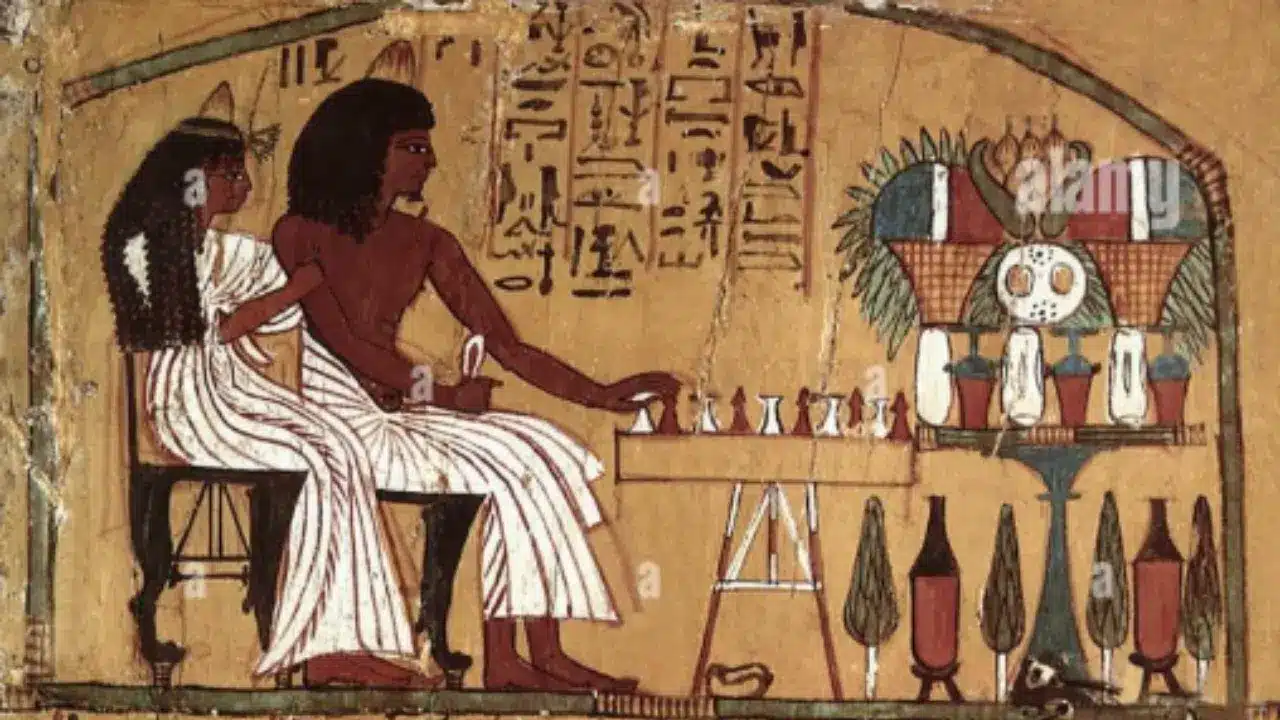
    Senet is widely considered the oldest known board game from Ancient Egypt. Its name is often translated as “passing”, a word that fits perfectly with the way Egyptians later understood the game: passing from one state to another, from life to death, and from death to the afterlife.

    Senet boards have been found in tombs and elite burials, indicating the game’s importance across centuries. It was not simply a pastime. It became part of the symbolic world that surrounded death and the hope of safe passage to the Field of Reeds — the ideal afterlife in Ancient Egyptian religion.

    Why Senet Was Placed in Tombs

    The presence of Senet in tombs was not accidental. Egyptians buried objects that could support the deceased in the next world: food, jewellery, amulets, texts, and sometimes games. Senet appears to have served as both comfort and protection — a familiar ritual object, and a spiritual metaphor for overcoming obstacles on the road to eternity.

    How Senet Was Played

    The Senet board is a grid of 30 squares, usually arranged in three rows of ten. Players moved their pieces according to the throw of casting sticks or knucklebones, functioning like an early form of dice.

    Even though not every rule has survived with certainty, the structure of the board and surviving depictions strongly suggest a mixture of strategy and chance. This balance mattered: in Ancient Egyptian thought, fate and divine order were always present, but human action still counted.

    The Board as a Map of the Afterlife

    Over time, Senet became increasingly symbolic. Certain squares appear to have represented key dangers and turning points in the soul’s journey. Many modern reconstructions refer to the “House of Water” as a perilous square and the final squares as zones of safety and fulfilment, sometimes described as a “House of Happiness”.

    Whether played in life or placed in a tomb for the dead, Senet became a miniature drama of passage: risk, judgement, protection, and arrival.

    Senet and Ancient Egyptian Religion

    Senet’s deeper power lies in how it blends play with belief. Egyptians did not sharply separate the everyday world from the sacred world. Ritual and daily life overlapped. A game could be entertainment and spiritual practice at the same time.

    Winning in Senet was more than a social victory. In later periods, it could be read as a sign of divine favour — an omen that the gods supported one’s passage, one’s balance with Ma’at, and one’s readiness for what came after death.

    Senet and Tutankhamun

    Senet boards were discovered among the treasures of Tutankhamun, reinforcing the idea that the game was not only popular but meaningful. For a pharaoh — a divine ruler expected to unite earthly and cosmic order — a game representing spiritual passage was an ideal companion for eternity.

    Why Senet Still Captivates Travellers Today

    Senet remains compelling because it makes Ancient Egypt feel close. It reveals a civilisation that was monumental, yes — but also intimate. People played games, argued over rules, celebrated luck, feared loss, and looked for meaning in patterns.

    For travellers exploring Egypt, these details matter. Temples and tombs show the grandeur of the civilisation. But objects like Senet show the human mind behind it: curiosity, strategy, humour, and the timeless desire to win against fate.

    At EgyptDiscovering, we share stories like Senet because they help visitors experience Egypt as a living culture, not just as a list of monuments. The past becomes real when it feels personal.

    A Board Game That Became a Journey

    Senet began as a game. It became a spiritual metaphor. And today, it remains one of the clearest reminders that Ancient Egypt was not only built in stone — it was lived in moments.

    One move at a time, Senet carried Egyptians through their greatest question of all: what happens after life ends?

  • Sustainable Tourism in Egypt: Sailing the Nile Without Pollution — A Real Case Study from EgyptDiscovering

    Sustainable Tourism in Egypt: Sailing the Nile Without Pollution — A Real Case Study from EgyptDiscovering

    Eco-Friendly Nile Cruises on Traditional Boats Supporting Local Communities and Protecting the River

    Sustainable tourism in Egypt is no longer a theory — it is a necessity. The Nile, one of the world’s most fragile cultural and cultural ecosystems, faces increasing pressure from mass tourism and large diesel-powered cruise ships. While these floating hotels promise luxury, they often contribute to pollution, noise, and economic leakage away from local communities.

    But there is another way to travel the Nile — slower, cleaner, and profoundly more human.

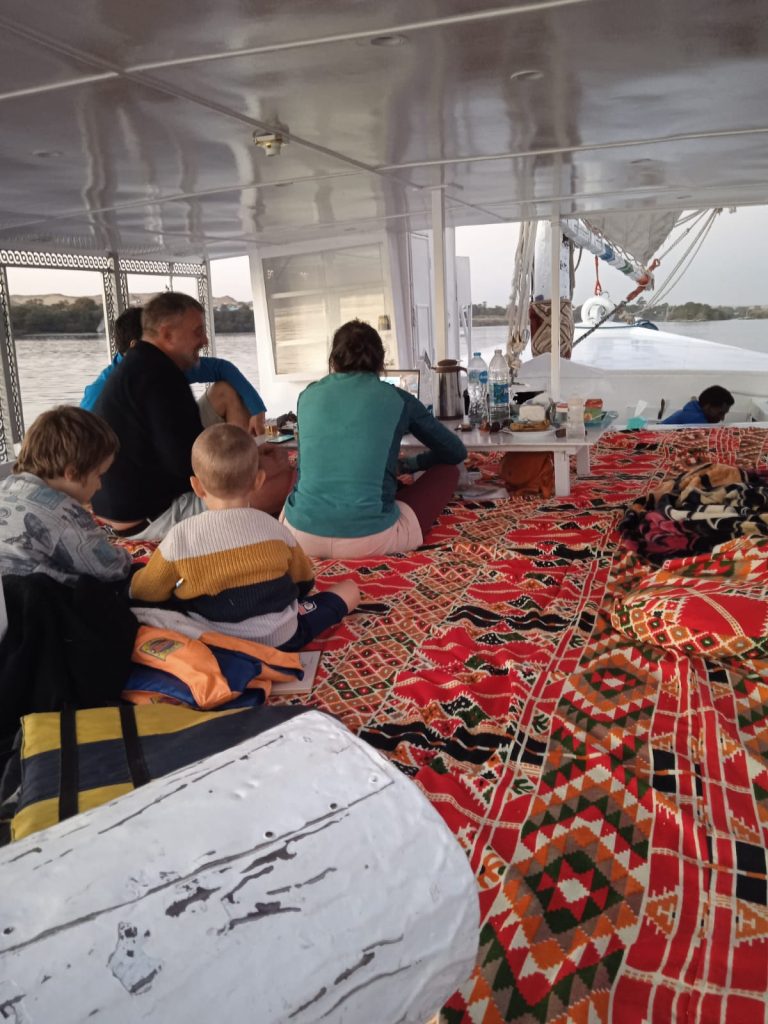
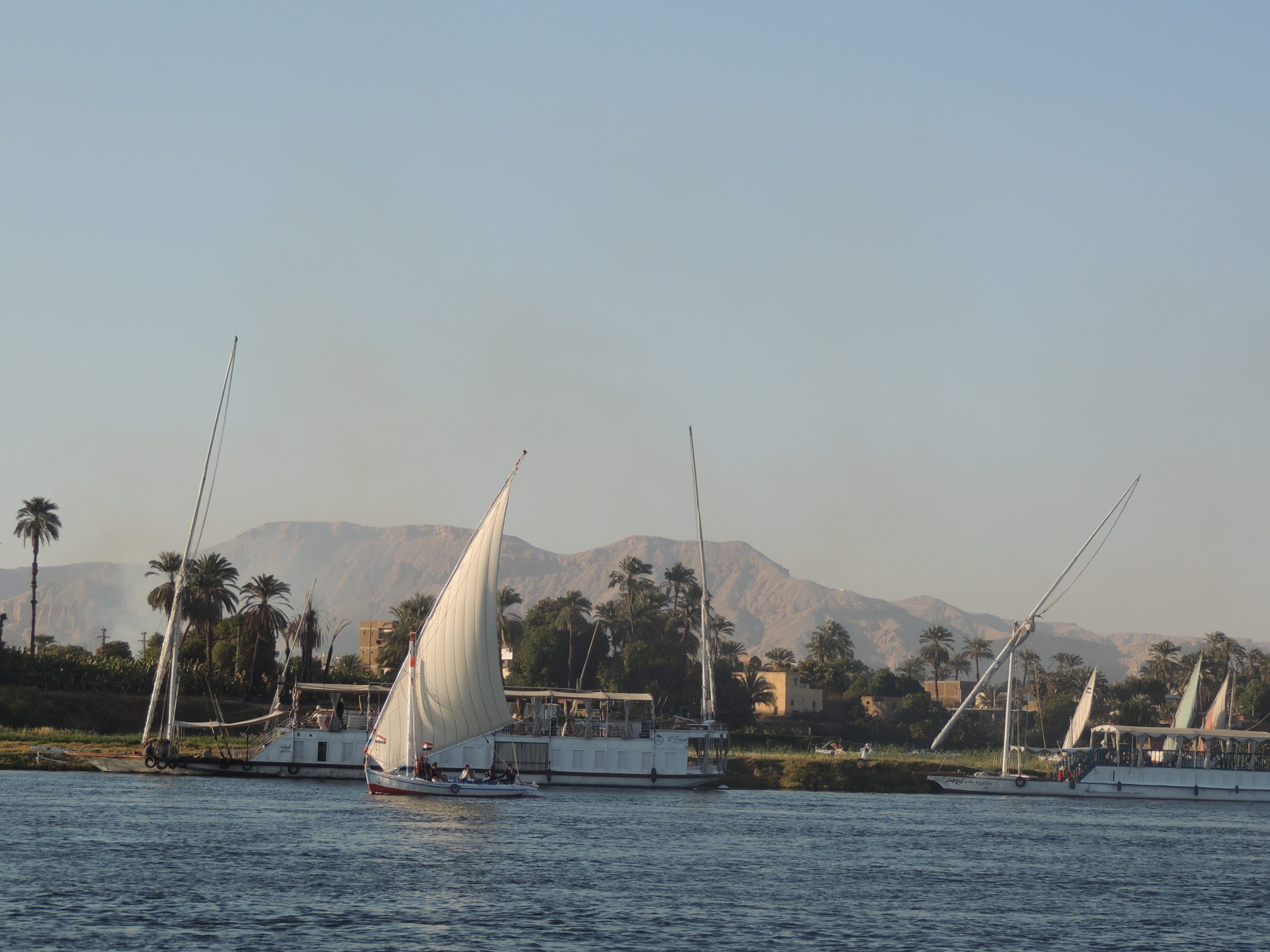
    EgyptDiscovering offers eco-friendly Nile sailing experiences on traditional boats such as feluccas, dahabiyas, and sendals. These journeys are powered primarily by wind, guided by local captains, and rooted in authentic cultural exchange. The goal is simple: protect the river, support local families, and preserve a heritage that has existed for thousands of years.

    Watch: Sustainable Nile Sailing Experience with EgyptDiscovering

    A Different Kind of Nile Cruise: Wind Instead of Diesel

    Ah yes, the infamous Nile cruises — those behemoth floating hotels gliding up and down the river like misplaced shopping malls. They promise five-star luxury, but often deliver crowded decks, constant engine noise, and a faceful of fumes. Romantic, perhaps… if carbon monoxide with a sunset view and a soundtrack of repetitive pop music is your thing.

    Traditional sailing offers something entirely different. Silence. Space. Time.

    EgyptDiscovering operates feluccas, dahabiyas, and traditional sendals — elegant wooden boats that once carried pharaohs, merchants, and travelers for centuries. We do it the old-fashioned way: with sails, with patience, and with genuine human connection.

    Sustainable Tourism Means Supporting Real People

    We are not a conventional travel agency. EgyptDiscovering is a family-rooted initiative built around sustainable tourism principles and respect for the Nile ecosystem.

    When you travel with us, your investment directly supports the local economy. Captains, cooks, farmers, artisans, and village families benefit from tourism income that stays within the region rather than flowing to international corporations. This model creates economic resilience while maintaining cultural identity.

    Your journey pays the captain who learned to read the wind from his grandfather.

    It supports the cook whose lentil soup becomes a memory you carry home.

    It sustains families whose knowledge of the river is older than most modern nations.

    That is the kind of tourism economy we believe in — not for the few, but for the future.

    Protecting the Nile Through Responsible Travel

    Sustainable tourism is not only about environmental protection — it is about dignity. Tourism should improve the lives of host communities, not overwhelm them.

    Large cruise ships can transport hundreds of passengers at once, but they often disconnect travellers from the very culture they came to experience. Traditional sailing, by contrast, creates space for conversation, learning, and genuine encounters with daily life along the Nile.

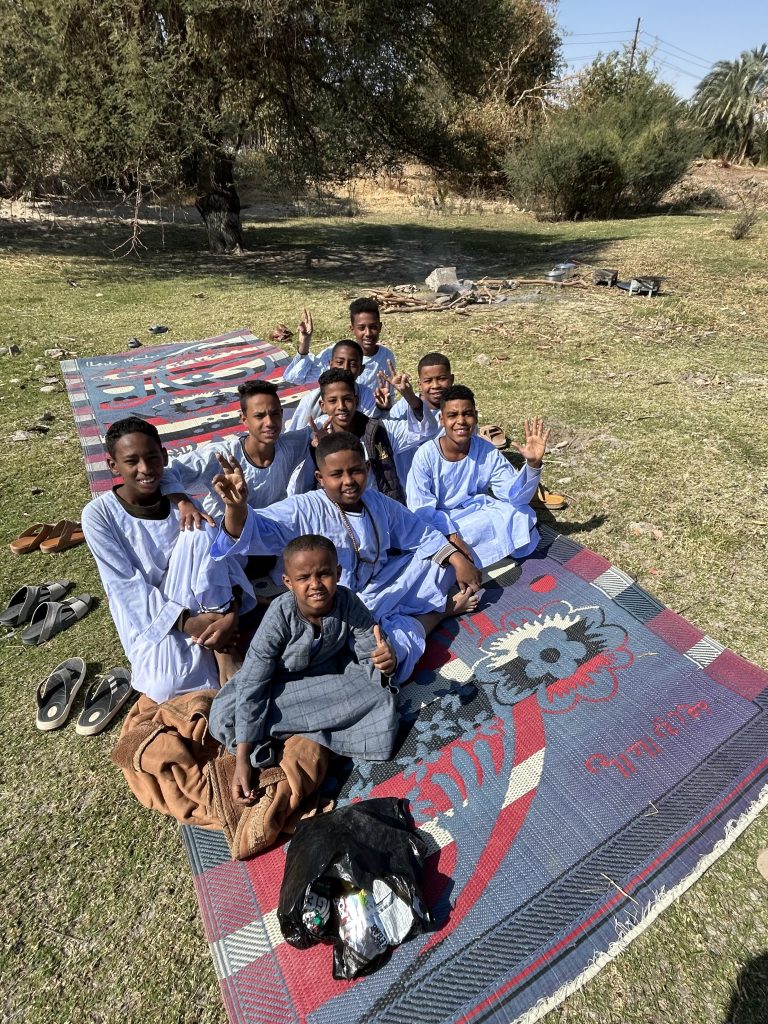
    Guests share meals prepared from local ingredients, listen to Nubian music at sunset, and wake to landscapes that have changed little since ancient times. This is not staged authenticity — it is lived reality.

    By relying primarily on wind power and maintaining small group experiences, EgyptDiscovering reduces environmental impact while preserving cultural heritage and traditional navigation knowledge.

    More Than Travel: Preserving a Living Heritage

    EgyptDiscovering is committed to long-term sustainable development. In a region where industrial tourism increasingly dominates the river, traditional sailing risks disappearing. Promoting responsible travel helps protect maritime knowledge, local employment, and cultural continuity.

    Tourism should not only delight the traveller — it should also dignify the host.

    With EgyptDiscovering, you don’t just float through Egypt. You become part of its living story. You sip tea under the stars, hear drums at dusk, and wake up to the sun rising over a river that still breathes ancient secrets.

    Choosing Sustainable Tourism in Egypt Is an Ethical Decision

    Choosing sustainable tourism in Egypt is not only a travel choice — it is a conscious one.

    By sailing with EgyptDiscovering, travellers reduce environmental impact, support local communities, and experience the Nile in a way that large cruise ships simply cannot offer.

    The wind becomes the engine.

    The river becomes the guide.

    And the journey becomes part of something larger than tourism — the preservation of a living heritage.

    The Nile has carried civilizations for millennia. With responsible travel, it can continue to do so for generations to come.

  • A New Chapter for Egypt — and for the World’s Heritage

    A New Chapter for Egypt — and for the World’s Heritage

    Will This Bring a New Era of Authentic Cultural Tourism on the Nile?

    Felucca Maitea moored on the Nile River at sunset with golden sky and traditional sailing boat in Aswan, Egypt
    Evening calm on the Nile — felucca Maitea ready for the night.

    On 6 October 2025, the world witnessed a moment of profound symbolism. For the first time, an Egyptian was elected Director-General of UNESCO.

    Khaled El-Anany — once a young guide among the timeless stones of Giza — now leads the international organisation responsible for protecting humanity’s cultural and natural heritage.

    Only a few months earlier, in January 2025, he had been appointed Rapporteur of the African World Heritage Fund, reflecting the continent’s confidence in his vision for safeguarding heritage for future generations.¹

    Egypt, Guardian of the Flame of Human Memory

    This achievement is more than a personal success. It represents global recognition of Egypt’s unique role as the cradle of one of the world’s oldest continuous civilisations.

    Across millennia, Egypt has preserved an extraordinary cultural legacy along the Nile — temples, tombs, language, art, and traditions that continue to shape human understanding of history itself.

    While other ancient cultural centres, including parts of Mesopotamia, have suffered devastating losses through war and instability, Egypt has retained a remarkable continuity of heritage.

    The rediscovery of ancient Egypt by European scholars during Napoleon Bonaparte’s expedition in 1799 — including the Rosetta Stone — reignited global fascination and laid the foundations of modern Egyptology. From that moment onward, the Nile returned to the centre of humanity’s historical consciousness.

    Today, Egypt remains a bridge between past and present, where heritage is not only preserved in monuments but lived daily through culture, crafts, and community life.

    Protecting this legacy is not solely an Egyptian responsibility. Cultural heritage belongs to humanity as a whole. Once destroyed, it cannot be replaced.

    Recent conflicts in the Middle East have shown how fragile our shared historical memory can be. Libraries, archaeological sites, and monuments have been lost forever. The preservation of Egypt’s heritage therefore carries global significance.

    A Turning Point for Cultural Tourism in Egypt?

    This historic moment also raises an important question.

    Could new international leadership help reshape the future of tourism in Egypt?

    Egypt does not need more tourists. It needs conscious travellers — visitors who seek understanding, connection, and respect for culture rather than rapid consumption of monuments.

    For decades, mass tourism on the Nile has been dominated by large cruise ships with tight schedules and heavy environmental impact. Noise, pollution, and overcrowding can diminish the very atmosphere that makes Egypt extraordinary.

    Authentic cultural tourism offers another path.

    Travel experiences that move slowly along the river, in harmony with nature and local communities, allow visitors to engage more deeply with Egypt’s history and living traditions.

    The real Egypt is not found in hurried itineraries. It is experienced in the silence of sunset on the Nile, in Nubian villages, in conversations with local families, and in the rhythm of the river itself.

    Traditional sailing journeys — whether on a felucca or a dahabiya — reconnect travellers with this timeless dimension.

    Sailing the Nile — The Living Experience of Heritage

    The most meaningful way to experience Egypt’s heritage is not simply by visiting monuments, but by travelling between them.

    Sailing from Aswan to Luxor on a traditional Nile boat allows visitors to witness landscapes, temples, and daily life as travellers have done for centuries.

    The Nile becomes more than a river. It becomes a teacher.

    Empires have risen and fallen along its banks, yet Egypt’s cultural identity continues to flow forward — resilient, creative, and alive.

    This is the spirit behind EgyptDiscovering.

    Through small-scale Nile journeys guided by local expertise and respect for culture, travellers can experience Egypt beyond tourism — as a living civilisation.

    A New Renaissance of Authentic Travel?

    Perhaps this new chapter at UNESCO will encourage a global shift toward sustainable and culturally respectful tourism.

    Heritage is not only what we preserve in stone. It is what we experience, protect, and share.

    Egypt invites the world not to consume history, but to connect with it.

    And the Nile continues to flow — patient, eternal, and ready to reveal its stories.

    Sail slowly. Travel deeply. Discover Egypt.Egypt, Guardian of the Flame of Human Memory

    Egypt Cultural Tourism and Nile Travel: A New Chapter for Heritage | EgyptDiscovering