Simply, Proudly, Eternally Egyptian
When people think about Egypt, the first images that often appear are the pyramids of Giza, the Nile River, and the golden desert landscapes. Yet Egypt is far more than monuments or geography. Egypt is a living civilization — continuous, evolving, and deeply human — shaped over thousands of years by culture, trade, spirituality, and resilience.
Egypt has never belonged to a single category, race, or region. Its identity cannot be reduced to modern labels.
Ancient Egypt was not purely Mediterranean, even though it traded across the sea.
It was not solely African, though the pulse of Africa flows through the Nile Valley.
It was not limited to Semitic or Hamitic classifications, nor to modern ideas of black or white.
Egypt was — and remains — something greater: uniquely, irreducibly Egyptian.
Egypt: A Bridge Between Worlds
The strength of Egyptian civilization has always been its ability to connect worlds. For millennia, Egypt welcomed merchants, travelers, scholars, and explorers from across Africa, the Middle East, Europe, and Asia. Along the Nile, cultures met, ideas merged, and knowledge flourished.
Rather than losing its identity, Egypt absorbed influences while maintaining its own cultural core. This balance between openness and continuity is one of the reasons Egypt became one of the most influential civilizations in human history.
Today, that same spirit continues.
Modern Egypt stands at the crossroads of continents — geographically, culturally, and spiritually — offering travelers an experience that is both ancient and alive.
Travel to Egypt: Beyond Monuments and History
For modern travelers, Egypt is not only about visiting archaeological sites. It is about immersion.
From Cairo’s vibrant streets to the peaceful landscapes of Aswan, from the temples of Luxor to the timeless rhythm of life along the Nile, Egypt offers experiences that go beyond tourism.
A Nile cruise is not simply a journey between destinations. It is a passage through history, culture, and daily life. Watching the riverbanks pass slowly by reveals villages, palm groves, farmers, fishermen, and traditions that have existed for centuries.
This is where Egypt becomes real.
The Spiritual Dimension of Egypt
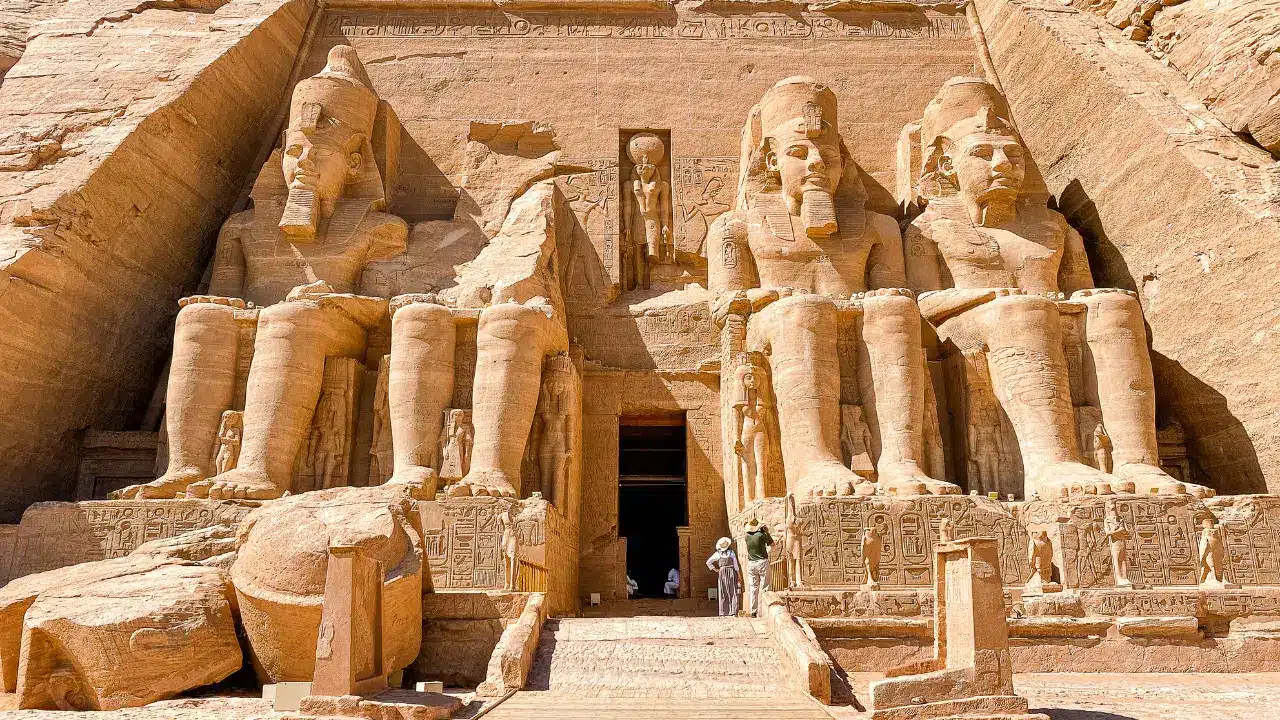
Egypt has always carried a profound spiritual presence. The ancient temples dedicated to deities such as Sekhmet, Maat, Nut, and Serket were not only religious spaces but centers of knowledge, philosophy, and cosmic understanding.
Travelers today often feel something difficult to explain — a sense of connection, stillness, or recognition — when standing inside a temple or sailing at sunset on the Nile.
Egypt offers more than history. It offers perspective.
Authentic Egypt Experiences with Egypt Discovering
At Egypt Discovering, our journeys are designed to go beyond traditional tours. We focus on authentic experiences along the Nile, connecting travelers with local communities, landscapes, and stories that reveal the true spirit of Egypt.
Whether sailing on a traditional felucca, exploring ancient temples, or sharing moments with local families, our goal is simple: to help travelers experience Egypt as a living culture, not just a historical destination.
Our routes from Aswan to Luxor, and beyond, allow visitors to discover the diversity, beauty, and humanity that define this country.
Egypt Is a Living Journey
Egypt cannot be placed inside categories such as East or West, Africa or Middle East. It is all of these, and more. Egypt is a meeting point of civilizations, a cradle of human creativity, and a bridge across time.
For travelers seeking authenticity, depth, and meaning, Egypt offers something rare — an experience that continues to evolve long after the journey ends.
Come and feel the warmth of a land shaped by millennia of sunlight.
Let the Nile carry you through landscapes unchanged by time.
Discover a civilization that is not frozen in the past but alive in the present.
Egypt is not a destination to define.
Egypt is a journey to experience — simply, proudly, eternally Egyptian.