Contact me via WhatsApp Chat with Catalina on WhatsApp

Tag: Egypt Discovering

  • Why Egypt Exists Where It Does

    Why Egypt Exists Where It Does

    The River, the Deserts, and the Geography That Created a Civilization

    Standing on the banks of the Nile, it is easy to forget that Egypt exists in one of the most unforgiving landscapes on Earth. Beyond the narrow ribbon of green that follows the river lies an immense expanse of desert stretching across thousands of kilometres. Yet precisely here, in this unlikely environment, one of the longest-lasting civilisations in human history emerged.

    More than two thousand years ago, the Greek historian Herodotus, writing in the 5th century BC, captured this reality in a simple but powerful phrase:

    “Egypt is the gift of the Nile.”

    What he meant was not merely poetic admiration. Egypt did not emerge by chance. Its existence is the result of a remarkable geographical balance between river, desert, climate, and trade routes. The Nile made life possible, while the surrounding deserts shaped the boundaries and stability of the civilisation that grew along its banks.

    Understanding why Egypt exists where it does means understanding the landscape itself.

    The Nile’s northward course is one of the defining geographical features of Egypt, explained in detail in Why Does the Nile Flow North?

    The Nile: A River That Created a Country
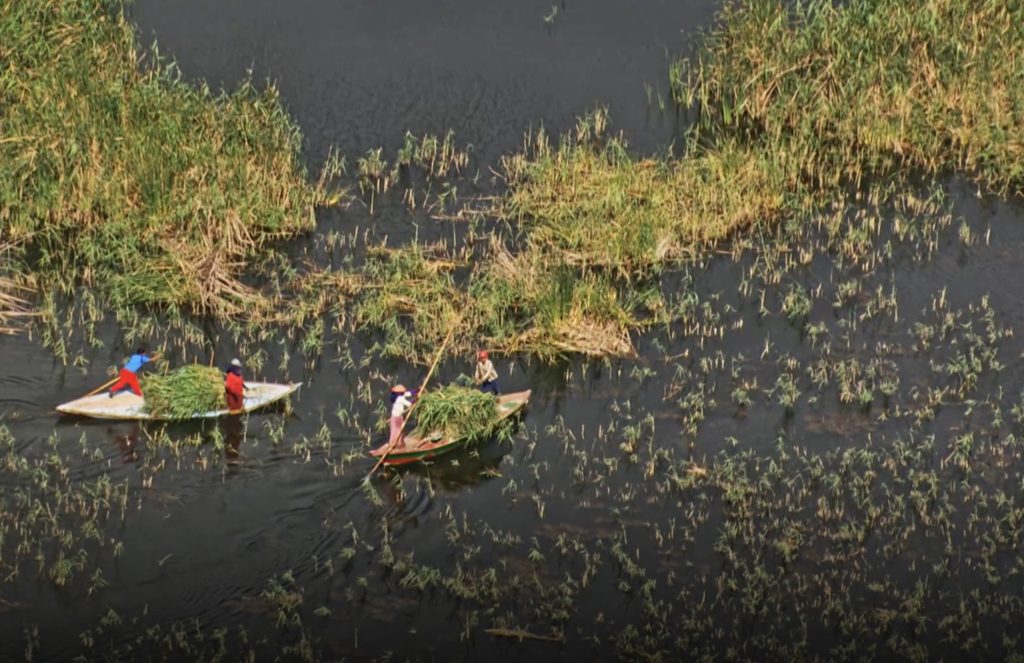
    Local people harvesting river plants from small boats along the Nile in Egypt
    Local workers collecting river vegetation from traditional boats on the Nile in Egypt.

    At the heart of Egypt lies the Nile River, one of the most remarkable waterways on Earth. The Nile is a major north-flowing river in northeastern Africa that empties into the Mediterranean Sea. At 7,088 kilometres in length, it is traditionally considered the longest river in the world.

    Despite its great length, the volume of water it carries is far smaller than that of other major rivers such as the Amazon or the Congo, whose tropical basins receive much heavier rainfall.

    What makes the Nile extraordinary is not its size alone but the role it played in shaping human civilisation. Each year the river flooded its banks, depositing nutrient-rich silt across the valley. This natural cycle transformed a narrow corridor of land into one of the most productive agricultural regions of the ancient world.

    Crops such as wheat and barley flourished, sustaining populations and allowing cities to develop along the river.

    Without the Nile, Egypt would simply be desert. With it, the land became the cradle of a civilisation that endured for more than three millennia.

    A River Shaped by Deep Geological Time

    Although the Nile seems eternal, geologically speaking it is a relatively young river. The river has flowed along roughly its present course for only about 12,000 years, after climatic changes at the end of the last Ice Age reshaped the drainage systems of northeastern Africa.

    Earlier geological periods saw very different river systems across the region. Only when climatic conditions stabilised did the Nile valley form the continuous river corridor we recognise today.

    In this sense, the landscape that allowed Egyptian civilisation to flourish is itself the result of relatively recent geological change.

    The Name of the Nile

    The name “Nile” carries its own long linguistic journey.

    The English word “Nile” derives from the Latin Nilus, which itself comes from the Ancient Greek Νεῖλος (Neilos). The Greek term may ultimately originate from the Semitic word naḥal, meaning “river” or “valley stream.”

    Ancient Egyptians themselves used different names for the river, often referring to it simply as Iteru, meaning “the river.”

    For them the Nile was not merely a geographical feature. It was the defining element of their world.

    A Green Corridor Through the Desert

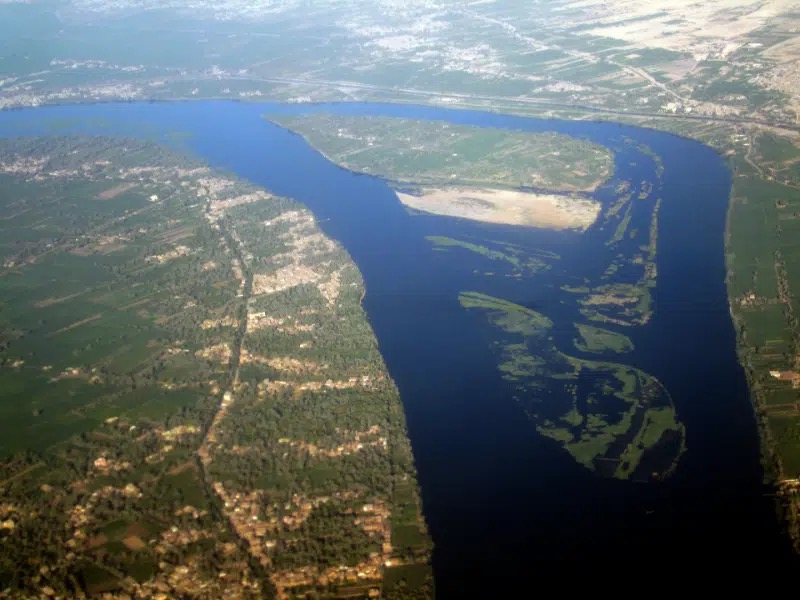
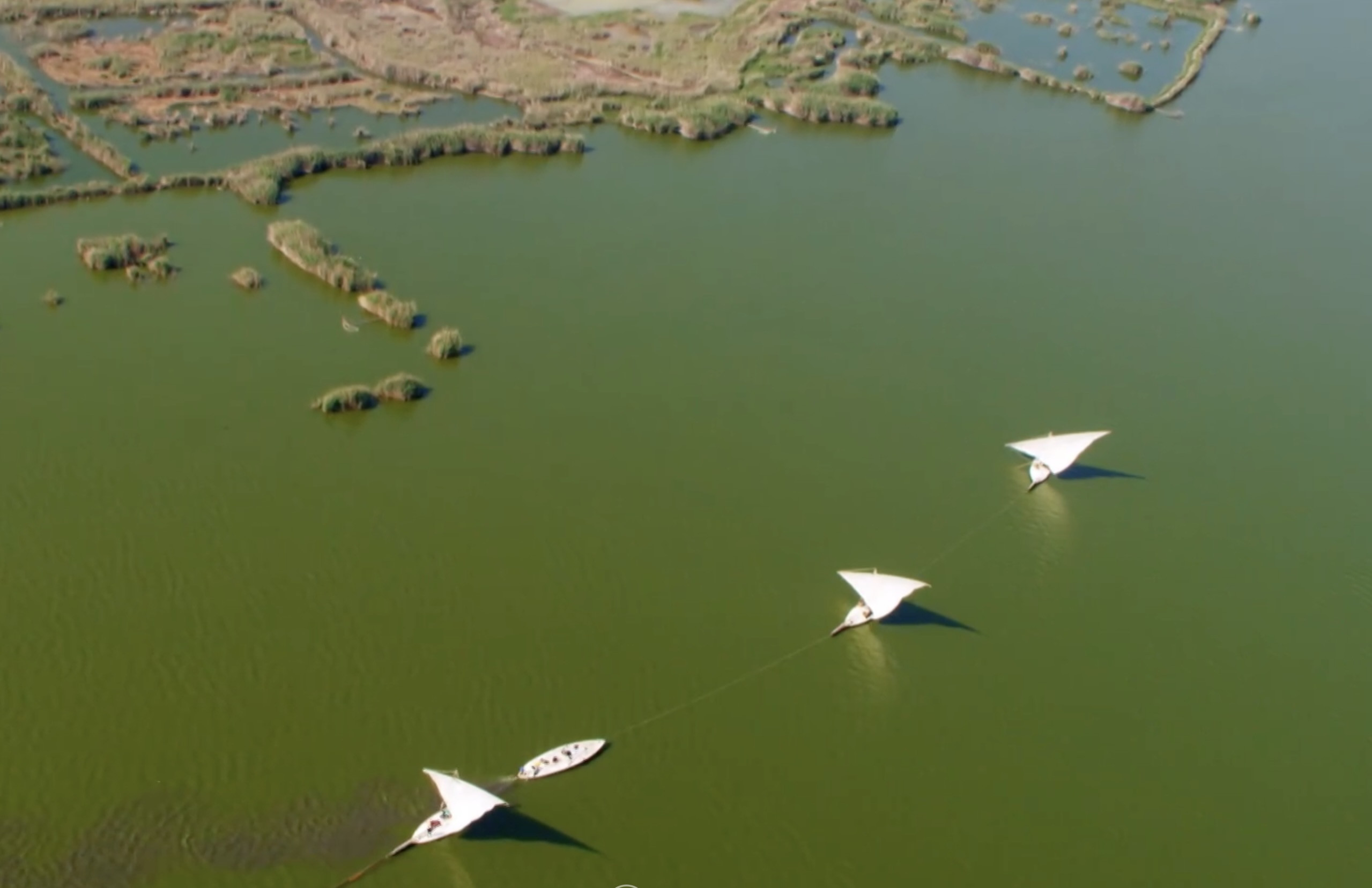
    Seen from above, Egypt appears as a striking contrast. A thin band of fertile green land follows the Nile through a vast sea of sand and stone.

    This valley is rarely more than 10 to 20 kilometres wide, yet it supported millions of people throughout ancient history. Every settlement, temple, and agricultural field depended on the river’s presence.

    The Nile therefore functioned not only as a source of water but also as Egypt’s main highway. Boats travelling along the river connected cities, temples, markets, and villages across hundreds of kilometres.

    In this sense the Nile was more than a river. It was the spine of the country, the axis along which Egyptian civilisation developed.

    A River and a Wind That Made Travel Possible

    One of the most remarkable geographical features of the Nile is the natural system that made navigation possible for thousands of years.

    The river flows from south to north, descending gradually from the highlands of East Africa toward the Mediterranean Sea. At the same time, the prevailing winds in Egypt blow in the opposite direction, from north to south.

    This unique combination created a natural transportation system long before engines or modern infrastructure existed.

    Boats travelling northward could simply follow the current of the river.

    Boats travelling southward could raise their sails and use the steady northern winds to move against the current.

    Thanks to this natural balance between river flow and wind direction, ancient Egyptians were able to navigate the Nile with remarkable efficiency. Traders, officials, pilgrims, and travellers could move along the river in both directions using simple sailing vessels.

    This geographical advantage played a decisive role in the development of Egyptian civilisation. The Nile became not only a source of water and fertile soil but also the primary highway of the country.

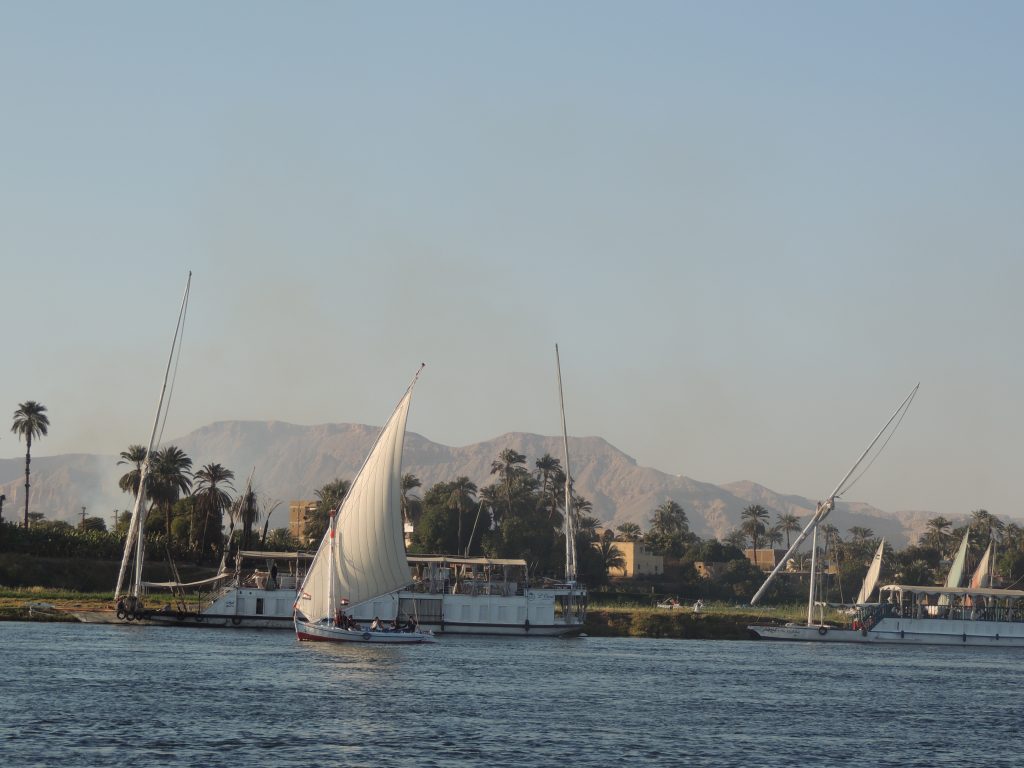
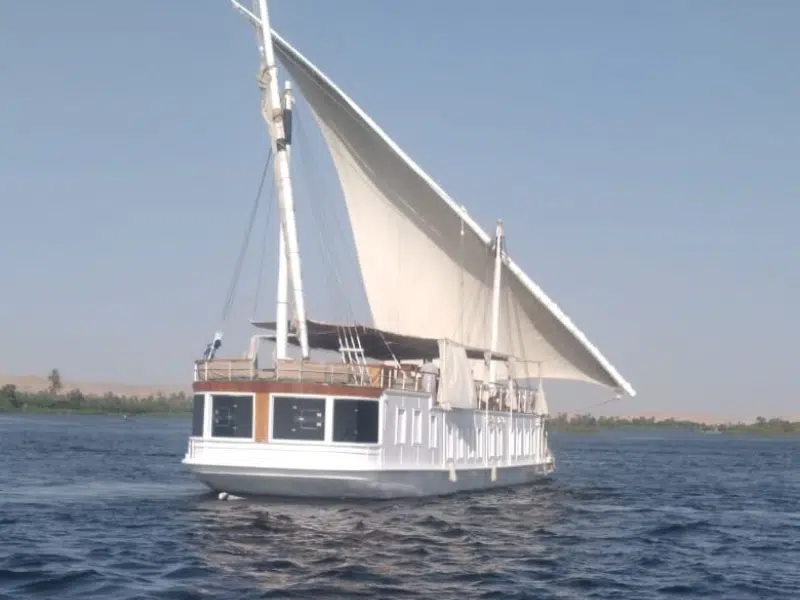
    Even today, traditional sailing boats such as feluccas and dahabiyas continue to rely on this same natural relationship between river current and prevailing winds.

    The Deserts That Protected Egypt

    Surrounding the Nile valley are vast desert regions that shaped Egypt’s historical stability.

    To the west lies the Western Desert, part of the Sahara and one of the largest desert regions on Earth. Within it are dramatic landscapes such as the White Desert, the Black Desert, and the immense dune fields of the Great Sand Sea, punctuated by ancient oasis settlements including Siwa, Bahariya, Farafra, Dakhla, and Kharga.

    To the east stretches the Eastern Desert, a rugged mountainous region between the Nile and the Red Sea. This landscape contains ancient mining areas and caravan routes linking the Nile with Red Sea ports used in antiquity for trade with Arabia, East Africa, and India.

    Further north lies the Sinai Peninsula, a land bridge between Africa and Asia with its own unique desert mountains and plateaus.

    Together these desert regions created natural barriers around the Nile valley. While not impossible to cross, they discouraged large-scale invasions and helped protect the civilisation that developed along the river.

    A Natural Corridor Between Continents

    Although the deserts protected Egypt, they also helped define its position as a crossroads between continents.

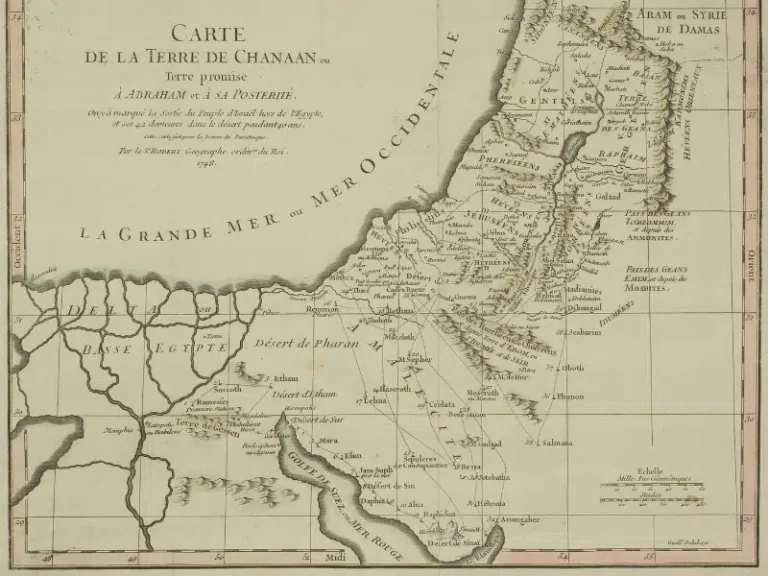
    The Nile valley formed a natural corridor linking central Africa with the Mediterranean world. Through the Sinai Peninsula Egypt connected with the Near East and the Levant, while Red Sea ports linked the Nile to maritime routes reaching Arabia, East Africa, and India.

    Merchants, diplomats, pilgrims, and travellers all moved through this landscape, following routes shaped by geography thousands of years earlier.

    A Landscape That Shaped a Civilization

    Ancient Egyptian society developed in close harmony with the rhythms of the Nile and the structure of the surrounding land.

    Agriculture depended on the annual flood. Cities rose along the riverbanks. Temples were aligned with the movement of the sun and the flow of the river.

    Even the way Egyptians described their own country reflected this geography.

    River-Based Orientation

    Ancient Egyptians did not orient themselves primarily by north and south but by the direction of the river.

    • Upstream (south) was called Upper Egypt

    • Downstream (north) was called Lower Egypt

    The Nile defined orientation, agriculture, religion, and daily life. In many ways Egypt was not simply a country with a river. It was a civilisation built around one.

    The Same Geography Still Defines Egypt Today

    Thousands of years later the same geographical structure continues to shape Egypt.

    Modern cities, agriculture, and transportation still follow the Nile valley. Travellers exploring the country today move along the same corridor that ancient Egyptians used thousands of years ago.

    Travelling along the river today still reveals the same landscape that shaped Egyptian civilisation, as described in Nile Narratives: A Timeless Journey Through the Heart of Egypt.

    Sailing between Aswan and Luxor, watching the river pass temples, villages, and desert cliffs, one experiences the same landscape that once sustained pharaohs, traders, and pilgrims.

    The geography that created Egypt has never truly changed.

    The Nile still flows north. The deserts still frame the valley. And the narrow green corridor along the river remains the heart of the country.
  • Tourism in Roman Egypt: When the Ancient World Came to See the Nile

    Tourism in Roman Egypt: When the Ancient World Came to See the Nile

    Egypt After 30 BC: From Kingdom of the Pharaohs to Roman Imperial Province

    In 30 BC, after the defeat of Mark Antony and Cleopatra VII following the Battle of Actium (31 BC), Egypt was annexed by Emperor Augustus and transformed into a Roman imperial province. From that moment Egypt became one of the most strategically important territories of the Roman Empire. Its significance was not only cultural but deeply economic. Egypt rapidly became the breadbasket of Rome, supplying enormous quantities of grain that fed the population of the imperial capital. At the time Rome was the largest city in the known world, with perhaps one million inhabitants, and its food supply depended heavily on the fertile harvests of the Nile valley. Yet Egypt was already famous long before the Romans arrived. When Roman travellers came to the Nile they encountered monuments that were already more than two and a half millennia old. For them, Egypt was not merely another province; it was a land of ancient wonders.

    Monuments Already Ancient to the Romans

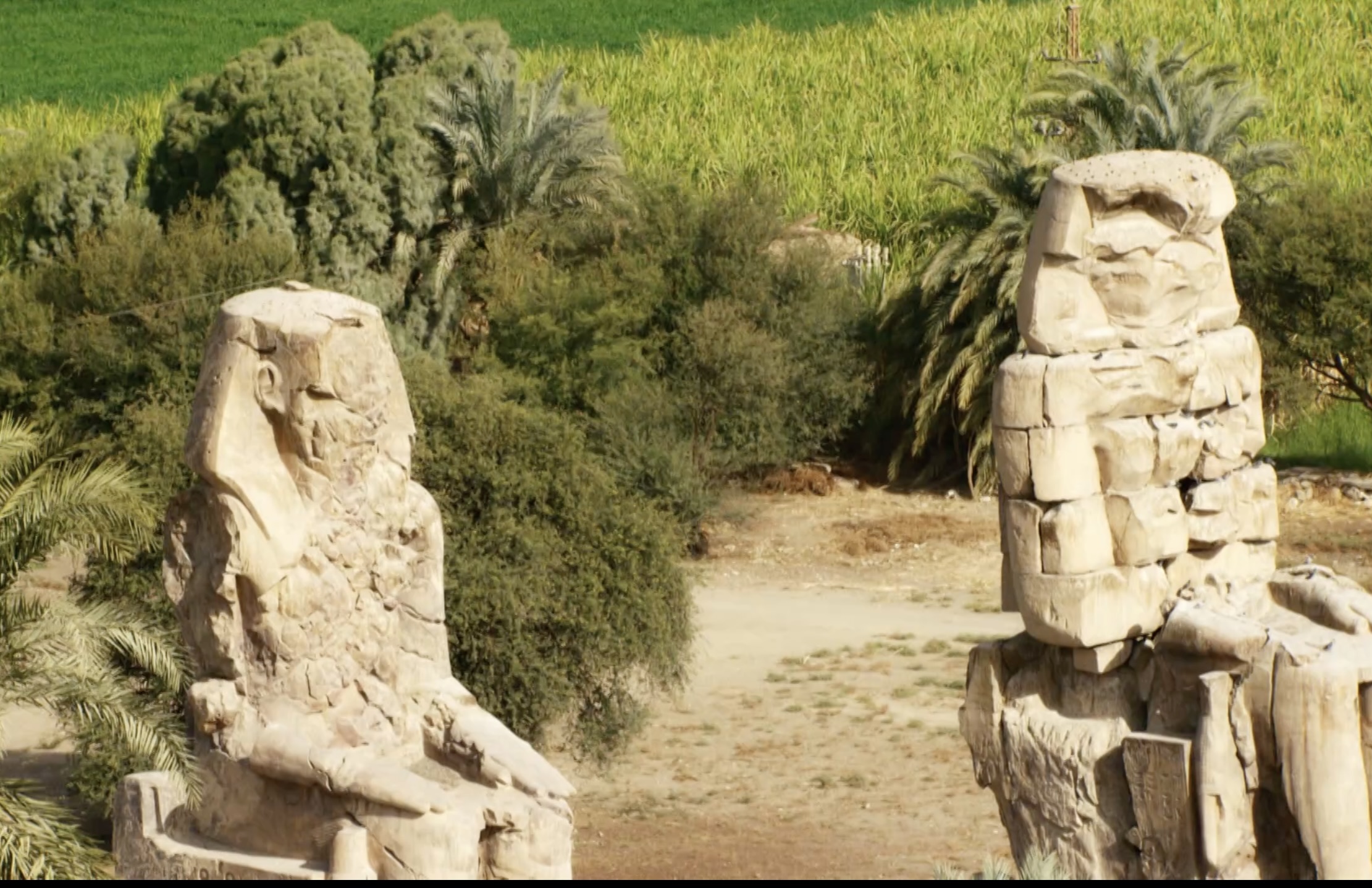
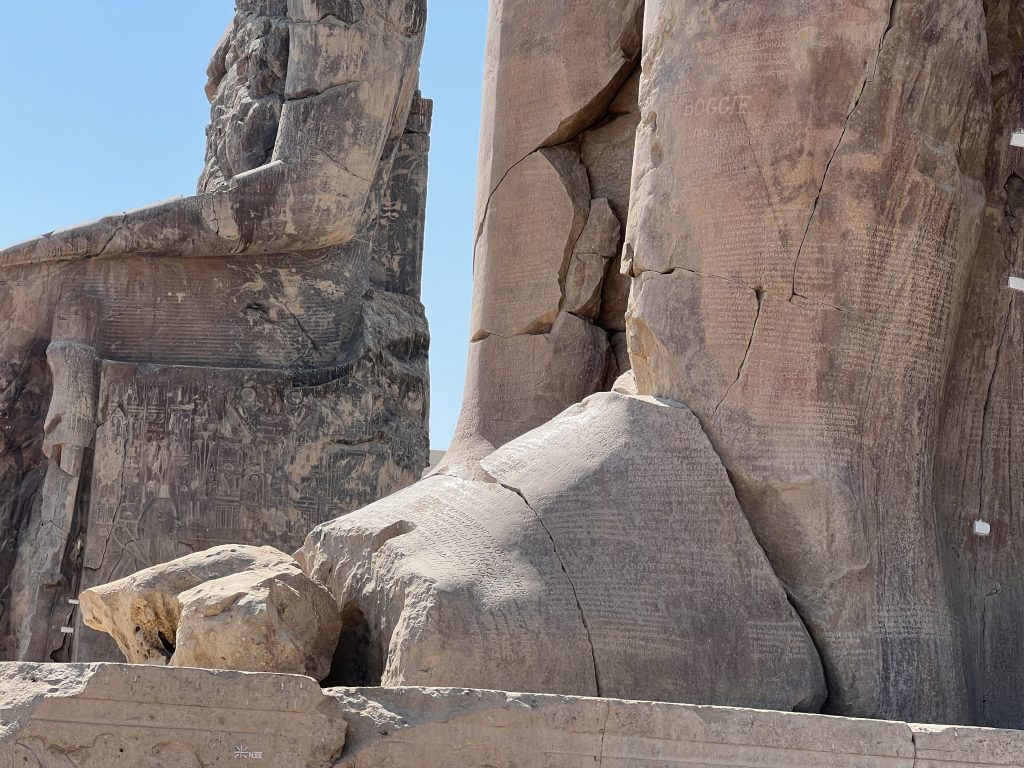
    By the first century AD the Great Pyramids of Giza, constructed around 2600–2500 BC during the Fourth Dynasty, were already among the oldest monumental structures still standing anywhere on Earth. Roman travellers visited them with the same sense of awe experienced by modern visitors. Evidence of these ancient travellers survives in the form of Greek and Latin graffiti carved into temple walls and monuments. One of the most fascinating examples comes from the Colossi of Memnon near Thebes (modern Luxor). After an earthquake in 27 BC, one of the giant statues began to produce a mysterious sound at sunrise due to cracks in the stone. Romans believed the statue was singing. Visitors from across the empire travelled to hear the phenomenon and carved inscriptions on the monument recording their presence. One Roman traveller wrote a short message that has survived nearly two thousand years: “I, Gaius Julius Balbillus, heard the voice of Memnon.” These inscriptions are among the earliest surviving examples of something that feels very much like tourist graffiti.

    Roman travellers were so impressed by the site that many carved their names into the statue itself. More than one hundred inscriptions left by visitors between the 1st and 3rd centuries AD still survive today.

    Ancient Greek and Roman inscriptions carved by travellers on the Colossi of Memnon in Luxor
    Greek and Roman inscriptions carved by visitors on the Colossi of Memnon near Luxor. Travellers from across the Roman Empire recorded their visits here between the 1st and 3rd centuries AD.

    Alexandria: Intellectual Capital of the Roman Mediterranean

    One of the most important destinations for Roman visitors was Alexandria, founded in 331 BC by Alexander the Great. By the Roman period the city had become one of the largest and most cosmopolitan cities in the Mediterranean world. It was second only to Rome in population and importance. Alexandria’s reputation rested largely on its intellectual life. The city was home to the famous Library of Alexandria and the scholarly institution known as the Mouseion, where scholars studied mathematics, astronomy, medicine, philosophy, and geography. Intellectuals from across the Roman world travelled to Alexandria to study, debate, and exchange ideas. Another marvel of the city was the Lighthouse of Pharos, built in the 3rd century BC and rising perhaps 100–120 metres high. It was one of the Seven Wonders of the Ancient World and guided ships safely into Alexandria’s enormous harbour. For travellers arriving by sea, the lighthouse symbolised both the technological brilliance and the prestige of the city.

    Egypt as the Breadbasket of the Roman Empire

    Beyond its monuments and learning, Egypt held enormous economic importance for Rome. The annual flooding of the Nile deposited fertile silt along the riverbanks, allowing agriculture to flourish in a region otherwise surrounded by desert. Roman administrators carefully organised grain production and shipment. Every year fleets of cargo ships transported grain from Alexandria to Rome, ensuring the stability of the empire’s food supply. Ancient writers such as Juvenalnoted how dependent Rome had become on Egyptian harvests. Without the grain of the Nile valley, feeding the population of the imperial capital would have been impossible. This economic role made Egypt not only a cultural destination but also a vital strategic territory within the Roman world.

    Religious Pilgrimage and Sacred Travel

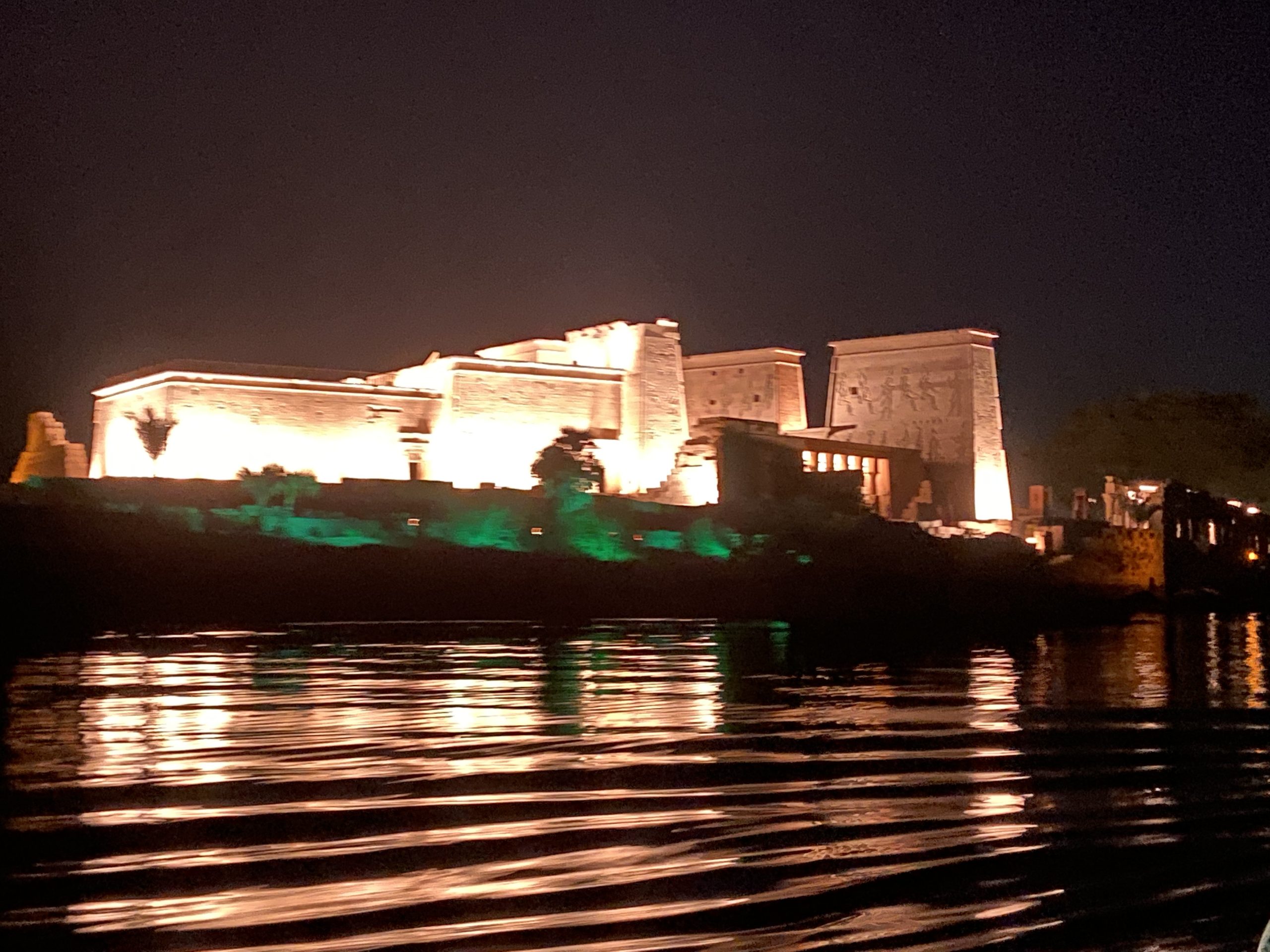
    Egypt also attracted visitors for religious reasons. The worship of Isis, originally an Egyptian goddess, spread widely across the Roman Empire. Temples dedicated to Isis appeared from Italy to Britain, and pilgrims travelled to Egypt to visit the sacred centres associated with her cult. One of the most important pilgrimage destinations was the Temple of Philae near Aswan, which remained an active religious sanctuary well into the Roman period. Another major religious site was the Serapeum of Alexandria, dedicated to the god Serapis, a deity combining Egyptian and Greek religious traditions. Pilgrims sought healing, divine guidance, and spiritual experiences at these temples, contributing to the constant flow of travellers entering Egypt.

    Travelling the Nile in Antiquity

    The Nile itself served as the great travel route through Roman Egypt. Visitors arriving in Alexandria could sail south along the river, stopping at cities and temple complexes that lined its banks. Boats carried merchants, administrators, scholars, and pilgrims through a landscape that was both fertile and monumental. Along the Nile stood some of the most impressive temple complexes of antiquity, including Dendera, Edfu, Kom Ombo, and Philae. For Roman travellers, sailing the Nile offered a journey through a landscape where ancient temples rose above green fields bordered by desert cliffs.

    A Travel Tradition More Than Two Thousand Years Old

    Although the word “tourism” did not exist in the Roman world, the motivations behind travel to Egypt were remarkably similar to those of modern travellers. Visitors came to admire ancient monuments, participate in religious ceremonies, pursue learning in Alexandria, conduct trade, and experience one of the most extraordinary landscapes of the ancient world. More than two thousand years later, the same temples, monuments, and river landscapes continue to attract visitors from across the globe. The fascination that once drew Roman travellers to the Nile remains very much alive today. In this sense, Egypt’s tradition of welcoming travellers is not modern at all. It is one of the oldest travel traditions in human history.

  • Why Does the Nile Flow North?

    Why Does the Nile Flow North?

    Understanding the Geography Behind One of the World’s Most Extraordinary Rivers

    Standing on the banks of the Nile for the first time often brings a moment of surprise. The river moves steadily northward, eventually emptying into the Mediterranean Sea. On a map this can feel almost counter-intuitive, as the river appears to flow “upward” toward the top of the page.

    Yet the Nile is not behaving unusually at all. It is simply following the most basic rule governing every river on Earth: gravity.

    Water always flows from higher elevation to lower elevation. The Nile flows north because the highlands of East Africa sit far above the Mediterranean coast, creating a natural slope that guides the river toward the sea.

    This simple geographical fact shaped the development of one of the most remarkable civilisations in human history.

    Rivers Follow Gravity, Not Compass Directions

    Many people assume rivers normally flow south, but this is a misconception. Rivers have no preferred direction on a compass. Their course is determined entirely by the topography of the land they cross.

    If the land slopes northward, the river will flow north. If the terrain slopes east, west, or south, the river will follow that path instead.

    The Nile happens to flow north because the interior of Africa is elevated compared to the Mediterranean coastline. From its sources in the highlands, the river gradually descends across thousands of kilometres until it reaches the sea.

    Where the Nile Begins

    The Nile does not begin at a single spring but in a vast network of lakes, rivers, and rainfall across eastern and central Africa.

    Two great tributaries form the main river.

    The White Nile

    The White Nile originates in the Great Lakes region of Africa. Lake Victoria is commonly considered its principal source, although several smaller rivers feed into the lake itself.

    From there the White Nile flows through Uganda and South Sudan, providing a steady and reliable supply of water to the Nile system.

    The Blue Nile

    The Blue Nile begins at Lake Tana in the Ethiopian highlands. Seasonal monsoon rains in Ethiopia dramatically increase its volume each year.

    In ancient Egypt these rains produced the famous annual flooding of the Nile, which deposited fertile silt along the riverbanks and allowed agriculture to flourish in an otherwise arid land.

    The Blue Nile and the White Nile meet in Khartoum, Sudan, where the two rivers merge before continuing their journey north toward Egypt.

    The Countries of the Nile

    The Nile travels through a remarkable portion of the African continent.

    Countries the main river flows through

    The principal course of the Nile passes through four countries:

    • Uganda
    • South Sudan
    • Sudan
    • Egypt

    Countries belonging to the Nile Basin

    However, the full Nile basin — the vast region whose rainfall eventually feeds the river — includes eleven countries:

    • Egypt
    • Sudan
    • South Sudan
    • Ethiopia
    • Uganda
    • Kenya
    • Tanzania
    • Rwanda
    • Burundi
    • Democratic Republic of Congo
    • Eritrea (partially connected through tributaries)

    This enormous watershed makes the Nile one of the most internationally shared river systems in the world.

    The Nile and the Birth of Egyptian Civilisation

    By the time the Nile reaches Egypt it has already travelled thousands of kilometres across Africa. Yet its final stretch may be the most historically significant.

    Across the Egyptian desert the river forms a narrow ribbon of fertile land surrounded by vast arid landscapes. For thousands of years this green corridor made agriculture, settlements, and cities possible.

    Temples, towns, and fields developed along the banks of the river, making the Nile the central lifeline of Egyptian civilisation.

    How Ancient Egyptians Understood Direction

    Ancient Egyptians had their own distinctive way of understanding geography. Rather than orienting themselves primarily by north and south, they organised their world according to the flow of the river.

    River-Based Orientation

    • Upstream (south) was called Upper Egypt
    • Downstream (north) was called Lower Egypt

    These names reflect elevation rather than compass direction.

    For the ancient Egyptians the Nile was not simply a river crossing the land. It was the axis around which the entire country was organised.

    Their geography was literally river-centred thinking. The Nile defined orientation, agriculture, time, transportation, and even religious symbolism. The annual flood determined the agricultural calendar, while the river itself served as the primary route linking cities, temples, and communities.

    In this sense, the Nile was far more than landscape. It was the structure of Egyptian life.

    Experiencing the Nile Today

    For travellers today, the Nile remains the thread connecting Egypt’s landscapes, history, and culture.

    Between Aswan and Luxor, the river flows past ancient temples, small villages, palm groves, and desert cliffs that have witnessed thousands of years of human history.

    Sailing the Nile offers one of the most meaningful ways to experience Egypt. Travellers can explore the river aboard:

    • traditional felucca sailing boats, offering an authentic and peaceful journey
    • elegant dahabiya vessels, combining classic sailing with comfort and spacious decks

    Both experiences reveal how the Nile continues to shape life along its banks, just as it did in the time of the pharaohs.

    A River Shaped by Deep Time

    The Nile’s northward journey is ultimately the result of millions of years of geological change. The uplift of the East African highlands created the slopes that still guide the river today.

    Long before pyramids or temples existed, the landscape itself had already determined the direction of Egypt’s future.

    Sometimes the forces that shape civilisations are not political or cultural at all.

    Sometimes they begin with something as simple — and as powerful — as gravity guiding a river toward the sea.

  • 6 Days in Egypt: The Perfect Itinerary from Cairo to the Nile

    6 Days in Egypt: The Perfect Itinerary from Cairo to the Nile

    Discover Pyramids, Temples, and the Timeless River in One Unforgettable Journey

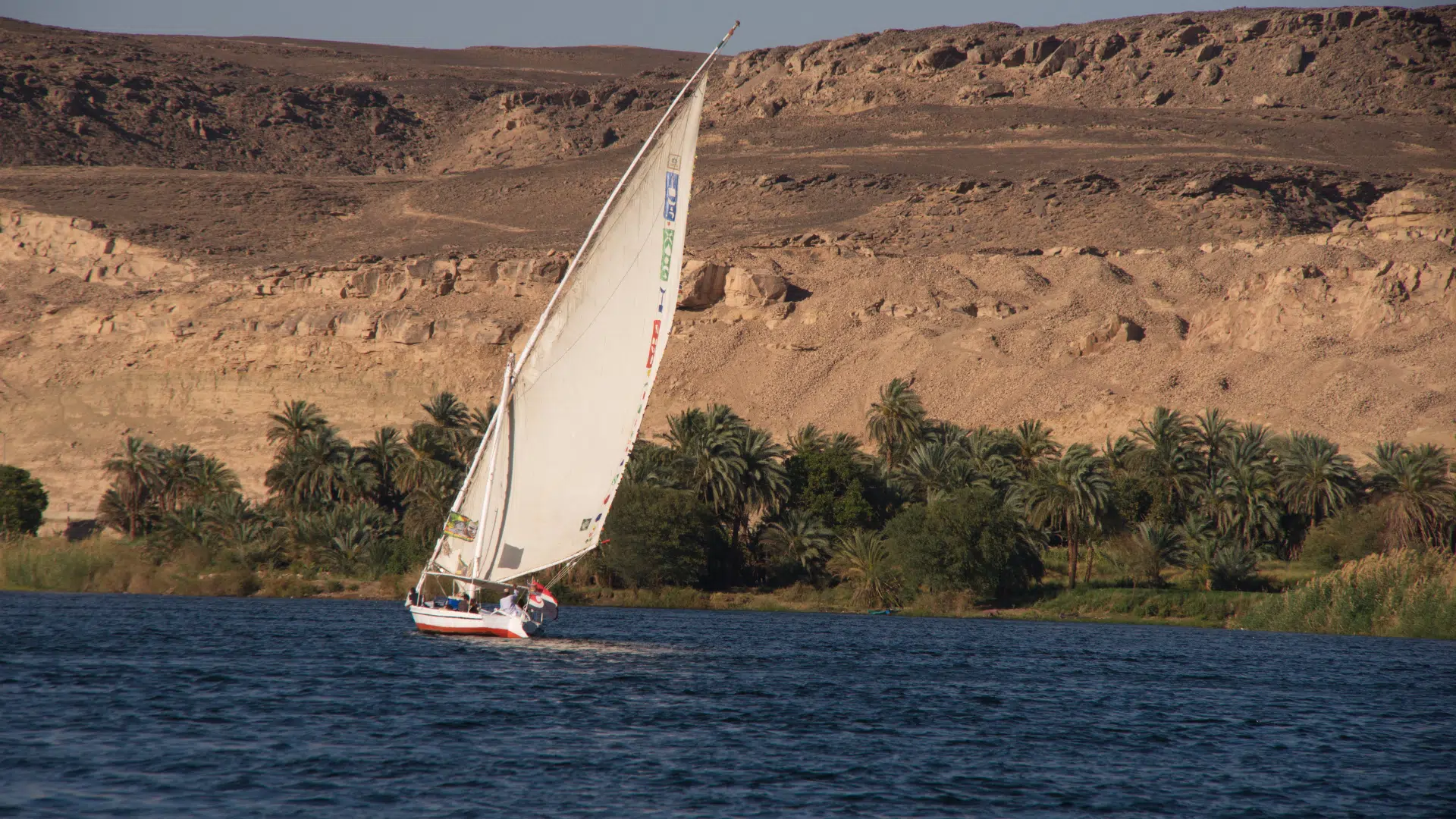
    Traditional Egyptian feluccas sailing on the Nile River near Aswan with palm trees and desert mountains in the background
    Sailing the Nile where desert, river, and life meet.

    Egypt is one of the most fascinating travel destinations in the world, where ancient civilisation, monumental architecture, and living culture exist side by side. Even with limited time, travellers can experience many of the country’s most extraordinary sites.

    If you have six days in Egypt, a carefully planned itinerary allows you to explore the pyramids of Cairo and the legendary temples along the Nile between Aswan and Luxor. The key is combining internal flights with a memorable sailing journey along the Nile.

    This itinerary assumes arrival in Cairo the day before, allowing the journey to begin fresh on Day 1.

    Day 1 – Cairo: The Pyramids of Giza and the Treasures of Egypt

    Your journey begins in Cairo, Egypt’s vibrant capital and gateway to one of the most extraordinary civilisations in history.

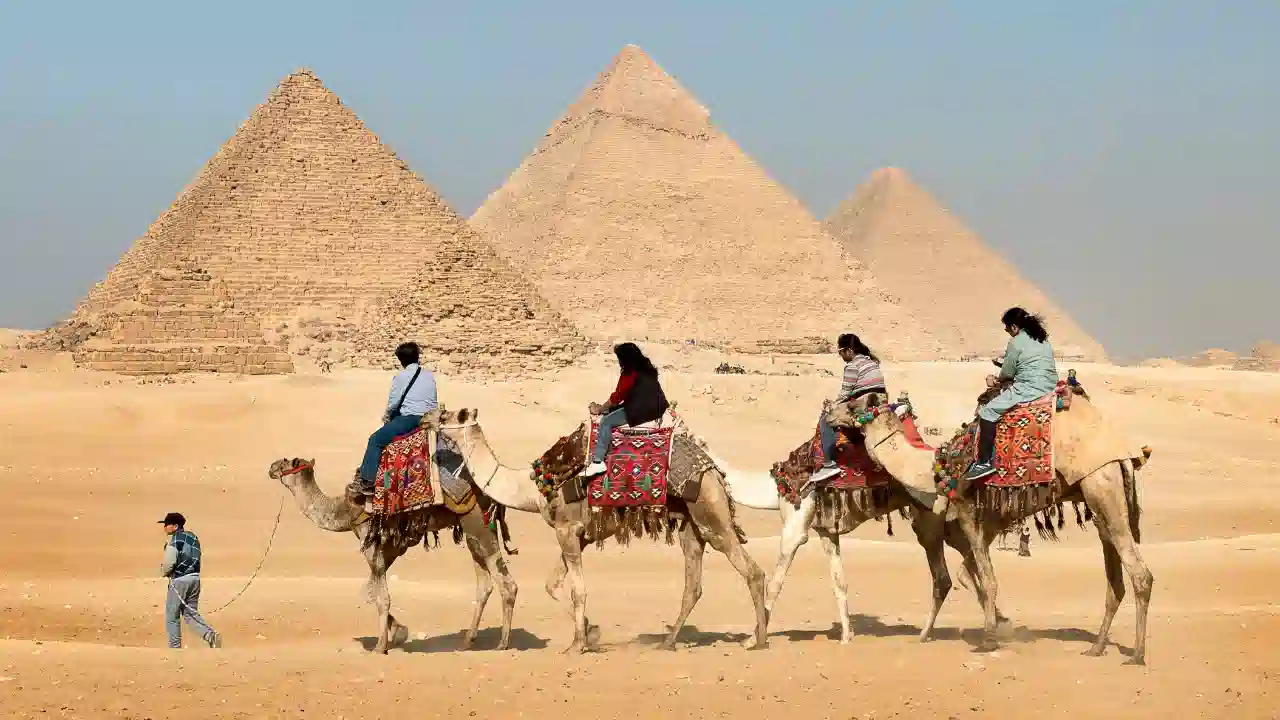
    Start the day at the Great Pyramids of Giza, one of the Seven Wonders of the Ancient World. Standing beside these monumental structures offers a powerful connection to the pharaohs who ruled Egypt more than 4,500 years ago.

    Nearby, the Great Sphinx continues to guard the plateau with its timeless gaze.

    In the afternoon, visit the Egyptian Museum (or the Grand Egyptian Museum if open during your visit), home to thousands of artefacts including the famous treasures of Tutankhamun.

    End the day exploring Khan El Khalili Bazaar, where Cairo’s vibrant atmosphere, traditional crafts, and historic cafés offer a memorable introduction to Egyptian culture.

    Day 2 – Flight to Aswan and the Beauty of the Nile

    An early morning flight from Cairo to Aswan (about 1 hour 30 minutes) brings you to one of the most peaceful cities in Egypt.

    Highlights of the day include:

    • The Temple of Philae, dedicated to the goddess Isis and beautifully located on an island in the Nile
    • The Aswan High Dam, a remarkable modern engineering project
    • A traditional felucca sailing experience at sunset around Elephantine Island

    Aswan’s relaxed pace and Nubian culture provide a wonderful contrast to Cairo.

    Day 3 – Abu Simbel: Ramses II’s Monumental Masterpiece

    One of Egypt’s most breathtaking sites awaits today: Abu Simbel.

    Located about 280 km south of Aswan, these colossal temples were built by Pharaoh Ramses II in the 13th century BCE and later relocated in an extraordinary UNESCO rescue project.

    The temples honour:

    • Ramses II himself
    • Queen Nefertari
    • The gods Ra-Horakhty, Amun, and Ptah

    Most travellers depart very early in the morning to avoid the heat and return to Aswan around midday.

    The afternoon can be spent relaxing, visiting a Nubian village, or preparing for the journey north along the Nile.

    Day 4 – Sailing the Nile: Kom Ombo and Edfu

    The journey north from Aswan to Luxor offers the opportunity to explore two remarkable temples along the Nile.

    The first stop is Kom Ombo Temple, uniquely dedicated to two gods:

    • Sobek, the crocodile god
    • Horus the Elder, the falcon god

    Continue to Edfu Temple, one of the best-preserved temples in Egypt. Built during the Ptolemaic period, it is dedicated to Horus and contains some of the finest relief carvings in the country.

    After visiting Edfu, continue your journey along the Nile toward Luxor.

    Day 5 – Luxor: The World’s Greatest Open-Air Museum

    Luxor is often described as the world’s greatest open-air museum, and for good reason.

    On the West Bank of the Nile, visit:

    • The Valley of the Kings, burial place of many pharaohs including Tutankhamun
    • The magnificent Temple of Hatshepsut at Deir el-Bahri
    • The Colossi of Memnon

    In the afternoon, cross to the East Bank to explore:

    • The vast temple complex of Karnak, one of the largest religious sites ever built
    • Luxor Temple, particularly impressive when illuminated in the evening

    Day 6 – Return to Cairo

    Fly from Luxor back to Cairo (about 1 hour).

    Depending on your departure schedule, you may have time to explore:

    • Coptic Cairo and the Hanging Church
    • The Citadel of Salah El-Din and the Mosque of Muhammad Ali
    • Additional museums or a final walk through historic Cairo

    Your Egyptian journey ends with memories of pyramids, temples, and the timeless Nile.

    Experience the Nile by Felucca or Dahabiya

    One of the most memorable parts of this itinerary is the journey along the Nile between Aswan and Luxor. At Egypt Discovering, this section of the trip can be experienced in two different ways depending on your preferred style of travel.

    Felucca Sailing: Authentic Nile Adventure

    For travellers who enjoy nature, simplicity, and a true connection with the river, sailing on a traditional Egyptian feluccaoffers an unforgettable experience.

    Feluccas are traditional wooden sailing boats powered only by wind. Travellers experience peaceful sailing, stops at small villages, swimming in the Nile, and camping on quiet river beaches under the stars.

    This option is ideal for those seeking authenticity, adventure, and a deeper connection with the natural rhythm of the Nile.

    Dahabiya Cruises: Elegant Luxury on the Nile

    For travellers who prefer comfort and elegance, the same journey can be experienced aboard a dahabiya.

    Dahabiyas are beautiful traditional sailing vessels, typically 35–40 metres long, offering spacious cabins, shaded decks, and personalised service. Historically used by Egyptian nobility and nineteenth-century explorers, modern dahabiyas combine traditional sailing charm with contemporary luxury.

    Guests can relax on deck while the landscapes of Upper Egypt unfold slowly along the river.

    Flexible Itinerary and Seasonal Pricing

    This itinerary can be adapted depending on travel preferences and available time. The Nile journey between Aswan and Luxor can be organised by felucca or dahabiya.

    Prices may vary depending on the season, travel demand, and type of vessel chosen.

    At Egypt Discovering, our team will help create the itinerary that best fits your travel style.

    Travel Logistics: Why Flying Saves Time

    Egypt is a large country and distances between major destinations are considerable.

    Approximate distances:

    Cairo → Aswan: 880 km

    Aswan → Abu Simbel: 280 km

    Aswan → Luxor: 220 km

    Domestic flights between Cairo, Aswan, and Luxor make it possible to experience the highlights of Egypt within six days while leaving time to explore the Nile region comfortably.

  • Hatshepsut: The Woman Who Became Pharaoh

    Hatshepsut: The Woman Who Became Pharaoh

    A Queen Who Redefined Power in Ancient Egypt

    Among the rulers of Ancient Egypt, few figures are as remarkable as Hatshepsut. She was not only one of the most successful female leaders in history but also a monarch who transformed how kingship itself could be understood. Rising from queen and regent to full pharaoh, Hatshepsut reshaped royal authority, political legitimacy, and gender expectations in one of the world’s greatest civilisations.

    Her reign during the 18th Dynasty (1479–1458 BCE) marked a period of stability, prosperity, and monumental building that continues to inspire visitors today, particularly at her extraordinary mortuary temple at Deir el-Bahri near Luxor.

    From Regent to Pharaoh: Breaking Tradition

    Hatshepsut was the daughter of Pharaoh Thutmose I and later became the wife of her half-brother, Thutmose II. After his death, the throne passed to his young son, Thutmose III. As the child king was too young to rule independently, Hatshepsut initially served as regent — a traditional role for royal women.

    However, within a few years, she took an unprecedented step: she declared herself pharaoh.

    Rather than ruling only in the background, Hatshepsut adopted full royal titles, regalia, and authority. She wore the double crown of Upper and Lower Egypt, carried the crook and flail, and was often depicted with the ceremonial false beard associated with kingship.

    Her imagery sometimes presented her with traditionally male attributes, not to conceal her identity, but to align her with the established visual language of royal power.

    The Meaning of the Title “Pharaoh”

    The word “pharaoh” derives from the Egyptian term per-aa, meaning “great house”, originally referring to the royal palace or institution of kingship rather than the individual ruler. Over time, the term evolved into a direct designation for the king himself.

    During and after Hatshepsut’s period, this linguistic transition became increasingly formalised. Her reign therefore represents an important moment in the development of royal identity, when the concept of kingship expanded beyond traditional male succession.

    More importantly, Hatshepsut demonstrated that royal authority could be legitimised through divine ideology, political competence, and public works — not solely through gender.

    A Reign of Peace and Prosperity

    Unlike many rulers remembered primarily for military conquest, Hatshepsut’s legacy is defined by economic growth and cultural development. She initiated extensive trade expeditions, most famously to the land of Punt, bringing exotic goods, incense trees, and wealth back to Egypt.

    Her building programme was equally impressive. Temples, monuments, and obelisks across Egypt reflected both artistic innovation and political stability.

    The most spectacular achievement remains her mortuary temple at Deir el-Bahri, a masterpiece of architecture integrated harmoniously into the cliffs of western Thebes. Today, it stands as one of Egypt’s most iconic archaeological sites.

    Women and Power Before Hatshepsut

    Hatshepsut was not the first woman to hold authority in Egypt. Earlier figures such as Queen Merneith of the First Dynasty may have ruled as regent or monarch in their own right. However, Hatshepsut elevated female rulership to an entirely new level by assuming full pharaonic identity and sustaining it successfully for decades.

    Her reign proved that leadership in Ancient Egypt could transcend conventional gender boundaries when supported by religious legitimacy and political skill.

    Legacy and Historical Memory

    After Hatshepsut’s death, some of her monuments were altered or her images removed, possibly during the later reign of Thutmose III. Yet her achievements could not be erased. Archaeology and historical research have restored her place as one of Egypt’s most influential rulers.

    Today, she is recognised not only as a pioneering female leader but also as a symbol of innovation, resilience, and political intelligence.

    Experiencing Hatshepsut’s Egypt Today

    Travellers visiting Luxor can explore the landscapes associated with her reign — the temples of Karnak, the Valley of the Kings, and especially Deir el-Bahri. Standing before her temple offers a direct connection to a ruler who reshaped Egyptian history more than three thousand years ago.

    At Egypt Discovering, journeys through Upper Egypt allow visitors to experience these sites within the broader cultural and historical context that defined Hatshepsut’s era.

    A Queen Who Changed the Rules

    Hatshepsut’s story is ultimately about transformation — of identity, power, and possibility. She did not simply inherit authority; she redefined it.

    In doing so, she ensured that her legacy would endure alongside the greatest pharaohs of Egypt.

  • Forbearance in Ancient Egypt

    Forbearance in Ancient Egypt

    What the Pyramids Teach Us About Patience, Endurance, and Time

    In today’s fast-moving world, patience often feels like a forgotten virtue. Technology delivers immediate results, expectations are shaped by speed, and waiting can feel uncomfortable. Yet one of the greatest civilisations in human history was built upon a very different relationship with time — one defined by endurance, discipline, and long-term vision.

    Ancient Egypt offers a powerful reminder that meaningful achievements rarely happen quickly. From the construction of pyramids to the organisation of society itself, Egyptian culture was rooted in forbearance — the ability to persist calmly over long periods toward a greater goal.

    Understanding this mindset provides insight not only into Egyptian civilisation but also into our own relationship with time and ambition.

    Building Eternity: The Pyramids as Symbols of Patience

    Around 2500 BCE, the construction of pyramids required years — sometimes decades — of coordinated effort. Thousands of workers transported stone, organised labour, and planned architectural structures with extraordinary precision. Many individuals involved in these projects would never see the final result completed during their lifetimes.

    This long-term commitment reflected a worldview centred on continuity rather than immediacy. The pyramids were not simply tombs; they were expressions of eternity, cosmic order, and belief in the afterlife.

    For the Egyptians, time extended far beyond individual lifespan. What mattered was contributing to something enduring.

    Ma’at: The Philosophy of Balance and Endurance

    At the heart of Egyptian thought was the concept of Ma’at — the principle of balance, order, harmony, and justice that governed both the universe and human society. Maintaining Ma’at required patience, responsibility, and perseverance.

    Forbearance was therefore not merely practical but spiritual. Stability, calm effort, and disciplined action were seen as ways of sustaining cosmic harmony.

    This worldview contrasts sharply with modern expectations of rapid results and immediate gratification.

    Ancient Perspective and Modern Life

    Modern society often rewards speed, efficiency, and instant outcomes. While technological progress has brought enormous benefits, it can also reduce tolerance for delay or uncertainty.

    Ancient Egyptians approached life differently. Agricultural cycles followed the Nile’s rhythms. Monumental projects unfolded over generations. Religious beliefs emphasised preparation for eternity rather than immediate success.

    Their achievements — temples, pyramids, and cultural traditions that still inspire the world — were made possible by this long-term perspective.

    Lessons from Ancient Egypt for Today

    The endurance demonstrated by Egyptian civilisation offers valuable lessons:

    • Significant accomplishments require time and consistency
    • Long-term thinking creates lasting impact
    • Patience supports clarity and stability
    • Effort invested today may benefit future generations

    These principles remain relevant in modern life, whether applied to personal goals, creative work, or societal development.

    Experiencing Timelessness in Egypt Today

    Travellers visiting Egypt often sense this different relationship with time. Standing before the pyramids, sailing along the Nile, or exploring ancient temples creates an awareness of continuity across thousands of years.

    Egypt is not only a destination of monuments but also an encounter with endurance — a civilisation shaped by patience and vision.

    At Egypt Discovering, journeys along the Nile offer moments of quiet reflection where travellers can experience this timeless atmosphere directly.

    A Civilisation Built on Patience

    Ancient Egypt reminds us that the most enduring creations emerge from persistence rather than speed. The pyramids still stand because they were built with patience measured not in days or years, but in generations.

    Forbearance, once central to Egyptian life, remains a powerful skill today.

    Sometimes, the greatest progress happens slowly.

  • Imhotep: The Genius of Ancient Egypt Who Became a God

    Imhotep: The Genius of Ancient Egypt Who Became a God

    Architect, Physician, and Visionary of the Pyramid Age

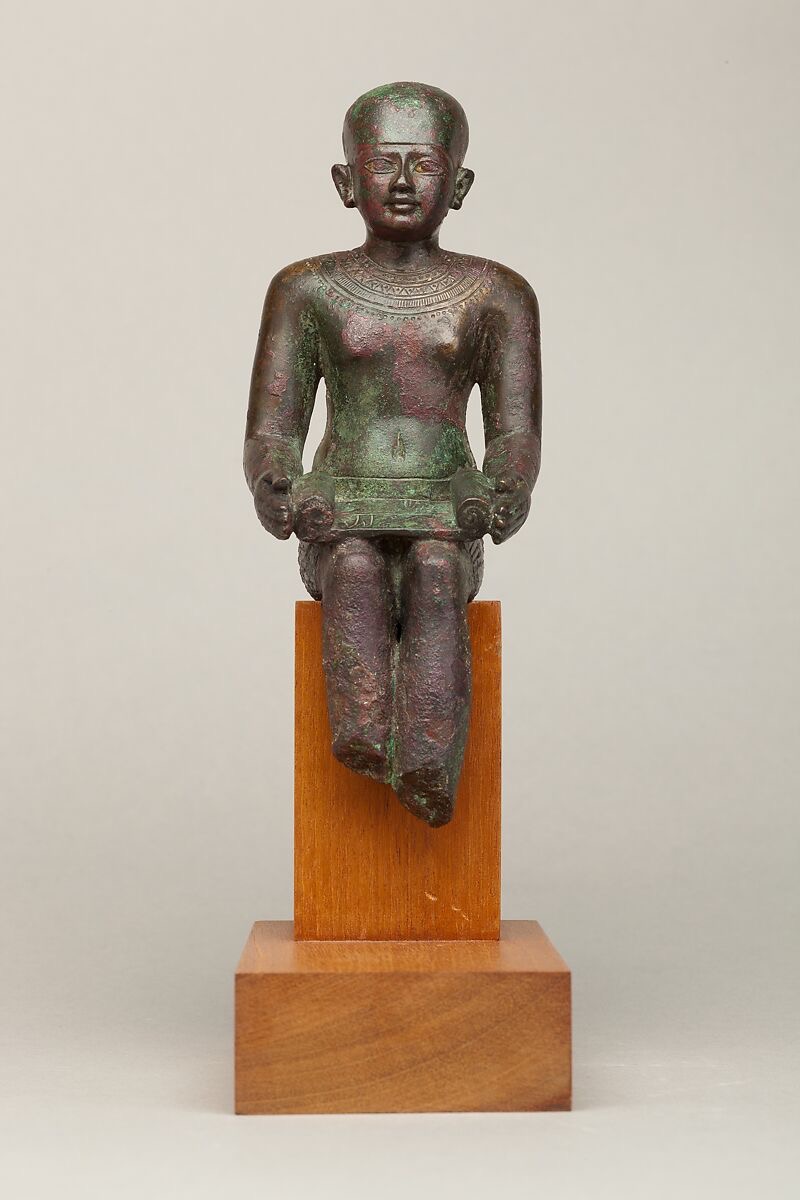
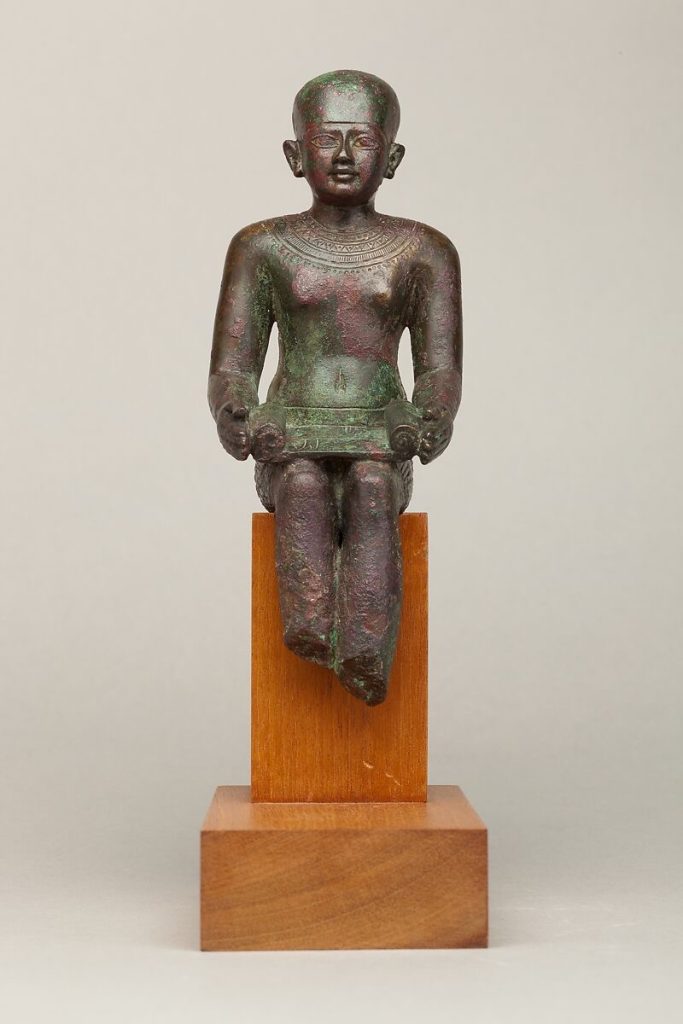
    Statue of Imhotep seated with papyrus scroll, ancient Egyptian architect and physician associated with the Step Pyramid at Saqqara.
    Statuette of Imhotep, Late Period–Ptolemaic Period (664–30 B.C.), from Memphis (Mit Rahina), Egypt. The seated figure represents Imhotep, architect of the Step Pyramid of Djoser and later revered as a god of wisdom and healing. Metropolitan Museum of Art, New York, Egyptian Art Collection.

    When people think of Ancient Egypt, they often imagine pyramids, pharaohs, and powerful gods. Yet one of the most extraordinary figures in Egyptian history began life not as a ruler or deity, but as a human whose brilliance transformed civilisation itself. His name was Imhotep — architect, physician, scholar, and eventually a god.

    Living during the Third Dynasty around 2650–2600 BCE, Imhotep served Pharaoh Djoser and rose to become one of the most influential individuals in early Egyptian history. His achievements were so remarkable that centuries later he was worshipped as a divine healer and patron of wisdom.

    Imhotep’s legacy bridges science, architecture, religion, and culture — making him one of the most fascinating personalities of the ancient world.

    Architect of the First Pyramid in History

    Imhotep is best known as the designer of the Step Pyramid of Djoser at Saqqara, widely recognised as the first monumental stone building ever constructed. Before this innovation, royal tombs were mastabas — flat, rectangular structures built from mudbrick.

    Imhotep introduced a revolutionary concept: stacking mastabas vertically to create a stepped structure rising toward the heavens. The result was the Step Pyramid complex, a vast architectural achievement that marked the beginning of the pyramid age.

    This innovation laid the foundations for the later pyramids of Giza, including the Great Pyramid of Khufu. In many ways, Imhotep changed the course of architectural history.

    Today, travellers visiting Saqqara encounter the origins of pyramid construction — a site that reflects the birth of monumental Egyptian architecture.

    Imhotep and the Origins of Medicine

    Beyond architecture, Imhotep gained legendary status as a physician. Although original medical texts attributed directly to him have not survived, ancient traditions consistently described him as a master healer with deep knowledge of anatomy, surgery, and herbal treatments.

    Centuries later, Egyptians honoured him as a god of medicine and healing. The Greeks identified him with their own healing deity, Asclepius, demonstrating how far his reputation spread beyond Egypt.

    Because of this association, Imhotep is often described as one of the earliest figures in the history of medical science.

    Political Power and Religious Influence

    Imhotep’s influence extended into government and religion. Serving as vizier under Pharaoh Djoser, he held one of the highest administrative positions in Egypt, effectively acting as chief advisor to the king.

    He also served as a high priest connected with the cult of Ra, the sun god, linking political authority with religious responsibility. This combination of intellectual, administrative, and spiritual roles elevated his status far beyond that of a typical official.

    Imhotep represented the ideal Egyptian scholar: knowledge combined with service to cosmic order, known as Ma’at.

    From Human to God: The Deification of Imhotep

    The transformation of Imhotep from historical figure to deity occurred gradually over centuries. By the New Kingdom period, around 1500 BCE, he was already revered as a semi-divine sage. During the Greco-Roman era, his worship expanded significantly, with temples dedicated to him across Egypt.

    Unlike most Egyptian gods, who were mythological from the beginning, Imhotep was a real person elevated to divine status — an exceptionally rare honour in Egyptian tradition.

    He was often depicted as a seated scholar holding a papyrus scroll, symbolising wisdom and learning.

    Imhotep’s Enduring Legacy

    Imhotep’s achievements shaped multiple fields:

    • Architecture — pioneering monumental stone construction
    • Medicine — early foundations of healing knowledge
    • Governance — administrative leadership under Pharaoh Djoser
    • Religion — later worship as a divine healer and sage

    Few individuals in human history have influenced so many domains simultaneously.

    For travellers exploring Egypt today, sites such as Saqqara provide direct connection to Imhotep’s world. Standing before the Step Pyramid allows visitors to witness the beginning of architectural innovation that would define Egyptian civilisation for millennia.

    A Legacy That Transcends Time

    Imhotep’s story demonstrates how knowledge, creativity, and vision can elevate a human life into legend. His transformation from scholar to god reflects the profound respect ancient Egyptians held for wisdom and achievement.

    More than 4,500 years later, his name remains synonymous with genius, innovation, and healing.

    Imhotep was not born a god.

    He became one.

  • Experience the Nile in Early Spring

    Experience the Nile in Early Spring

    The Perfect Escape Along Egypt’s Timeless River

    As winter fades and early spring arrives, the Nile enters one of its most beautiful travel seasons. Between March and April, temperatures are warm yet comfortable, days are filled with golden sunlight, and evenings remain pleasantly cool — ideal conditions for sailing, sightseeing, and relaxation along Egypt’s most legendary river.

    Travelling the Nile in early spring offers a perfect balance: excellent weather, vibrant landscapes, and an atmosphere that feels both lively and peaceful. Whether you seek adventure, authenticity, or refined comfort, this season is an exceptional time to explore Upper Egypt.

    A Felucca Journey: Authentic Adventure on the Nile

    For travellers drawn to simplicity, nature, and meaningful experiences, sailing on a traditional Egyptian felucca offers something truly unique. These elegant wooden sailing boats move with the wind, creating a calm rhythm far removed from modern noise and stress.

    Without engines or rigid schedules, felucca journeys allow guests to connect deeply with the Nile’s timeless atmosphere. Days unfold slowly as the boat glides past palm-lined shores, desert landscapes, ancient temples, and small riverside villages where life continues much as it has for generations.

    Sleeping beneath clear spring skies along quiet riverbanks often becomes one of the most memorable parts of the journey.

    A felucca voyage is not simply travel — it is immersion.

    Dahabiya Cruises: Luxury and Elegance on the River

    For travellers seeking comfort and sophistication, a dahabiya cruise provides a refined way to experience the Nile. Historically favoured by Egyptian nobility and nineteenth-century explorers, modern dahabiyas combine traditional sailing charm with contemporary comfort.

    Spacious cabins, attentive service, and elegant decks create a relaxed atmosphere of luxury. Guests enjoy private temple visits, fine cuisine, and breathtaking sunsets over landscapes that have inspired travellers for centuries.

    A dahabiya journey offers both cultural depth and comfort — the hallmark of premium Nile travel.

    Why Early Spring Is an Ideal Time to Visit the Nile

    Travelling during early spring offers several advantages:

    • Comfortable temperatures for sightseeing and sailing
    • Pleasant evenings for outdoor dining and relaxation
    • Ideal light conditions for photography
    • Vibrant river landscapes and greenery
    • Excellent travel conditions before peak summer heat

    This season allows visitors to experience Egypt with comfort while still enjoying warm sunshine and clear skies.

    A Different Kind of Spring Escape

    While many European destinations are still emerging from winter, the Nile offers warmth, light, and history in abundance. Instead of crowded resorts, travellers encounter ancient temples, desert horizons, and peaceful riverbanks shaped by thousands of years of civilisation.

    The experience feels both restorative and inspiring.

    Discover the Nile with Egypt Discovering

    At Egypt Discovering, journeys along the Nile are designed to reveal the authentic spirit of Egypt — whether through adventurous felucca sailing or elegant dahabiya cruises. Each itinerary combines historical discovery, local encounters, and moments of quiet connection with nature.

    Early spring departures offer particularly rewarding conditions for exploring Upper Egypt in comfort.

    The Nile has carried travellers for millennia.

    Now it is your turn.

  • Staying Healthy While Travelling in Egypt

    Staying Healthy While Travelling in Egypt

    Practical Health Tips for European Travellers Exploring the Nile and Beyond

    Travelling to Egypt is an unforgettable experience — from the pyramids of Giza to the temples of Luxor and the peaceful landscapes of the Nile. Like any international journey, a little preparation helps ensure your trip remains comfortable, safe, and enjoyable.

    The good news is that Egypt is generally a safe destination for travellers, and with a few simple precautions, most visitors experience no health problems at all. Understanding local conditions, climate, and food practices allows you to focus on what truly matters: discovering one of the world’s most extraordinary civilisations.

    Drinking Water in Egypt: Smart Hydration Choices

    Hydration is essential, especially in Egypt’s warm climate. The safest recommendation for travellers is to drink bottled or filtered water throughout your trip.

    In many tourist areas such as Luxor and Aswan, tap water quality is often acceptable for washing and brushing teeth, but visitors with sensitive stomachs may still prefer bottled water for drinking. Bottled water is inexpensive and widely available everywhere in Egypt.

    Remember to stay hydrated throughout the day, particularly when visiting archaeological sites under direct sun.

    Enjoying Egyptian Food Safely

    Egyptian cuisine is rich, fresh, and full of flavour. Most travellers can enjoy local dishes without difficulty by following simple guidelines:

    • Choose freshly cooked meals served hot
    • Wash fruits and vegetables before eating them raw
    • Eat at reputable restaurants or places recommended by guides
    • Practise regular hand hygiene

    Traditional Egyptian meals prepared with local ingredients are often highlights of the journey, especially during Nile cruises and cultural experiences.

    Mosquitoes and Insect Protection

    Mosquitoes are present along the Nile, particularly near water and vegetation. However, Egypt is not considered a high-risk malaria destination for typical tourist routes.

    Using a standard insect repellent containing DEET or similar ingredients is usually sufficient protection. Wearing light clothing in the evenings can also help reduce bites.

    If irritation occurs, local pharmacies in Egypt are well stocked and easily accessible. Pharmacists often provide effective creams suited to regional conditions.

    Sun and Heat: Protecting Yourself in the Egyptian Climate

    The Egyptian sun can be intense, particularly during summer months. Preventing heat exhaustion is simple with basic precautions:

    • Drink water frequently
    • Wear sunscreen with high SPF
    • Use a hat and light, breathable clothing
    • Rest in shaded areas during peak afternoon heat

    Planning temple visits early in the morning or later in the afternoon can also improve comfort while sightseeing.

    Preventing Traveller’s Stomach Problems

    Digestive discomfort is one of the most common concerns among international travellers anywhere in the world. In Egypt, risk remains low when visitors follow sensible precautions:

    • Drink bottled or filtered water
    • Avoid undercooked foods
    • Wash hands regularly
    • Carry basic medication recommended by your doctor

    Most travellers complete their trip without any stomach issues, especially when staying on organised journeys with experienced guides.

    Medical Care and Travel Preparation

    Egypt has modern medical facilities in major cities and tourist areas. Pharmacies are widely available and often provide medications without complicated procedures.

    Before travelling, it is advisable to:

    • Arrange travel health insurance
    • Carry any personal medications
    • Note emergency contact numbers
    • Consult your doctor if you have specific medical conditions

    Preparation provides peace of mind and allows you to relax during your journey.

    Travel with Confidence in Egypt

    With reasonable precautions, travelling in Egypt is comfortable and safe for most visitors. Millions of travellers explore the country every year, enjoying its history, landscapes, and hospitality without health concerns.

    At Egypt Discovering, we prioritise guest wellbeing during all Nile journeys, ensuring clean food preparation, comfortable conditions, and attentive local support throughout the experience.

    Egypt offers adventure, culture, and beauty unlike anywhere else in the world. With a little preparation, you can focus entirely on enjoying the journey.

  • Sailing the Nile on a Traditional Felucca

    Sailing the Nile on a Traditional Felucca

    A 6-Day Adventure from Aswan to Esna

    Imagine travelling along the Nile not on a crowded cruise ship, but on a traditional Egyptian felucca — powered only by wind, guided by experienced local sailors, and surrounded by landscapes unchanged for thousands of years. A 6-day, 5-night journey from Aswan to Esna offers one of the most authentic travel experiences in Egypt, combining history, nature, culture, and simplicity.

    This is not luxury tourism. It is something far more meaningful: connection.

    Day 1: Discover Abu Simbel — Monumental Egypt

    Your journey begins with a visit to the extraordinary temples of Abu Simbel, one of Egypt’s most impressive archaeological sites and a UNESCO World Heritage location. Carved directly into the rock cliffs during the reign of Pharaoh Ramses II, the colossal statues create an unforgettable introduction to Ancient Egyptian civilisation.

    This powerful encounter with Egypt’s monumental past sets the tone for the days ahead.

    Day 2: Sailing from Aswan Towards Kom Ombo

    As your felucca departs from Aswan, the rhythm of the Nile immediately takes over. The landscape shifts between golden desert dunes and lush green riverbanks, offering peaceful scenery rarely experienced by conventional travellers.

    Stops along quiet river beaches allow time for swimming, relaxation, and immersion in nature. By evening, you reach Kom Ombo, home to the remarkable twin temple dedicated to Sobek, the crocodile god, and Horus, the falcon god. Visiting the temple at sunset creates a magical atmosphere.

    Days 3–4: Life Along the Nile and Village Encounters

    One of the highlights of felucca travel is the opportunity to connect with local communities along the Nile. Small villages, palm groves, and agricultural fields reveal daily life that has changed little over generations.

    Guests may step ashore, meet local families, and experience the warmth and hospitality that define Upper Egypt. Meals are freshly prepared on board using local ingredients, offering traditional Egyptian flavours in an authentic setting.

    This is cultural travel at its most genuine.

    Day 5: Sleeping Beneath the Stars

    Each night, the felucca anchors on peaceful riverbanks far from urban light pollution. Guests sleep under open skies filled with stars, accompanied by the gentle sounds of the Nile.

    This simple experience often becomes the most memorable part of the journey. Without distractions, travellers reconnect with nature, silence, and the rhythm of the river.

    It is Egypt at its most timeless.

    Day 6: Arrival in Esna and the Temple of Khnum

    The journey concludes in Esna, a historic town known for the Temple of Khnum, dedicated to the ram-headed creator god. The temple’s detailed carvings and unique architecture offer a final glimpse into Egypt’s layered history before departure.

    Leaving the felucca, travellers carry with them memories of landscapes, friendships, and moments that cannot be replicated elsewhere.

    An Authentic Nile Experience with Egypt Discovering

    At Egypt Discovering, felucca journeys are designed for travellers seeking authenticity rather than mass tourism. Sailing with experienced local crews allows guests to experience the Nile in its purest form — peaceful, cultural, and deeply human.

    This itinerary is flexible and may vary depending on weather conditions, wind, and guest preferences for visiting temples along the route. It is suitable for couples, families, and small groups looking for a meaningful adventure in Egypt.