News travels fast. Often faster than understanding.
In recent weeks, much of the global narrative has been dominated by the conflict involving the United States, Israel, and Iran. For many travellers, such headlines raise a simple question: is it safe to travel to Egypt?
The answer, however, is not found in headlines.
It requires a more careful distinction between regional geopolitics and local reality.
What the News Does Not Show
Modern conflicts are complex, and increasingly shaped by technology, data, and rapid decision-making. They unfold across multiple layers—political, economic, strategic—many of which have little direct impact on daily life in places like Upper Egypt.
Egypt is a vast country.
What happens in one part of the region does not automatically define another. The Nile, particularly in the south between Luxor and Aswan, follows a rhythm that has remained remarkably constant over time—far removed from the urgency of global narratives.
The Distance Between Perception and Reality
One of the consequences of today’s information environment is that distance collapses.
Events that are geographically and politically complex are often perceived as immediate and universal. The result is a form of compression: different places, different realities, and different risks are grouped together into a single impression.
For travellers, this can lead to hesitation—not always grounded in the actual conditions on the ground.
Travelling Egypt Today
Egypt continues to welcome travellers every day.
In Upper Egypt, life along the Nile moves with a pace that resists urgency. Villages, landscapes, and ancient sites exist within a continuity that is not easily disrupted by external events.
This does not mean that global developments are irrelevant. It means that they must be understood with precision, not assumption.
Travelling here is not about ignoring reality. It is about seeing it clearly.
Why Experience Matters More Than Distance
Understanding a place from afar is always limited.
Egypt, perhaps more than most countries, requires proximity. It reveals itself slowly—through movement, conversation, and time spent along the river.
To travel the Nile is not simply to visit monuments. It is to experience a structure of life that has existed for thousands of years, largely independent of the fluctuations of modern headlines.
Closing Without Alarm
Concern is natural. It is also necessary.
But it should be guided by informed perspective rather than by the speed of information alone.
Egypt remains, as it has always been, a place that rewards those who take the time to see beyond first impressions.
A Different Way to Travel
If this way of travelling resonates with you, you may explore our upcoming journeys here.
For a deeper geopolitical analysis of the current situation,
Most people travel to Egypt as if it were something to see. A sequence of monuments, temples, and moments to capture. But Egypt does not reveal itself that way.
It resists speed. It resists noise. It resists the idea that understanding can be compressed into a few days and reduced to a sequence of visits.
To travel Egypt differently is not to add more stops. It is to change the way of moving through it.
The Nile is not a backdrop
It is the structure
Everything in Egypt begins and ends with the Nile. Not as scenery, but as system.
Civilization did not grow around it by chance. It was shaped by its rhythm, its cycles, its silence. The Nile is not something ancient that disappeared. It is still there, defining how Egypt lives, moves, and breathes.
To understand Egypt without the Nile is like trying to understand a language without listening to it.
Moving changes perception
Speed hides structure
When you travel fast, everything becomes surface. Temples become isolated monuments. Villages become background. People dissolve into the landscape instead of forming part of the story.
Slowing down changes that.
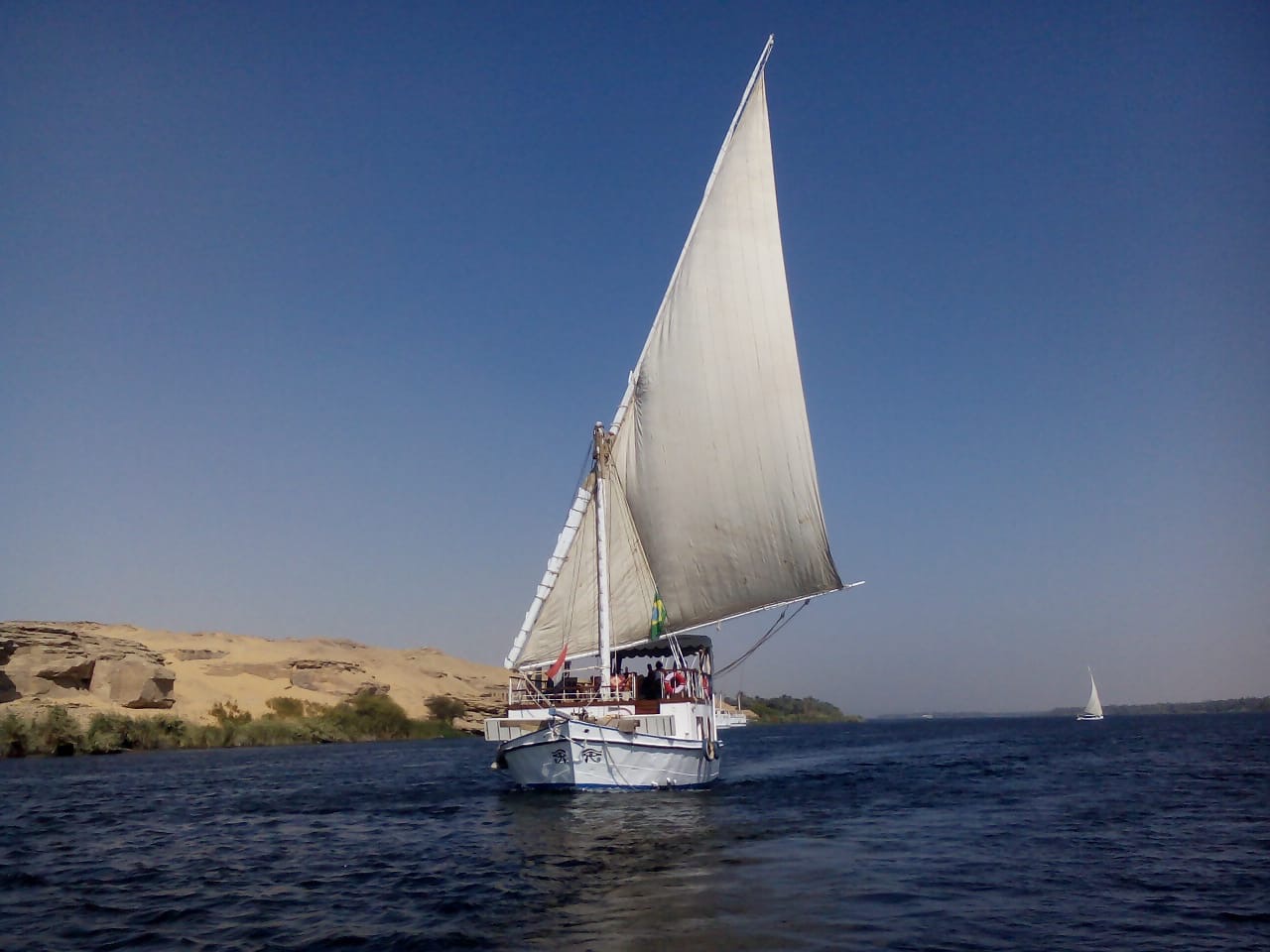
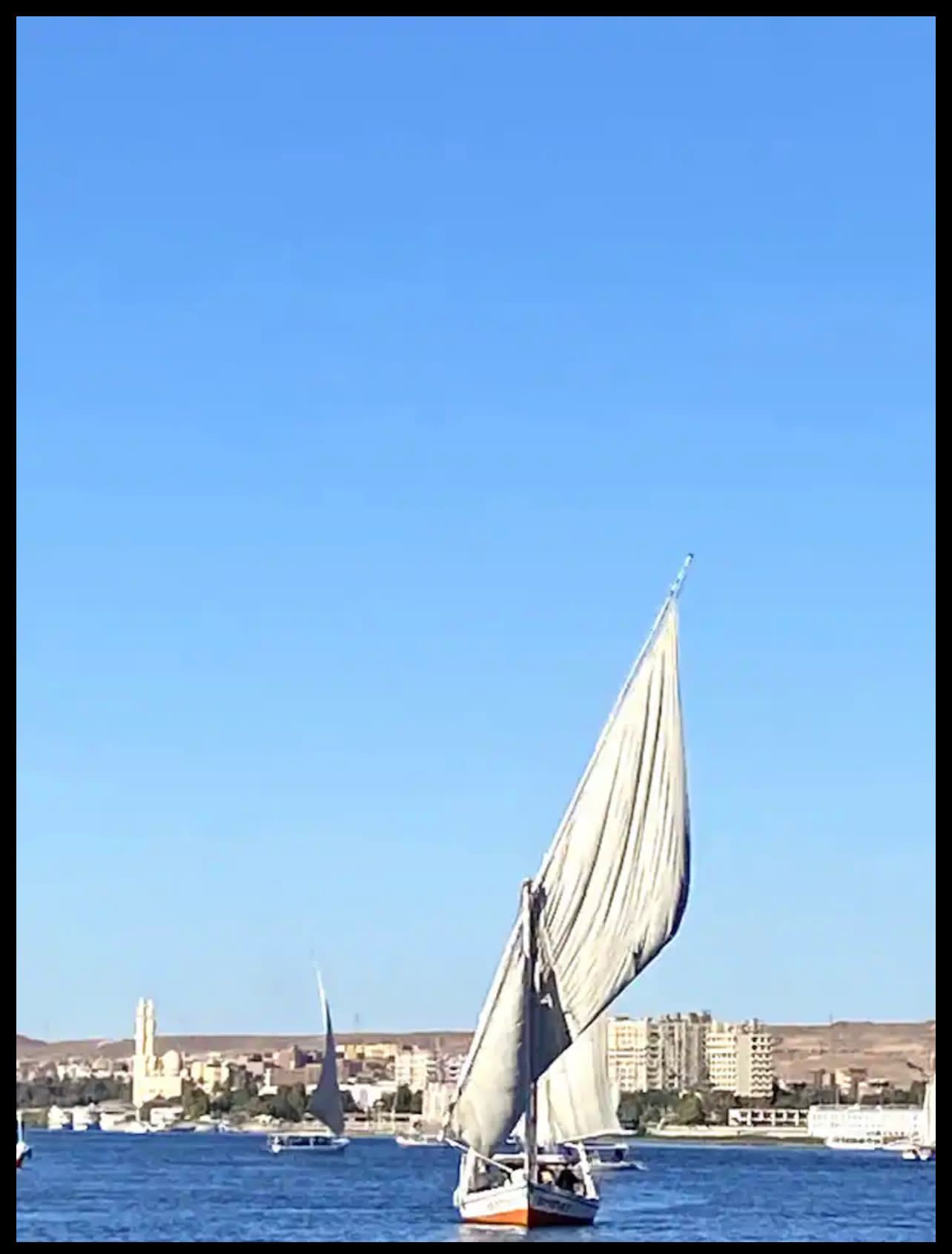
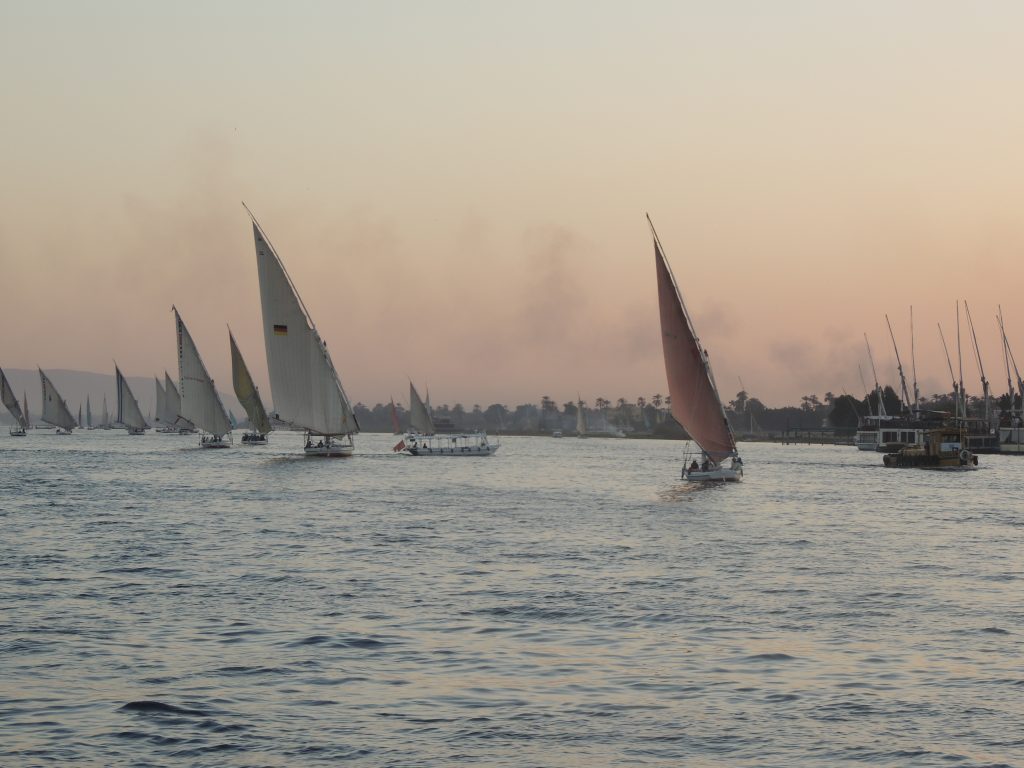
On a traditional felucca, between Aswan and Luxor, distance is no longer measured in kilometers, but in time. In the shifting light over the river. In the sound of water against wood. In the presence of people whose lives remain connected to the Nile in ways that have not disappeared.
There is a moment, usually after a few hours on the river, when something shifts.
The temples are no longer isolated sites. They begin to make sense in relation to the land, to the water, to the distance between them. Egypt stops being a collection of highlights and becomes a structure.
That moment cannot be scheduled. It cannot be rushed. But it can be made possible.
Sailing the Nile by Felucca: The Most Authentic Way to Experience Egypt
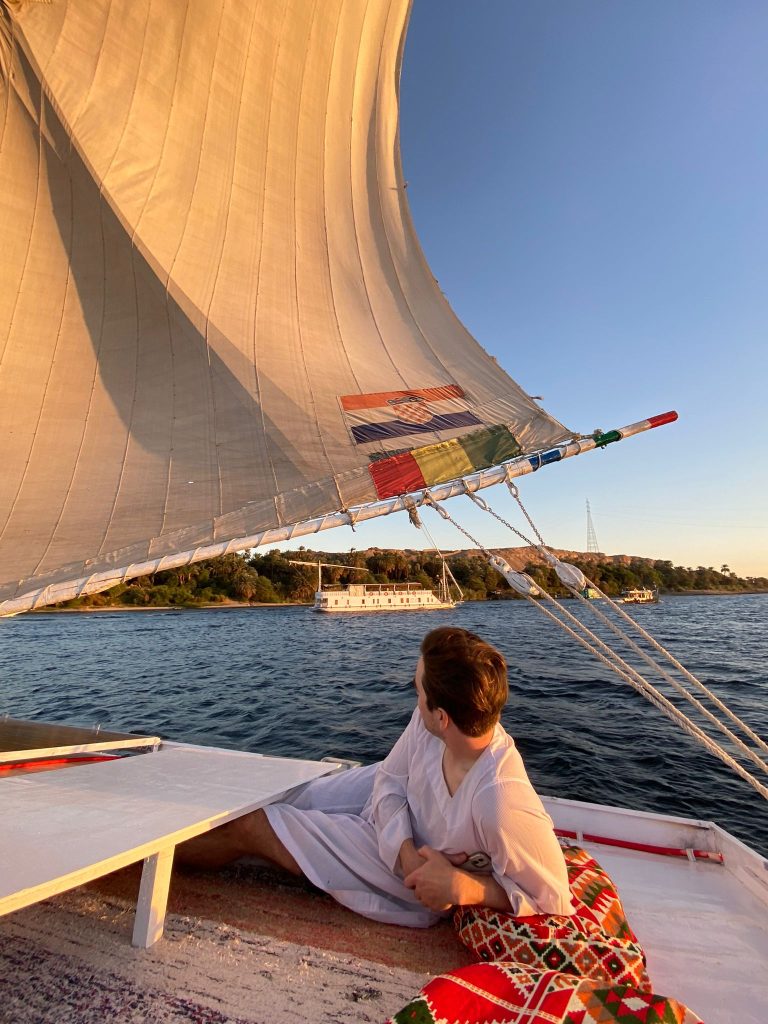
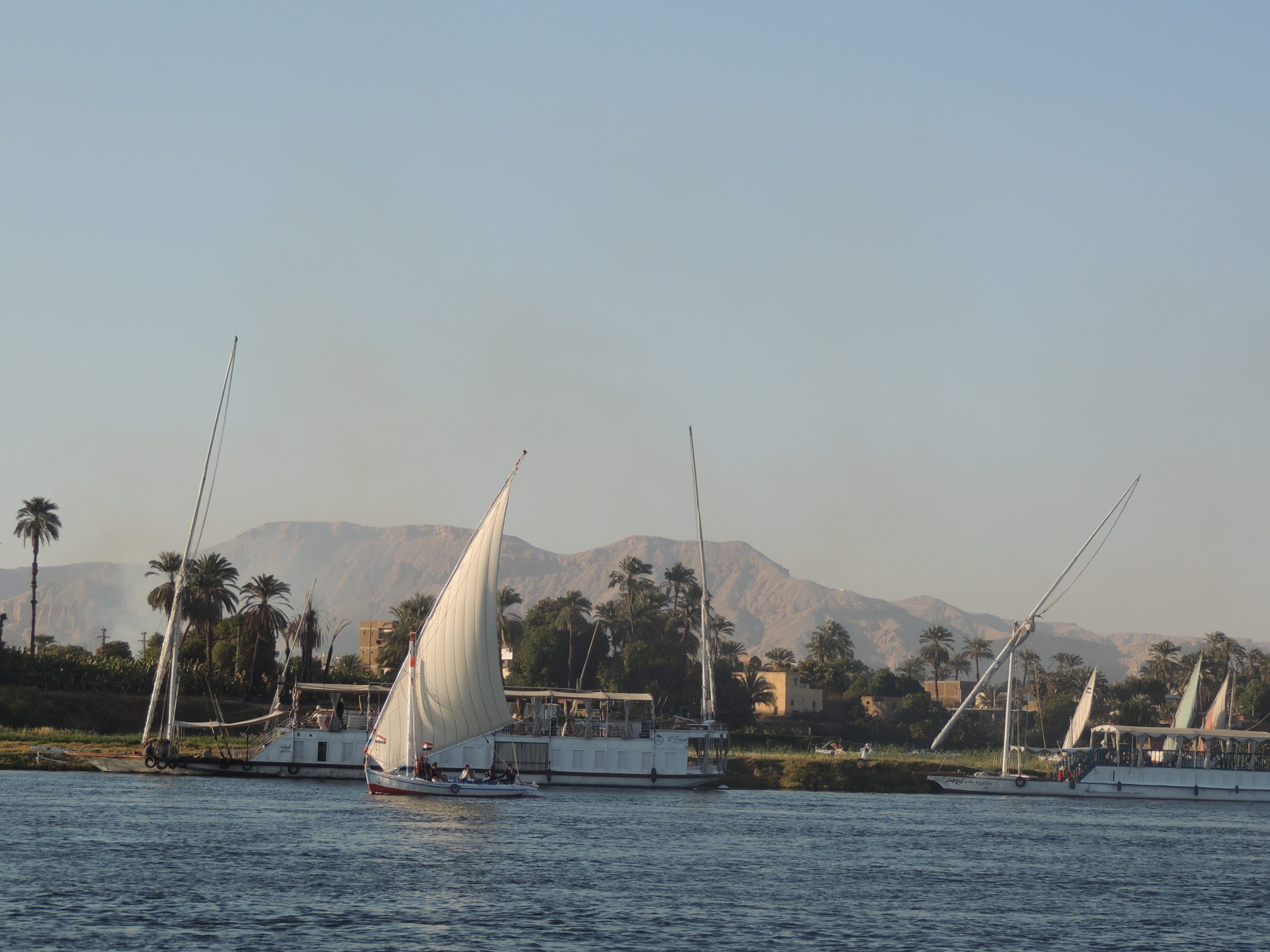
Relaxing aboard a traditional felucca while sailing the Nile near Aswan at sunset.
There is a particular silence on the Nile that does not belong to absence, but to continuity. It is the kind of silence that has carried voices, trade, prayers, and memory for millennia, and still moves with the same patient authority. To sail the Nile on a traditional felucca is to enter that continuity without interruption.
The felucca itself is an answer that predates the question. A simple wooden boat, shaped by necessity and refined by experience, it depends on nothing but wind, current, and the judgment of the man who steers it. There is no machinery to impose rhythm, no engine to fracture the sound of water. Movement is negotiated, not forced. The sail fills, relaxes, adjusts. The river accepts or resists. And slowly, almost imperceptibly, one begins to understand that this is not transport. It is alignment.
What was once the working boat of fishermen has not been replaced, only reinterpreted. The same structure that carried nets now carries travelers seeking an authentic Nile experience, yet it has not surrendered its nature. This is precisely what gives the journey its weight. It has not been redesigned for the visitor. The visitor has to adapt to it. And in that reversal, something rare happens. The journey ceases to be consumption and becomes attention.
The banks of the Nile do not present themselves as spectacle. They unfold. A field appears, then a small house, then a figure moving with the unselfconscious certainty of routine. Nothing is arranged, nothing explained, yet everything speaks. The river does not offer narratives. It reveals them to those who remain long enough to notice.
For those who travel with children, the effect is immediate and unfiltered. Deprived of distraction, the child enters the landscape without mediation. Water becomes movement, wind becomes presence, distance becomes curiosity. There is no need to interpret the experience for them. They recognize it as something whole, something that does not demand their attention but receives it naturally.
For those with sailing experience, the Nile introduces a different discipline. It is not the open sea, nor the predictable geometry of controlled waters. The current has its own logic, the wind its own intervals. One does not dominate the river. One reads it, responds to it, and, at times, waits. That waiting is not empty. It is part of the structure.
And within that structure, the past begins to emerge without effort. Not as reconstruction, but as continuity. The temples that rise along the Nile were not placed arbitrarily. They belong to this same movement, to this same dependence on water, to this same negotiation between permanence and flow. To sail past them at the pace of the river is to understand their position not as monuments, but as decisions.
The Nile does not insist. It does not explain itself. It carries. And in carrying, it reveals a different measure of time, one that does not divide experience into moments, but allows it to accumulate.
To choose a felucca sailing journey in Egypt is, in the end, to accept that measure. Not to pass through Egypt, but to enter it at the speed at which it was formed.
From Fishermen’s Boat to Unique Travel Experience
The felucca did not begin as an invitation. It was never designed to carry expectation, only necessity. For generations, it belonged to those who worked the river, men who read the wind as one reads a text, who understood the Nile not as landscape but as condition. Its form was not imagined, it was learned. Each line of the boat answered a function, each movement a response to current and season. Nothing was added that was not required.
What has happened since is not a transformation, but a quiet extension. The felucca has not been altered to satisfy the visitor. It has remained, and it is precisely this refusal to change that has given it a new meaning. To step onto it today is not to enter a constructed experience, but to borrow, for a limited time, a way of being that already existed. The traveler does not consume the Nile from a distance, but inhabits a form that was shaped by those who depended on it.
In this sense, the felucca offers something that modern travel rarely allows. It does not simulate authenticity, it preserves it. And through that preservation, it opens a passage not only across the river, but into the deeper logic of Egyptian culture, where movement, time, and survival have always been shaped by water.
The Real Nile Still Exists — You Just Have to Choose It
The Nile has not disappeared. It has not withdrawn into history or dissolved into the images that circulate beyond it. It continues to move with the same persistence, indifferent to the structures built around it, carrying with it the same current that once defined the limits of a civilization.
What has changed is not the river, but the way it is approached. There are many ways now to cross it, to observe it, to include it within a journey without ever entering it. Distance has become comfortable. Speed has become the norm. And in that shift, the essential experience risks being reduced to a surface.
Yet the river remains accessible to those who choose otherwise. Not through effort, but through decision. To travel Egypt differently is, in essence, to refuse that distance. To step onto a felucca is to accept a slower negotiation with space and time, to allow the Nile to impose its rhythm rather than impose one upon it.
Nothing is recreated. Nothing is staged. The river does not perform. It simply continues.
And it is in that continuity that the real Nile can still be found. Not as memory, but as presence. Not as something to be visited, but as something to be entered.
Sail the Nile by Felucca: Authentic Egypt Experience
Where travel slows down and the Nile sets the rhythm
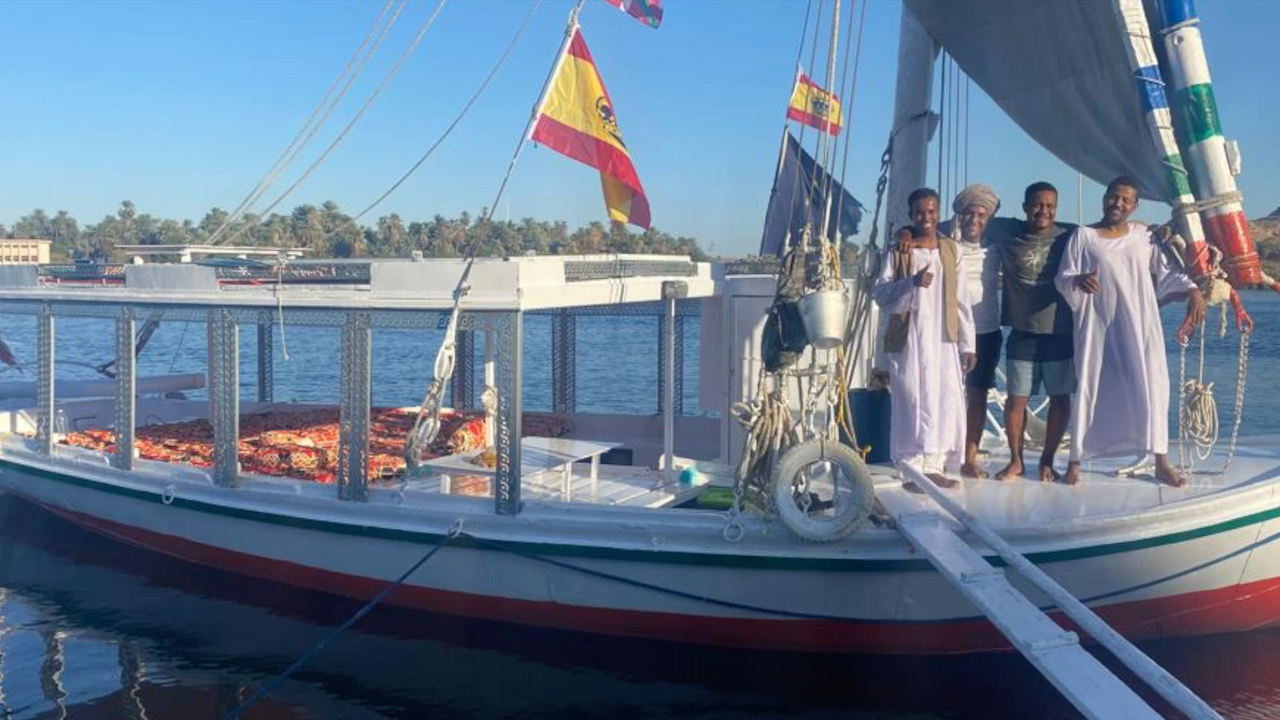
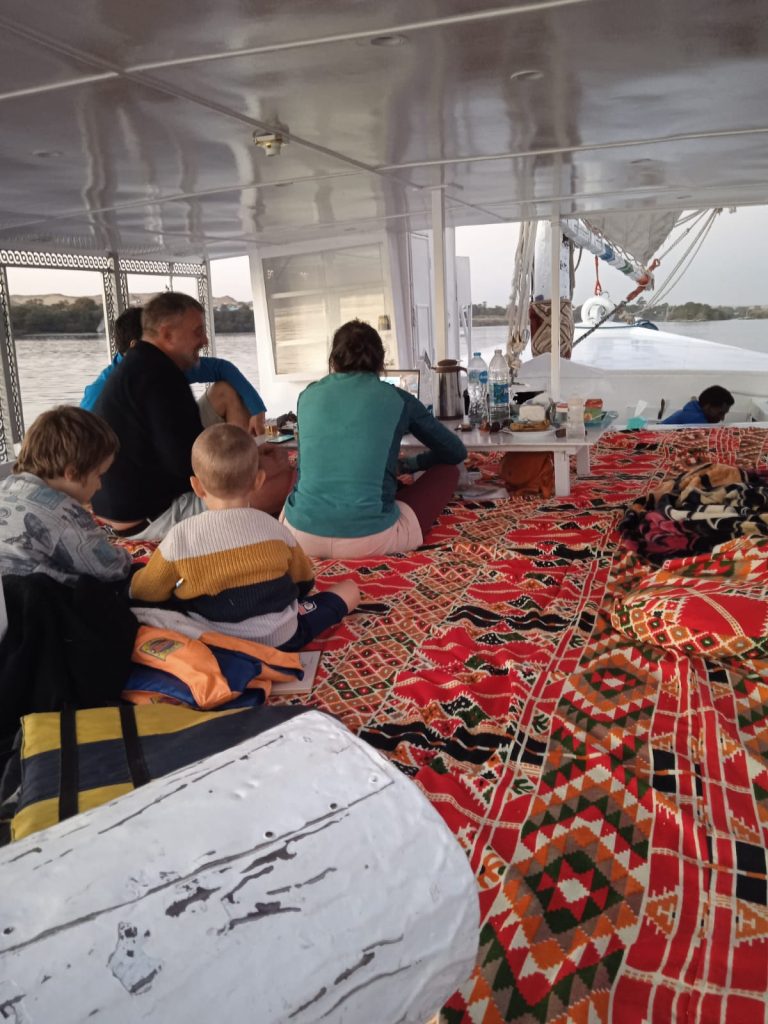
Guests from France relaxing on the carpeted deck of the felucca Maitea while sailing on the Nile near Aswan
There is another way to experience Egypt — not through rushing, noise or crowded itineraries, but through the rhythm of the Nile itself. On a felucca, time changes. Families sit together, children watch the river, and the journey becomes part of what Egypt really is.
There is the Egypt of headlines, and there is the Egypt of the Nile.
They are not the same reality.
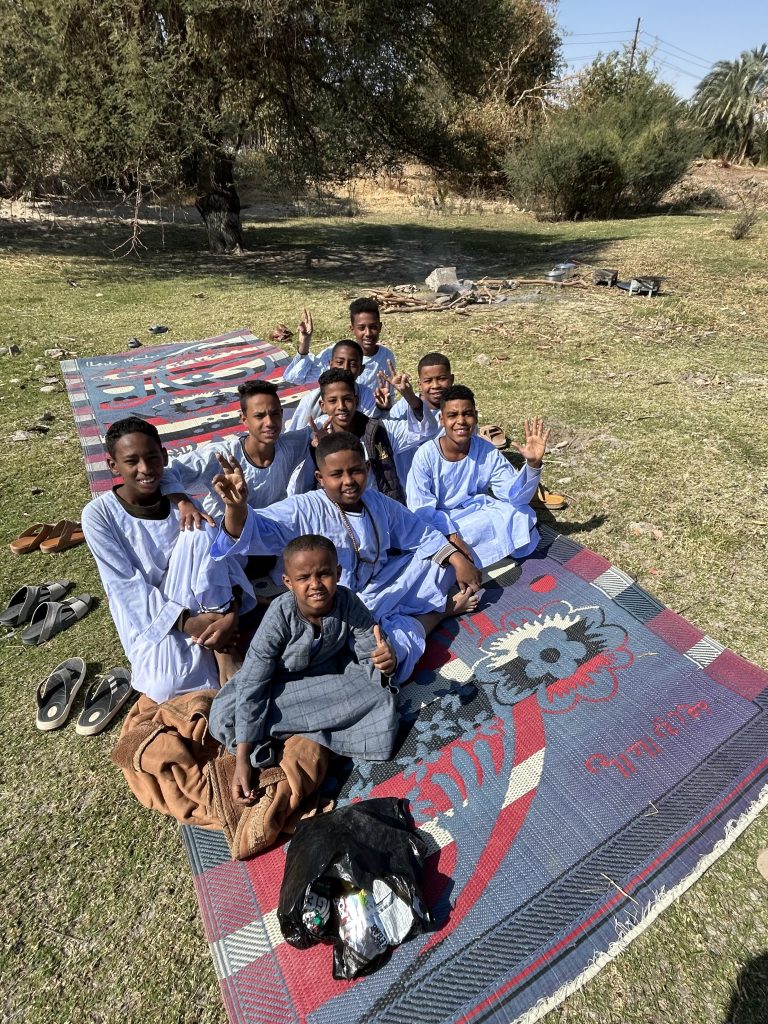
Along the river, far from noise and distance, life continues with a rhythm that has not changed for centuries. Boats move with the wind. Children run along the banks. Fishermen pass silently at dawn. The light falls slowly over the water, as it always has.
To travel here is not to ignore reality. It is to see it without distortion.
Upper Egypt, between Aswan and Luxor, exists in a dimension that is often invisible to those who have not experienced it. It is not defined by external narratives, but by continuity — of landscape, of culture, of daily life.
Sailing the Nile by Felucca: A Natural Way to Travel
Egypt is often reduced to images, to narratives, to distance.
But along the Nile, none of that remains.
For the youngest travellers, this becomes more than a trip — a space to discover, imagine, and grow, where learning happens effortlessly and creativity awakens with the rhythm of the Nile.
There is only the river, the light, the movement, and the quiet certainty that some things do not need to change.
And perhaps that is why, once experienced this way, it becomes difficult to travel differently again.
Will This Bring a New Era of Authentic Cultural Tourism on the Nile?
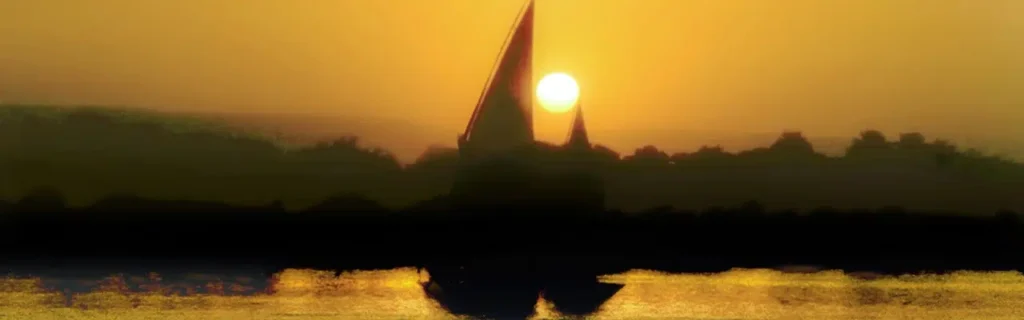
Evening calm on the Nile — felucca Maitea ready for the night.
On 6 October 2025, the world witnessed a moment of profound symbolism. For the first time, an Egyptian was elected Director-General of UNESCO.
Khaled El-Anany — once a young guide among the timeless stones of Giza — now leads the international organisation responsible for protecting humanity’s cultural and natural heritage.
Only a few months earlier, in January 2025, he had been appointed Rapporteur of the African World Heritage Fund, reflecting the continent’s confidence in his vision for safeguarding heritage for future generations.¹
Egypt, Guardian of the Flame of Human Memory
This achievement is more than a personal success. It represents global recognition of Egypt’s unique role as the cradle of one of the world’s oldest continuous civilisations.
Across millennia, Egypt has preserved an extraordinary cultural legacy along the Nile — temples, tombs, language, art, and traditions that continue to shape human understanding of history itself.
While other ancient cultural centres, including parts of Mesopotamia, have suffered devastating losses through war and instability, Egypt has retained a remarkable continuity of heritage.
The rediscovery of ancient Egypt by European scholars during Napoleon Bonaparte’s expedition in 1799 — including the Rosetta Stone — reignited global fascination and laid the foundations of modern Egyptology. From that moment onward, the Nile returned to the centre of humanity’s historical consciousness.
Today, Egypt remains a bridge between past and present, where heritage is not only preserved in monuments but lived daily through culture, crafts, and community life.
Protecting this legacy is not solely an Egyptian responsibility. Cultural heritage belongs to humanity as a whole. Once destroyed, it cannot be replaced.
Recent conflicts in the Middle East have shown how fragile our shared historical memory can be. Libraries, archaeological sites, and monuments have been lost forever. The preservation of Egypt’s heritage therefore carries global significance.
A Turning Point for Cultural Tourism in Egypt?
This historic moment also raises an important question.
Could new international leadership help reshape the future of tourism in Egypt?
Egypt does not need more tourists. It needs conscious travellers — visitors who seek understanding, connection, and respect for culture rather than rapid consumption of monuments.
For decades, mass tourism on the Nile has been dominated by large cruise ships with tight schedules and heavy environmental impact. Noise, pollution, and overcrowding can diminish the very atmosphere that makes Egypt extraordinary.
Authentic cultural tourism offers another path.
Travel experiences that move slowly along the river, in harmony with nature and local communities, allow visitors to engage more deeply with Egypt’s history and living traditions.
The real Egypt is not found in hurried itineraries. It is experienced in the silence of sunset on the Nile, in Nubian villages, in conversations with local families, and in the rhythm of the river itself.
Traditional sailing journeys — whether on a felucca or a dahabiya — reconnect travellers with this timeless dimension.
Sailing the Nile — The Living Experience of Heritage
The most meaningful way to experience Egypt’s heritage is not simply by visiting monuments, but by travelling between them.
Sailing from Aswan to Luxor on a traditional Nile boat allows visitors to witness landscapes, temples, and daily life as travellers have done for centuries.
The Nile becomes more than a river. It becomes a teacher.
Empires have risen and fallen along its banks, yet Egypt’s cultural identity continues to flow forward — resilient, creative, and alive.
This is the spirit behind EgyptDiscovering.
Through small-scale Nile journeys guided by local expertise and respect for culture, travellers can experience Egypt beyond tourism — as a living civilisation.
A New Renaissance of Authentic Travel?
Perhaps this new chapter at UNESCO will encourage a global shift toward sustainable and culturally respectful tourism.
Heritage is not only what we preserve in stone. It is what we experience, protect, and share.
Egypt invites the world not to consume history, but to connect with it.
And the Nile continues to flow — patient, eternal, and ready to reveal its stories.
Sail slowly. Travel deeply. Discover Egypt.Egypt, Guardian of the Flame of Human Memory
Egypt Cultural Tourism and Nile Travel: A New Chapter for Heritage | EgyptDiscovering