

Egypt is not a destination
Most people travel to Egypt as if it were something to see. A sequence of monuments, temples, and moments to capture. But Egypt does not reveal itself that way.
It resists speed. It resists noise. It resists the idea that understanding can be compressed into a few days and reduced to a sequence of visits.
To travel Egypt differently is not to add more stops. It is to change the way of moving through it.
The Nile is not a backdrop
It is the structure
Everything in Egypt begins and ends with the Nile. Not as scenery, but as system.
Civilization did not grow around it by chance. It was shaped by its rhythm, its cycles, its silence. The Nile is not something ancient that disappeared. It is still there, defining how Egypt lives, moves, and breathes.
To understand Egypt without the Nile is like trying to understand a language without listening to it.
Moving changes perception
Speed hides structure
When you travel fast, everything becomes surface. Temples become isolated monuments. Villages become background. People dissolve into the landscape instead of forming part of the story.
Slowing down changes that.
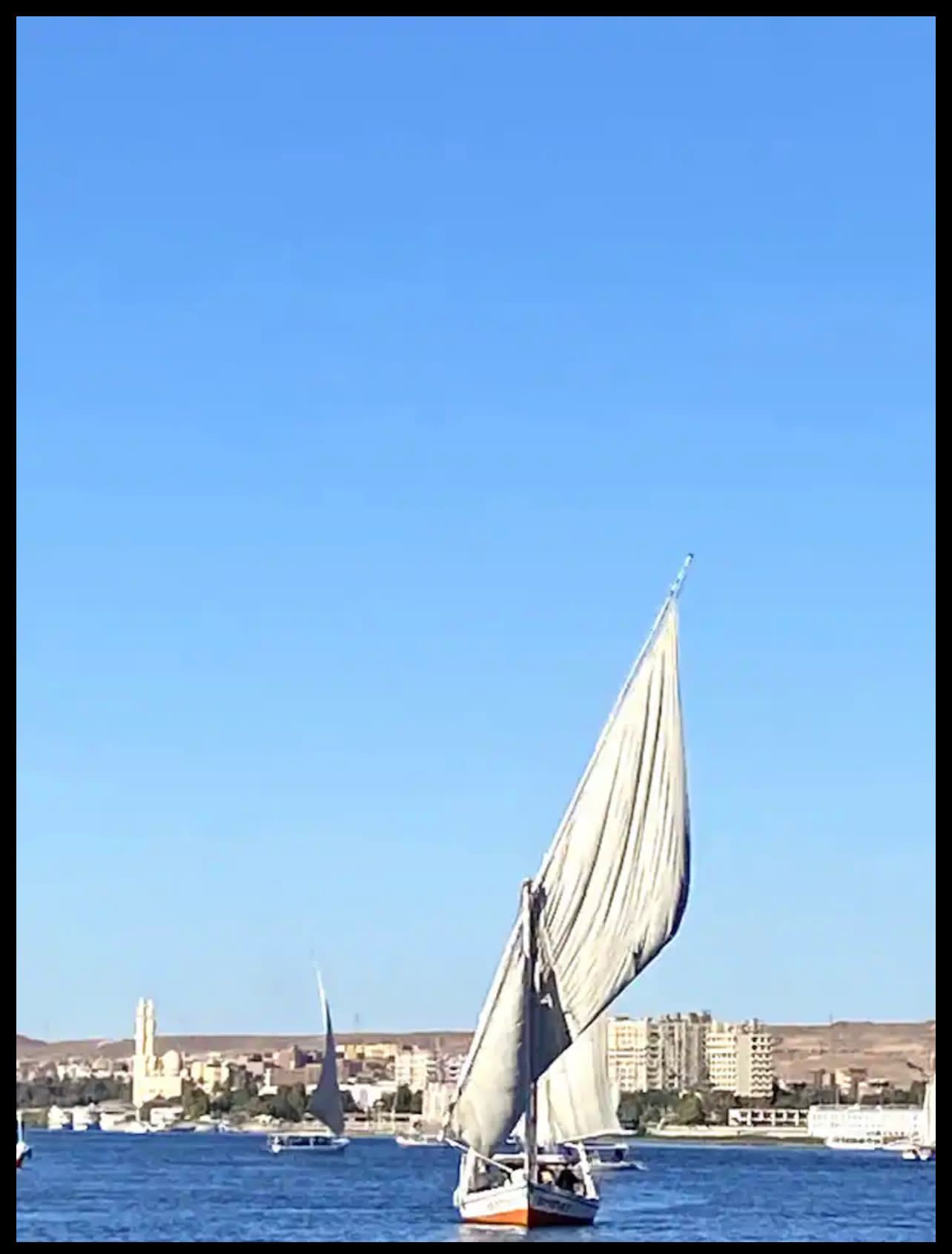
On a traditional felucca, between Aswan and Luxor, distance is no longer measured in kilometers, but in time. In the shifting light over the river. In the sound of water against wood. In the presence of people whose lives remain connected to the Nile in ways that have not disappeared.
Travel along the Nile by felucca
The difference between seeing and understanding
There is a moment, usually after a few hours on the river, when something shifts.
The temples are no longer isolated sites. They begin to make sense in relation to the land, to the water, to the distance between them. Egypt stops being a collection of highlights and becomes a structure.
That moment cannot be scheduled. It cannot be rushed. But it can be made possible.
This shift is not new. It reflects a much older structure in which knowledge and power have always been connected. One that Egypt understood long before we gave it new names.
A different way to travel Egypt
This is the idea behind EgyptDiscovering.
Not to offer more tours, but to offer a different relationship with the place. Smaller boats. Fewer people. More time. More silence. More connection.
Not a cruise, but a passage.
EgyptDiscovering Nile journeys
Between Aswan and Luxor
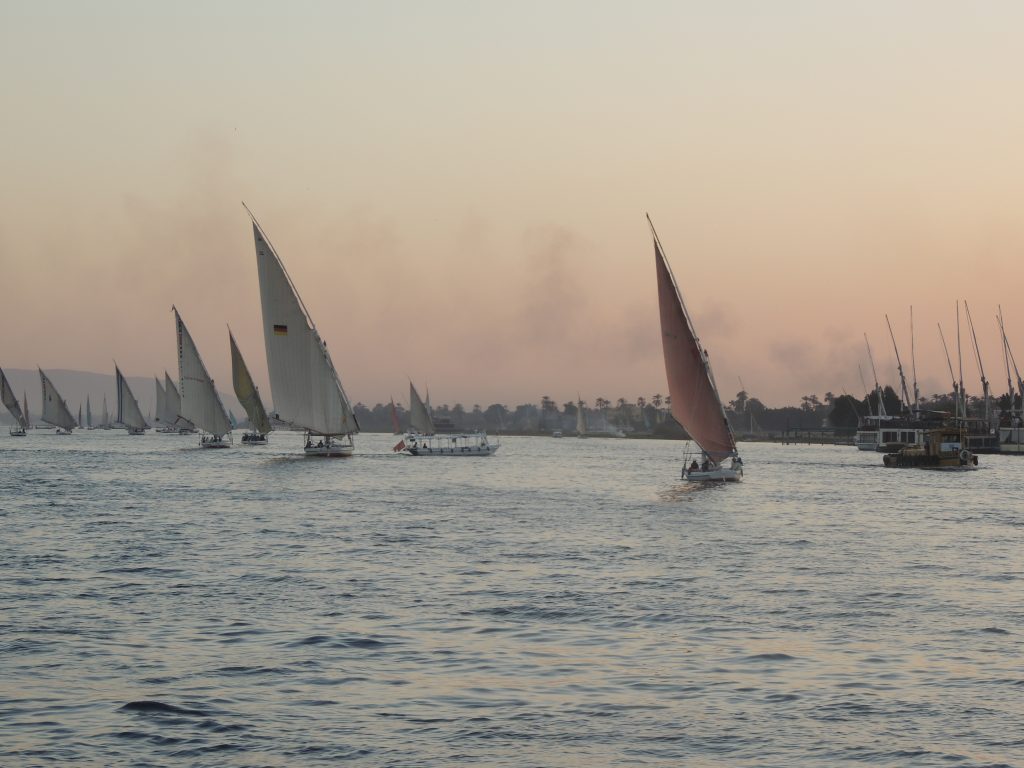
Where Egypt becomes visible
This stretch of the Nile holds something unique. Not only temples like Kom Ombo or Edfu, but the continuity between them.
Fields cultivated along the banks. Children waving from the shore. Evenings under open skies. Mornings where the river remains still.
It is here that Egypt is not explained, but experienced.
Travel as access
Travelling differently is not about luxury or exclusivity. It is about access.
Access to a slower rhythm.
Access to a deeper layer.
Access to something that cannot be reproduced within mass tourism.
Egypt is still there
Egypt has not disappeared beneath modern tourism. It is still there — in the river, in the villages, in the spaces between what is usually shown.