
Architect, Physician, and Visionary of the Pyramid Age
When people think of Ancient Egypt, they often imagine pyramids, pharaohs, and powerful gods. Yet one of the most extraordinary figures in Egyptian history began life not as a ruler or deity, but as a human whose brilliance transformed civilisation itself. His name was Imhotep — architect, physician, scholar, and eventually a god.
Living during the Third Dynasty around 2650–2600 BCE, Imhotep served Pharaoh Djoser and rose to become one of the most influential individuals in early Egyptian history. His achievements were so remarkable that centuries later he was worshipped as a divine healer and patron of wisdom.
Imhotep’s legacy bridges science, architecture, religion, and culture — making him one of the most fascinating personalities of the ancient world.
Architect of the First Pyramid in History
Imhotep is best known as the designer of the Step Pyramid of Djoser at Saqqara, widely recognised as the first monumental stone building ever constructed. Before this innovation, royal tombs were mastabas — flat, rectangular structures built from mudbrick.
Imhotep introduced a revolutionary concept: stacking mastabas vertically to create a stepped structure rising toward the heavens. The result was the Step Pyramid complex, a vast architectural achievement that marked the beginning of the pyramid age.
This innovation laid the foundations for the later pyramids of Giza, including the Great Pyramid of Khufu. In many ways, Imhotep changed the course of architectural history.
Today, travellers visiting Saqqara encounter the origins of pyramid construction — a site that reflects the birth of monumental Egyptian architecture.
Imhotep and the Origins of Medicine
Beyond architecture, Imhotep gained legendary status as a physician. Although original medical texts attributed directly to him have not survived, ancient traditions consistently described him as a master healer with deep knowledge of anatomy, surgery, and herbal treatments.
Centuries later, Egyptians honoured him as a god of medicine and healing. The Greeks identified him with their own healing deity, Asclepius, demonstrating how far his reputation spread beyond Egypt.
Because of this association, Imhotep is often described as one of the earliest figures in the history of medical science.
Political Power and Religious Influence
Imhotep’s influence extended into government and religion. Serving as vizier under Pharaoh Djoser, he held one of the highest administrative positions in Egypt, effectively acting as chief advisor to the king.
He also served as a high priest connected with the cult of Ra, the sun god, linking political authority with religious responsibility. This combination of intellectual, administrative, and spiritual roles elevated his status far beyond that of a typical official.
Imhotep represented the ideal Egyptian scholar: knowledge combined with service to cosmic order, known as Ma’at.
From Human to God: The Deification of Imhotep
The transformation of Imhotep from historical figure to deity occurred gradually over centuries. By the New Kingdom period, around 1500 BCE, he was already revered as a semi-divine sage. During the Greco-Roman era, his worship expanded significantly, with temples dedicated to him across Egypt.
Unlike most Egyptian gods, who were mythological from the beginning, Imhotep was a real person elevated to divine status — an exceptionally rare honour in Egyptian tradition.
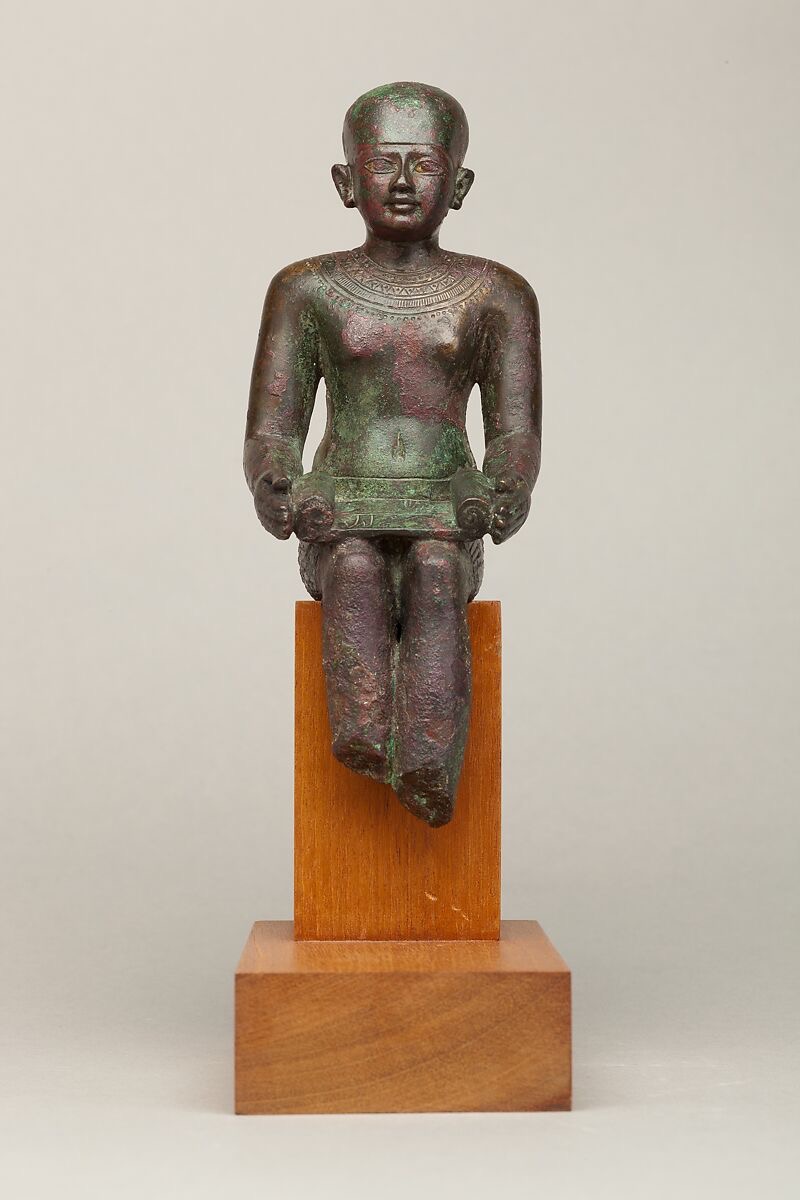
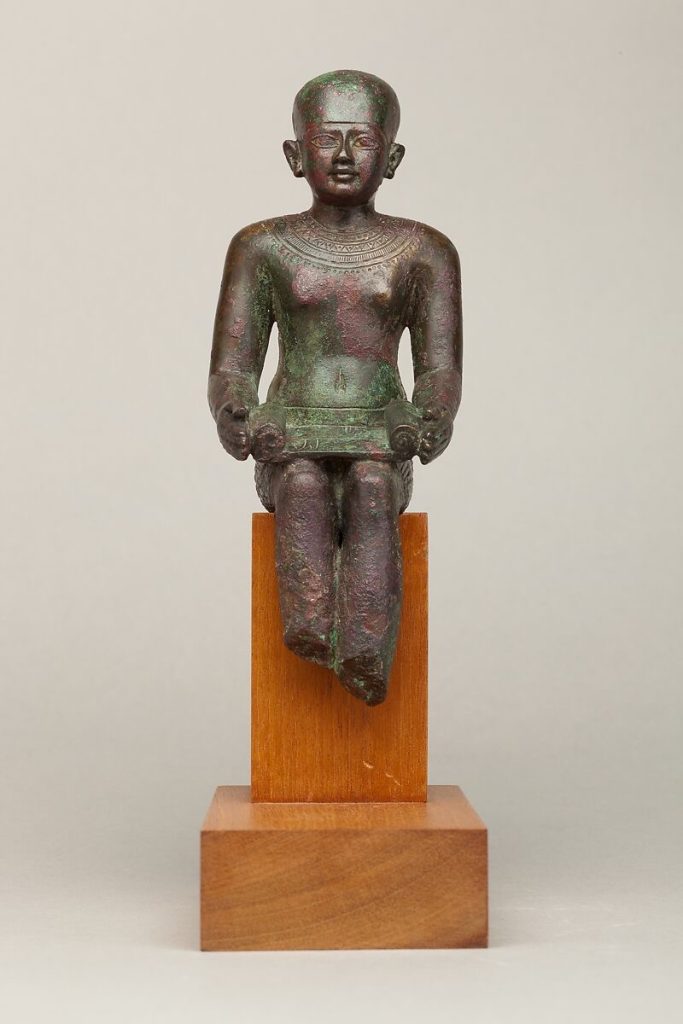
He was often depicted as a seated scholar holding a papyrus scroll, symbolising wisdom and learning.
Imhotep’s Enduring Legacy
Imhotep’s achievements shaped multiple fields:
- Architecture — pioneering monumental stone construction
- Medicine — early foundations of healing knowledge
- Governance — administrative leadership under Pharaoh Djoser
- Religion — later worship as a divine healer and sage
Few individuals in human history have influenced so many domains simultaneously.
For travellers exploring Egypt today, sites such as Saqqara provide direct connection to Imhotep’s world. Standing before the Step Pyramid allows visitors to witness the beginning of architectural innovation that would define Egyptian civilisation for millennia.
A Legacy That Transcends Time
Imhotep’s story demonstrates how knowledge, creativity, and vision can elevate a human life into legend. His transformation from scholar to god reflects the profound respect ancient Egyptians held for wisdom and achievement.
More than 4,500 years later, his name remains synonymous with genius, innovation, and healing.
Imhotep was not born a god.
He became one.